The Role of DAM in Retail Content Operations
Retail brands operate in an environment of constant change. Seasonal campaigns, product launches, promotional events, in-store signage, digital ads, and packaging updates all rely on accurate, consistent, and quickly accessible visual content. Digital Asset Management (DAM) gives retail teams the infrastructure to centralize and control these assets while enabling teams across departments, regions, and vendors to use them confidently and correctly.
For retailers managing a mix of online and brick-and-mortar channels, a cloud-based DAM platform is essential. It connects brand, marketing, eCommerce, creative, and operations teams by providing a single source of truth for visual and brand assets.
Common Asset Challenges in Retail
Retailers typically work at high volume and high velocity. That creates specific problems when assets aren’t managed properly:
- Promotional materials are stored in multiple locations or hard drives
- In-store staff use outdated signage from past campaigns
- Digital and print teams are not aligned on approved assets
- Agencies and partners request the same files repeatedly
- Designers spend hours resizing assets or resending images for different channels
These issues lead to brand inconsistencies, missed deadlines, and operational friction that slows down execution.
How Lingo Helps Retail Teams Manage Assets
Lingo was designed to solve the exact problems that fast-moving creative teams in retail face. It simplifies asset access, improves brand control, and helps teams deliver consistent content across every customer touchpoint.
Kits organize content by purpose or channel
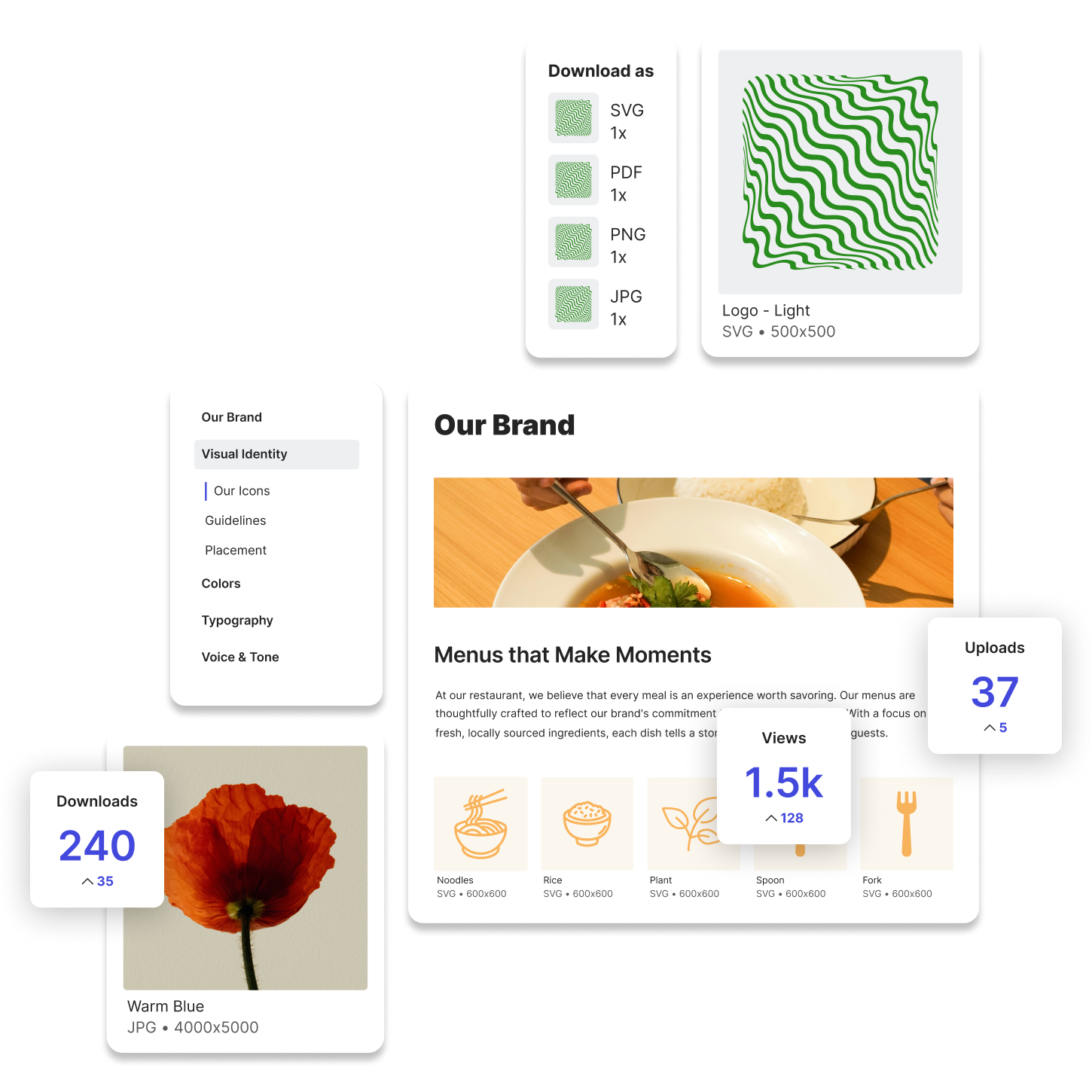
With Lingo, assets are grouped into Kits that reflect how teams actually work. These Kits are very flexible and can be structured around a variety of use cases. Some common Kits in retail include:
- Seasonal promotions (e.g., Back to School, Black Friday)
- Product categories or collections
- Store signage packages
- Social and digital ad sets
- Packaging templates or corporate identity brand guidelines
- Training and sales enablement materials
Try Lingo for free.