Portals: A Branded Front Door for Your Assets and Guidelines
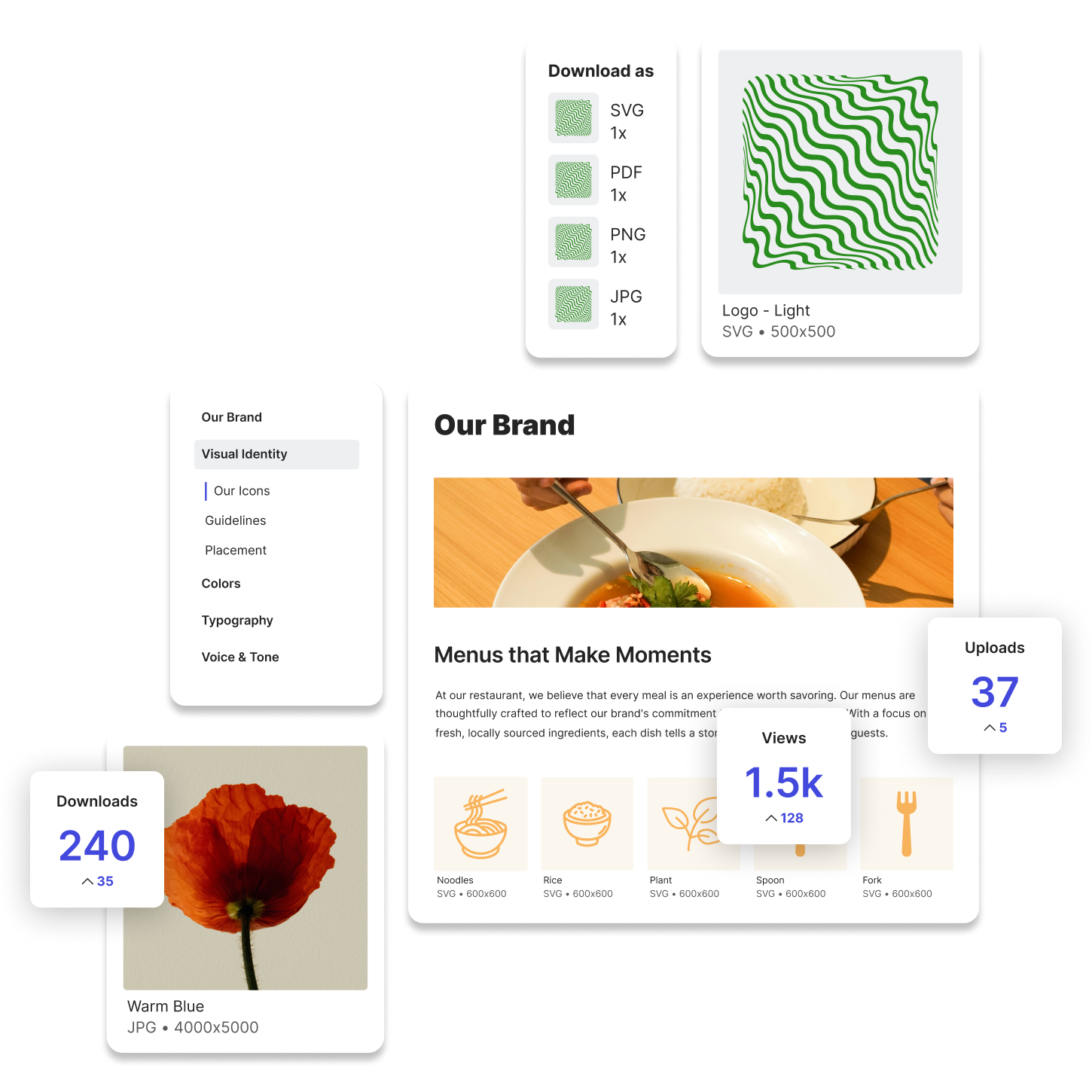
Portals are dedicated spaces where you can present curated sets of brand assets, Kits, and guidelines to specific audiences. Each Portal acts as its own branded experience, giving internal teams, external partners, or departments access to exactly what they need, without clutter, confusion, or unnecessary access to everything else.
Think of a Portal as a launchpad. It brings together the right materials, organized visually, in a space that feels intentional and on-brand from the start.
Why Portals Help Teams Work Smarter
Most teams have shared folders or systems in place, but they rarely give users a clear sense of where to begin. When someone lands in a folder structure or storage system, they have to hunt for what’s relevant to them. That creates friction, especially for those who are less familiar with your brand.
Portals remove that guesswork. You can guide people to exactly what they need by curating assets, Kits, and instructions within a single, easy-to-navigate space. Portals allow for better alignment across regions, departments, easier onboarding for new team members, and faster collaboration with external groups.
You’re not just organizing files. You’re giving people confidence that they’re starting in the right place.
Where Portals Fit into Today’s Workflows
Teams today are moving quickly, often across time zones, agencies, or internal silos. That means brand assets are being shared and used by a wide range of people, not all of whom are embedded in the day-to-day creative process.
Portals have become a smart way to serve different use cases without duplicating work or creating new systems for every audience. A Portal might house your press kit, a campaign launch package, or internal brand guidelines. Another might be built for onboarding new sales reps or managing regional marketing assets.
They’re especially helpful when you want to share assets externally but still control the experience. You can customize what people see, how it’s presented, and who has access.
Try Lingo for free.