What Are Digital Asset Management Platforms?
Digital Asset Management (DAM) platforms are software systems that centralize the storage, organization, management, and distribution of digital content. These platforms are purpose-built for visual and brand-centric assets like logos, photography, templates, videos, icons, campaign graphics, and more.
Unlike general cloud storage tools, DAM platforms include capabilities like metadata tagging, search, permission controls, visual previews, and brand usage guidance. The result is a centralized hub where teams can find the right asset, know how to use it, and trust that it is current and approved.
Why Digital Asset Management Platforms Matter
As content demands grow, brands are producing more assets, for more channels, with more collaborators. Without a DAM platform, teams often rely on folder systems, email attachments, and repeated requests to designers. This leads to versioning issues, inconsistent branding, and wasted time.
DAM platforms solve these problems by offering structured access to approved assets. They reduce operational noise, support consistent brand presentation, and enable marketing and creative teams to scale their output without scaling inefficiencies.
A DAM platform becomes especially important when:
- Teams are distributed across regions, departments, or partner networks
- Brands go through rebrands or visual updates
- Product and campaign assets need to be reused across touchpoints
- Creative teams are bogged down with asset requests
How DAM Platforms Are Used Today
Modern DAM platforms are used by a range of teams, from in-house marketing departments to global creative operations. They are often the backbone of content ecosystems where assets need to be:
- Reused across websites, emails, and ads
- Distributed to external partners or media
- Embedded into design systems and UI libraries
- Shared with sales, field, or retail teams
However, some DAM platforms have become overly complex. Many require heavy DAM implementation cycles, enterprise IT support, or specialized training. This can make them feel inaccessible or overbuilt for teams that need speed and simplicity. If Canto is already on your shortlist, comparing Canto alternatives can help you find the platform that best matches your team's size, workflow, and implementation needs.
As a result, smaller and mid-sized organizations often hesitate to invest in DAM platforms, even when their asset chaos clearly calls for one.
Why Digital Asset Management Platforms Matter to Marketers and Designers
Lingo’s audience is made up of designers, marketers, brand managers, and operators responsible for producing, distributing, and protecting brand assets. These users are typically juggling creative output, campaign deadlines, and cross-functional requests with limited time and tools.
They need a DAM platform that:
- Works without IT overhead
- Adapts to brand growth and change
- Empowers non-designers with self-serve access
- Embeds brand guidance directly into the asset experience
- Provides clarity without adding complexity
For these teams, a DAM vs. CMS are non-comparable; one powers the storage of your digital assets, and one powers how it appears, most commonly, on websites, alongside other content. A DAM ensures the brand shows up consistently, efficiently, and confidently across every channel.
Where Lingo Fits In
Lingo is a modern DAM platform designed for fast-moving teams who care about brand consistency, creative speed, and simplicity. It is structured around how teams actually work, rather than relying on outdated file trees or enterprise software logic.
Here’s how Lingo enhances the role of a DAM platform:
Kits for visual organization
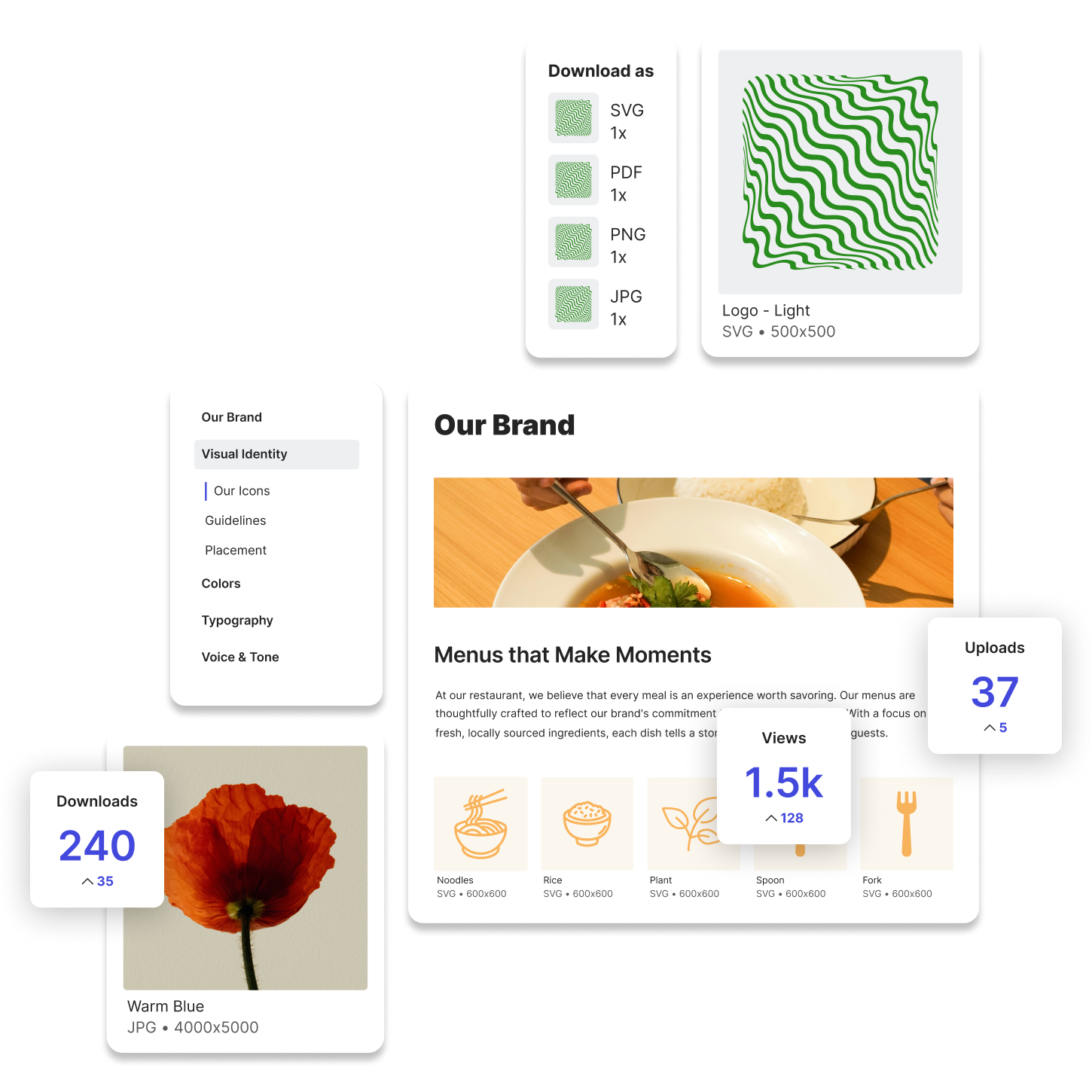
Instead of using folders, Lingo organizes content into Kits. These are curated collections of assets grouped by theme, campaign, team, or purpose. Each Kit is visual, searchable, and enriched with usage context.
This makes it easy for any user to locate the right file and understand how to use it, even without design experience.
Try Lingo for free.