What is Branding?
Branding is the process of creating a distinct identity for a business, product, or organization through visual elements, messaging, and customer experiences. It encompasses everything from a company’s logo and color palette to its tone of voice and overall reputation. Strong branding helps businesses differentiate themselves from competitors and build lasting relationships with their audience.
A well-executed branding strategy shapes how people perceive a company and influences their trust and loyalty. It is not just about visuals but also about the emotions and values that a brand communicates.
Key Elements of Branding
1. Brand Identity
Brand identity includes all the tangible elements that represent a brand, such as:
- Logo – The primary visual symbol of a brand.
- Typography and colors – Consistent font choices and a defined color palette enhance recognition.
- Imagery and design style – Photos, illustrations, and other design language contribute to a brand’s overall aesthetic.
2. Brand Messaging and Voice
A brand’s messaging defines how it communicates with its audience. This includes:
- Taglines and slogans that encapsulate a brand’s mission.
- Tone of voice that reflects the brand’s personality, whether professional, friendly, or playful.
- Key messaging pillars that ensure consistency in communication across all platforms.
3. Brand Positioning
Brand positioning is how a company differentiates itself in the market. It defines:
- Target audience – Who the brand serves and their specific needs.
- Unique value proposition (UVP) – What sets the brand apart from competitors.
- Market perception – How customers view the brand in relation to alternatives.
4. Customer Experience and Brand Reputation
A brand is not just what a company says it is but how customers experience it. Branding extends to:
- Customer interactions – How employees engage with customers across touchpoints.
- Product or service quality – The reliability and effectiveness of what a brand offers.
- Reviews and public perception – How customers talk about and rate the brand online.
How Lingo Helps Keep Your Company On-Brand
Maintaining brand consistency across teams, projects, and platforms can be challenging, especially as businesses scale. Lingo provides a complete system for organizing, sharing, and governing brand assets and guidelines, ensuring that every department, from marketing to product design, stays aligned with your brand identity.
1. A Visual-First Asset Library for Easy Access
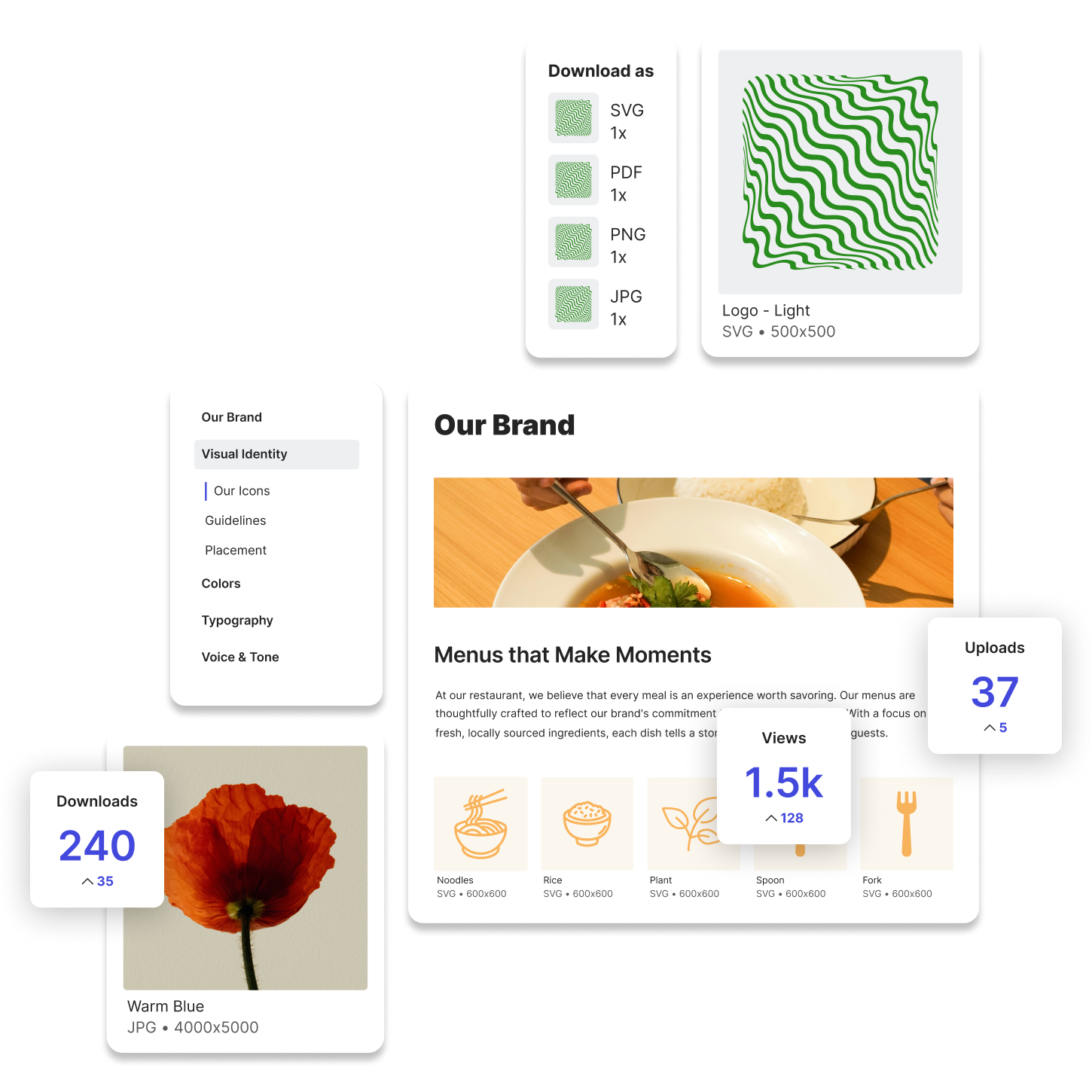
Lingo offers a visually intuitive interface that makes finding and using brand assets effortless. Unlike traditional file storage platforms, Lingo displays images, icons, fonts, and other brand elements in a way that allows teams to preview, browse, and organize assets visually rather than searching through confusing file names.
Try Lingo for free.