Brand Assets: What They Are and How to Manage Them Effectively
Whether you're building a brand from the ground up or evolving an existing one, brand assets play a central role in how your business is seen and remembered. These assets are more than just files; they are the visual and verbal cues that tell your brand’s story across every channel. As teams grow and content needs multiply, organizing and managing these elements becomes essential. This is where brand asset management becomes a critical part of maintaining consistency and clarity.
Understanding Brand Assets
Brand assets are the building blocks of brand identity. They include anything that shapes how people recognize, perceive, and experience your brand. Common brand assets include your logo, brand colors, fonts, photography, iconography, messaging guidelines, and design templates.
These elements work together to create a recognizable and cohesive brand experience, whether someone is visiting your website, opening a sales deck, or scrolling past your content on social media.
The power of brand assets lies in their consistency. A well-maintained set of assets reinforces trust, familiarity, and professionalism. When those assets are scattered or outdated, the opposite happens. Confusion sets in, branding gets diluted, and opportunities are missed.
Why Brand Assets Matter in DAM
In a digital-first world, brand assets are used and reused constantly. From quick-turn social posts to product packaging and investor decks, design teams and marketers need fast, reliable access to the right files. This is where a digital asset management system becomes essential.
A DAM system acts as a centralized home for all brand assets. It doesn't just store the files; it helps teams understand how and when to use them. This is especially critical for growing teams or distributed companies where multiple people are creating content. Without a system like Lingo in place, brand assets are often saved in nested folders, duplicated across platforms, or worse, shared through outdated links or dated PDFs.
The Risk of Scattered Assets
Let’s take a common scenario: a team member is creating a presentation and needs the latest logo. They find a version saved to their desktop, unaware that it is outdated. Or they pull imagery from an old campaign because it's easier to access than the most recent files.
Over time, these small inconsistencies compound into a bigger problem. A sales deck may have the wrong font. A social graphic may use a retired logo. A partner might use a low-res image pulled from an email attachment. These issues not only impact brand perception but also create unnecessary work for designers who are constantly fielding asset requests.
How Lingo Helps You Manage Brand Assets
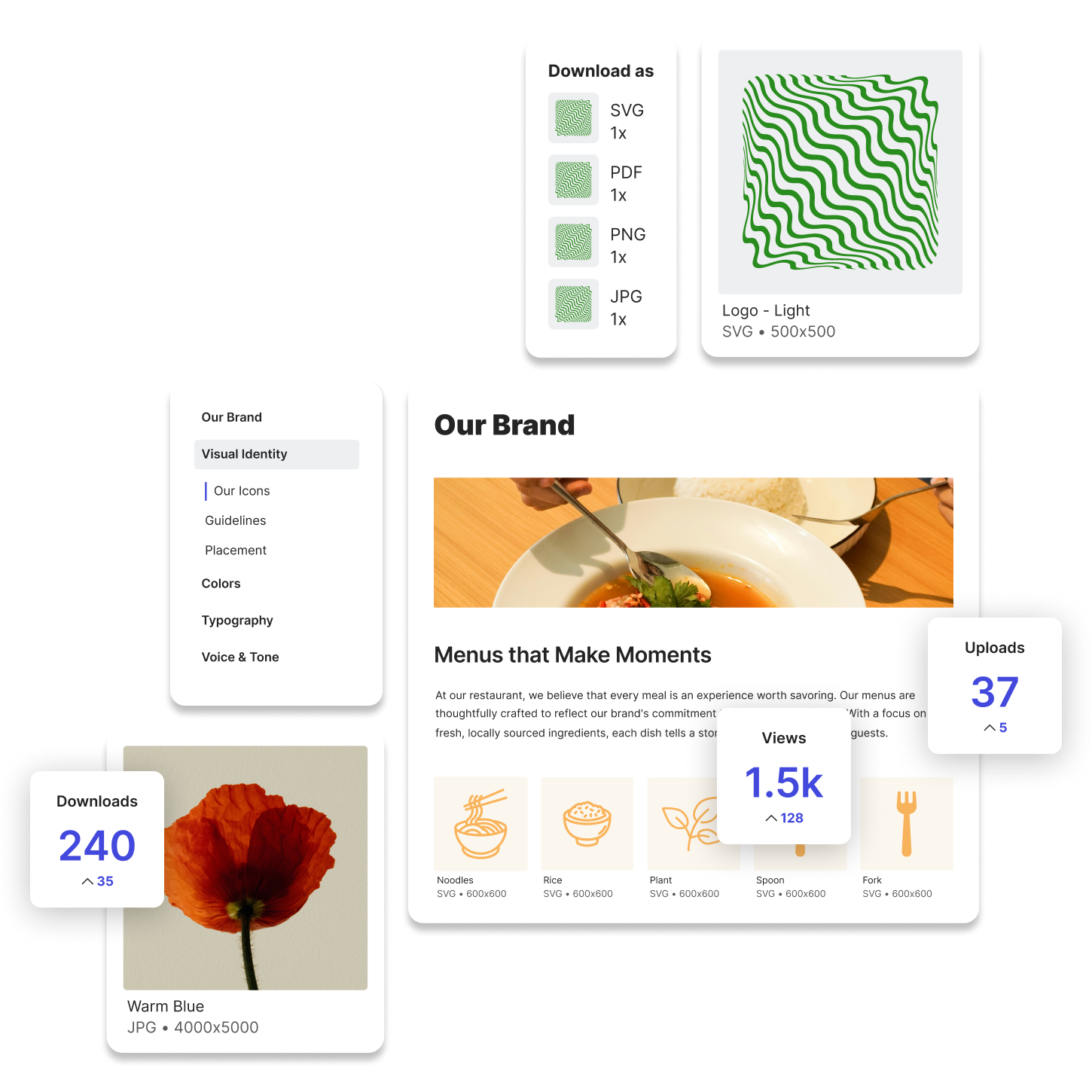
Lingo is built to help teams avoid these headaches by making brand asset management easy and intuitive. With Lingo, assets are organized into visual kits that make it simple to find what you need. Unlike traditional file storage, these kits combine content with context, so team members not only see the correct file, they also understand how to use it.
Here’s how it works:
- You upload your brand assets to Kits. Brand assets might be separated by brand, by state, by department, or more. We’re flexible to adapt to your needs.
- Each Kit includes details about the logo usage, iconography, typography, and more.
- Each asset can include a short description or usage note, helping non-designers make the right choices.
- You can organize Kits into Portals for different audiences, like press, internal teams, or partners.
- Assets are searchable, filterable, and version-controlled so you never worry about someone using the wrong file.
- And when someone needs a different file format, Lingo can automatically generate the right type. No design request needed.
Try Lingo for free.