Brand Management Software: Keeping Brands Consistent at Scale
As brands grow, so does the complexity of brand management and managing how they appear across campaigns, teams, and platforms. From product teams and marketers to agencies and sales reps, everyone interacts with brand assets in some way. Without a structured system in place, this often leads to inconsistencies, duplicated files, or outdated templates circulating throughout the organization. That is where brand management software comes in.
Brand management software gives your team a central place to store, organize, and share everything that defines your brand. It helps everyone stay on the same page and makes it easier to apply your brand consistently, no matter who is creating content.
What Brand Management Software Does
At its core, brand management tools provide one organized environment where all brand assets live. This includes more than just storing logos or templates. It allows teams to:
- Store brand assets like logos, typography, videos, and photography
- Define and publish brand guidelines
- Control user access and permissions
- Digital asset management version control history and prevent outdated asset use
- Support multiple formats and automatic file conversions
- Share branded content with internal or external users
It serves as both a creative workspace and a governance tool. Creative teams get efficiency. Marketing and leadership teams get confidence that the brand is being presented accurately.
Why Traditional Systems Fall Short
Many teams attempt to manage brand assets using shared drives, email, or project management tools. While these systems work in the early stages, they were not designed for brand governance.
As asset libraries grow and more teams rely on shared content, the cracks begin to show. Files are duplicated across folders. Teams ask for the same assets over and over. Partners use the wrong logo because the correct one was buried in an old email thread. These breakdowns are not just inconvenient; they erode brand trust and slow down execution.
Brand management software solves this by giving teams a structured, user-friendly way to find and use brand content correctly, every time.
How Lingo Supports Brand Management
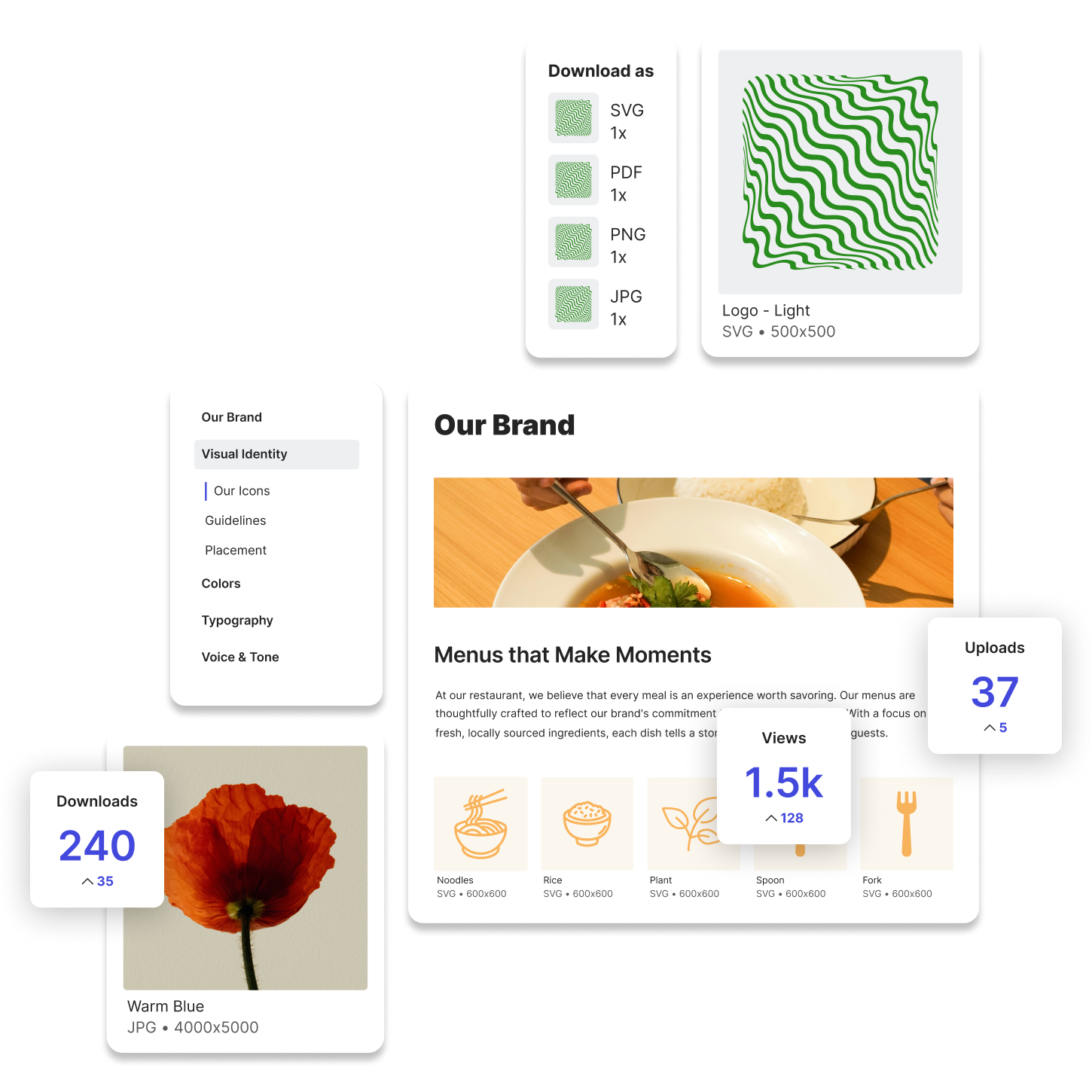
Lingo is purpose-built to simplify brand management for creative and marketing teams. It provides a flexible visual interface where assets and guidance live side by side. This means users can find the asset they need and instantly understand how to apply it.
In Lingo, you can:
- Create organized kits that group assets by campaign, audience, or format
- Include guidance next to each asset, such as spacing rules or usage notes
- Build branded portals for different user types, like internal teams or external partners
- Use search, filters, and tags to help users find exactly what they need
- Automatically offer assets in multiple formats to avoid repeat requests
Try Lingo for free.