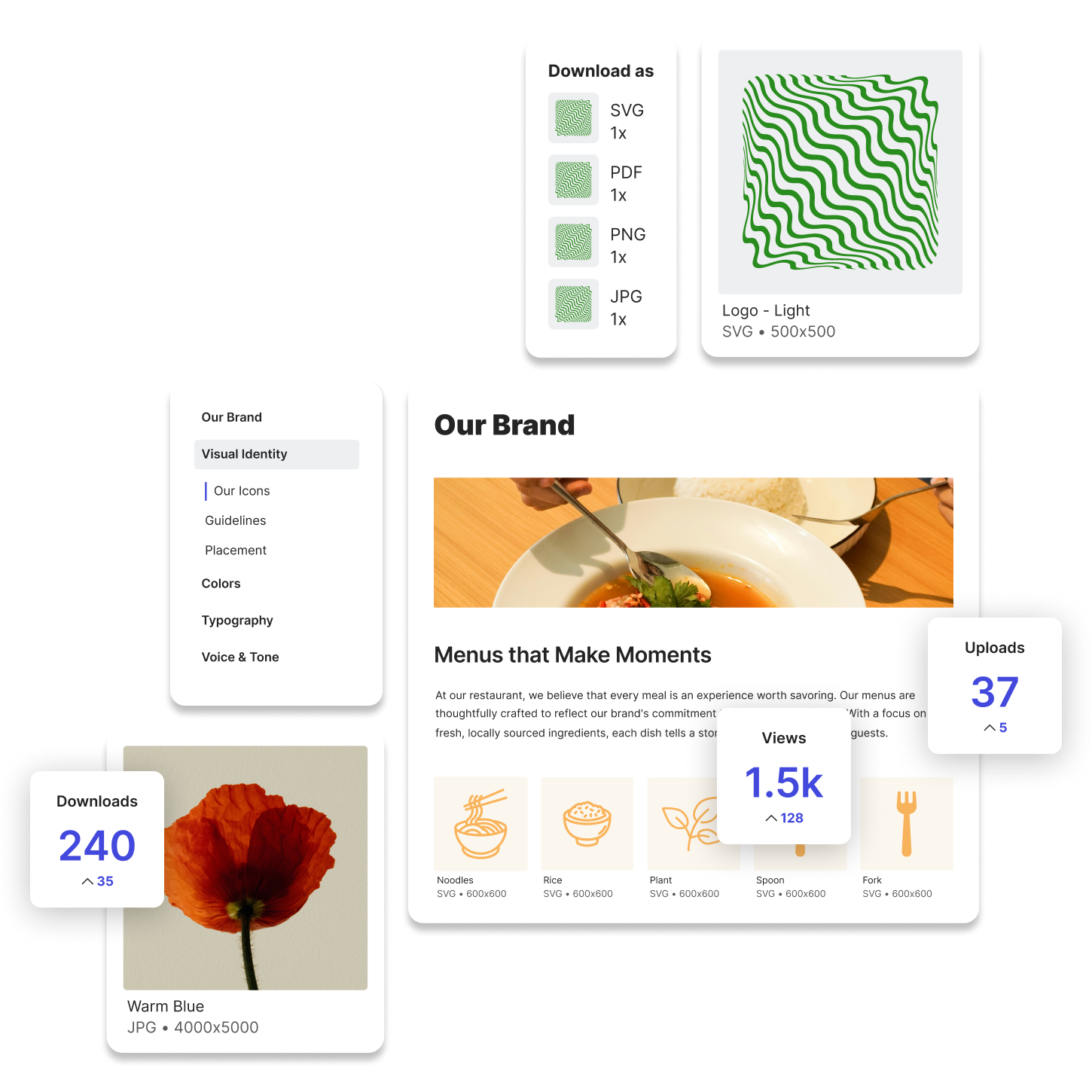
As organizations grow and brand touchpoints multiply, it becomes harder to keep everyone aligned. Marketing teams, designers, external partners, and agencies all need access to brand materials, but not everyone knows where to find them or how to use them correctly. Sharing files by email or scattered cloud folders leads to confusion, duplicated requests, and branding errors. This is where brand portals come in.
A brand portal acts as a centralized, always-current source of truth for everything related to your brand. It is not just a folder of files. It is a digital environment where assets and guidance are combined, making it easy for users to access multiple Kits at once, and thereby what they need to apply it with confidence.
A brand portal is more than just a place to download logos. It is a curated digital brand hub that reflects your brand’s identity and structure. While every portal can be customized, most include:
The beauty of a brand portal is that it gives users everything they need in one place, with clear structure and built-in context. Whether someone needs a press-ready logo, a social media template, or an updated brand font, they can find it quickly without needing to send a request.
In a digital asset management (DAM) platforms like Lingo, brand portals are a key way to simplify asset sharing, user rights, and governance. Rather than navigating a web of folders and links, users are presented with an organized, visual interface that makes finding assets easy and intuitive.
Lingo allows teams to build multiple portals tailored to different users. For example:
Each portal can be public, private, or password-protected, giving teams control over who sees what. Portals can also include real-time updates, so changes to a logo or template are instantly reflected in the experience. This eliminates outdated versions and ensures everyone is aligned.

Denison University uses Lingo to maintain brand consistency across a wide range of audiences, including internal teams, faculty, students, and external partners. To meet the needs of these diverse groups, Denison created two distinct brand portals — one internal and one public.
The internal portal is designed for university staff and faculty. It includes campaign templates, in-progress assets, and tools used for day-to-day communications across departments. This internal space helps keep working materials organized and ensures everyone is using assets that align with the university’s most up-to-date standards. It also supports operational efficiency by reducing repetitive asset requests to the design team.
The public-facing portal offers an external snapshot of the Denison brand. It includes logos, brand guidelines, image libraries, and design resources for press, partners, vendors, and students who need quick, reliable access to official materials. This allows anyone representing the university externally to find the correct files and follow the appropriate usage rules without needing to go through internal channels.
Segmenting their brand presence in this way allows Denison to offer both structure and flexibility. They can share relevant brand materials with each audience, while maintaining control over how different elements are used. The result is a more consistent content experience, fewer support requests, and a clear sense of ownership across departments.
When executed well, a brand portal becomes more than an internal resource. It becomes a strategic tool that strengthens your brand at every touchpoint. Some of the key benefits include:
Users can find what they need in seconds, not hours. No more email chains or Slack threads requesting logos.
Portals reduce confusion by clearly showing only the most recent, approved files. Version control is built in.
External partners and agencies can get what they need without repeated outreach to internal teams. The portal becomes their go-to destination.
A branded portal reflects the care and consistency of your brand. It leaves a better impression than a link to a shared drive.
Teams feel empowered to execute quickly and stay on brand. Designers spend less time answering questions and more time creating.
Instead of dumping everything into one folder, create Kits by function or by audience. For example, “Press Kit,” “Social Media Assets,” or “Internal Campaign Templates” would be a good example of “by function.” In the case of Denison University, they consider the audience when constructing their Kits. For example, “Brand Elements” is universal and is accessible both internally and publicly, whereas “Messaging Strategy Roadmap” is restricted to internal use only.
Do not assume users know what to do. A short line of instruction next to a logo or image helps ensure correct usage every time.
A brand portal is only valuable if it reflects the current brand. Update files and remove outdated versions regularly to maintain trust.
Use permissions to control visibility. Public-facing content can live in one portal, while internal materials are available only to your team.
Use tags, thumbnails, and clear labels. Visual clarity makes a big difference when someone is in a hurry to find the right file.
A brand portal is not just a storage space. It is the front door to your brand. It shapes how your team works, how your partners engage, and how your audience experiences your identity.
By giving teams and collaborators a single place to access brand content and understand how to use it, portals reduce errors, save time, and promote consistency. They make the brand easier to share, protect, and scale.
With a DAM like Lingo, brand portals become easy to set up, flexible to manage, and powerful to use. Your team spends less time digging for assets and more time doing work that moves the brand forward.