Brand Asset Management: What It Is and Why It Matters
Whether you're launching a brand from scratch or managing a growing library of assets across multiple teams, keeping everything organized and used correctly can feel like a moving target. Logos, templates, photos, and typography are constantly in play. If they’re scattered or outdated, your brand consistency takes a hit.
Brand asset management gives creative and marketing teams the structure they need to keep branding aligned, accessible, and ready to use at a moment’s notice.
Understanding Brand Asset Management
Every business has brand assets: logos, color palettes, photography, icons, slide decks, templates, and more. These assets aren’t just files; they are the visual and tonal representation of your brand in the world. Brand asset management is the discipline of organizing, storing, distributing, and maintaining these materials in a way that ensures consistency and clarity.
Without a structured way to manage them, teams run into common issues such as outdated files, incorrect logo usage, inconsistent design, and time lost searching through nested folders. Whether you’re a growing startup or a well-established enterprise, the risks of brand inconsistency increase as teams scale and more people create content.
Why It Matters in a DAM Context
Digital asset management systems bring structure to chaos. They centralize your content, but more importantly, in the case of brand asset management, they provide a single source of truth for all brand materials. This isn’t just about storage; it’s about enablement. When marketers need the latest event banner, or designers need access to icons or photography, a DAM ensures they can find exactly what they need, in the correct file format, with confidence that it's the latest, approved version.
The Problem with Traditional Solutions
Most companies start with cloud-based file storage such as Google Drive, Dropbox, or SharePoint. These platforms work fine for housing files, but they are not purpose-built for brand governance. They don’t pair content with the guidance needed to use it correctly. They are also not intuitive for non-creatives to navigate, often leading to bottlenecks where designers are repeatedly asked to dig up files or resend assets in the right size.
For example, a marketing associate might find an outdated logo in an old deck, or a sales team might use a social graphic with incorrect spacing. These errors dilute the brand’s impact and can lead to confusion, especially when assets are shared with external partners, press, or resellers.
How Lingo Streamlines Brand Asset Management
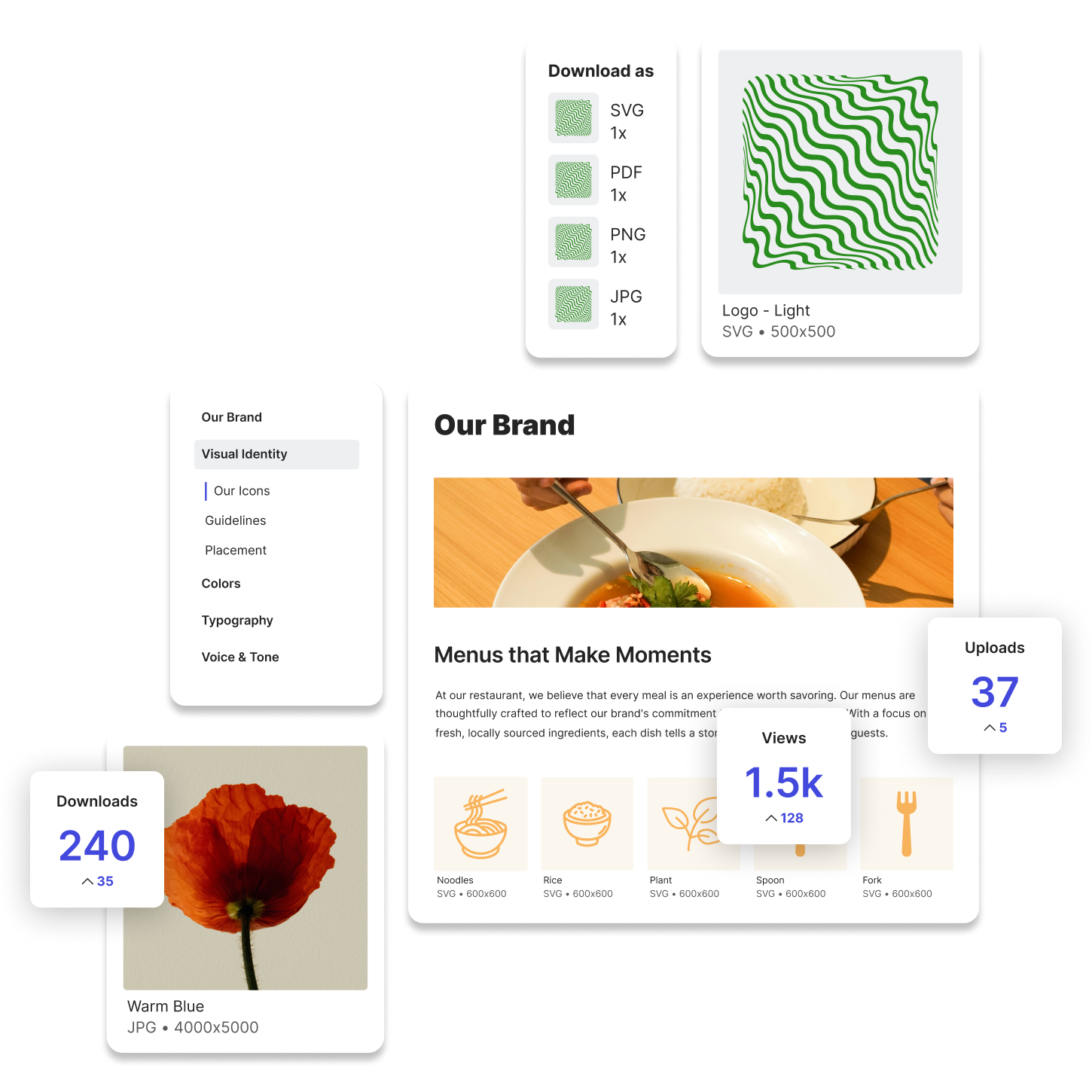
Lingo was built with brand asset management at its core. Unlike traditional DAMs that emphasize file hierarchy and storage architecture, Lingo brings the brand experience front and center. Its flexible, visual front end allows teams to pair content (assets) with context (how and when to use them). This is crucial because it’s not just about providing files; it’s about ensuring assets are used correctly.
With Lingo, you can:
- Create brand kits that group related assets like logos, color palettes, and photography together in meaningful, easy-to-navigate collections.
- Add usage guidance right alongside assets, so the moment someone downloads a logo, they also see when and how it should be used.
- Set access controls for internal teams or external partners, using private, public, or password-protected links.
Automatically convert files into the formats and sizes needed, eliminating repetitive requests for PNGs, JPGs, or resized versions.
Try Lingo for free.