What Are Digital Asset Management Workflows?
Digital Asset Management (DAM) workflows are the repeatable processes used to create, manage, review, approve, distribute, and archive digital assets within a DAM system. These workflows connect teams, tools, and content stages to ensure that assets are produced consistently, stored correctly, and used appropriately.
DAM workflows are not a single process. They are a series of interconnected steps that help creative and marketing teams move from asset creation to asset activation with fewer delays and fewer mistakes.
Why Digital Asset Management Workflows Matter
As organizations scale, their content volume grows and their teams become more distributed. In this environment, managing creative and brand assets is no longer about simply storing files. It is about ensuring the right people are involved at the right time, and that content is deployed with accuracy and consistency.
Without defined workflows, teams often face:
- Confusion about who owns what
- Redundant asset creation
- Misuse of outdated or unapproved content
- Delays in campaign launches
- Creative teams bogged down by repeated requests
Digital asset management workflows provide structure. They reduce friction by replacing ad-hoc processes with predictable systems that support both quality and speed.
How DAM Workflows Are Used Today
In modern organizations, DAM workflows vary by team, asset type, and channel. However, many include common stages such as:
- Content request or brief intake
- Creative development
- Internal review and approval
- Upload to the DAM platform
- Application of metadata or tags
- Usage guidance added (when and how to use)
- Distribution to internal teams or partners
- Archiving or expiration after use
Some DAM platforms offer workflow automation features such as approval routing, asset status indicators, and Kit version control. Others rely on integrations with project management tools to support upstream creative processes.
Regardless of tooling, the goal is the same: create clarity, reduce repetition, and improve the consistency and speed of asset delivery.
Why Digital Asset Management Workflows Matter to Lingo’s Audience
Lingo’s users are creative operators, designers, marketers, and brand managers. These are the people responsible for producing and maintaining high-quality branded content across digital and physical channels. For these users, workflow problems are not theoretical. They show up in the form of:
- Slack messages asking for a logo
- Email threads about missing templates
- Confusion about which version of a banner is approved
- Rebuilding assets that already exist
- Lost time searching folders or cloud drives
They need workflows that are flexible, visual, and easy to manage, especially in environments where teams are small, deadlines are tight, and creative work is always in motion.
Where Lingo Fits In
Lingo supports DAM workflows by making the final stages of content management more structured, visual, and self-serve. While it is not a workflow automation tool in the traditional sense, Lingo enables workflows by helping teams move from asset finalization to asset access and distribution with greater speed and clarity.
Here is how Lingo fits into modern DAM workflows:
Kit-based organization
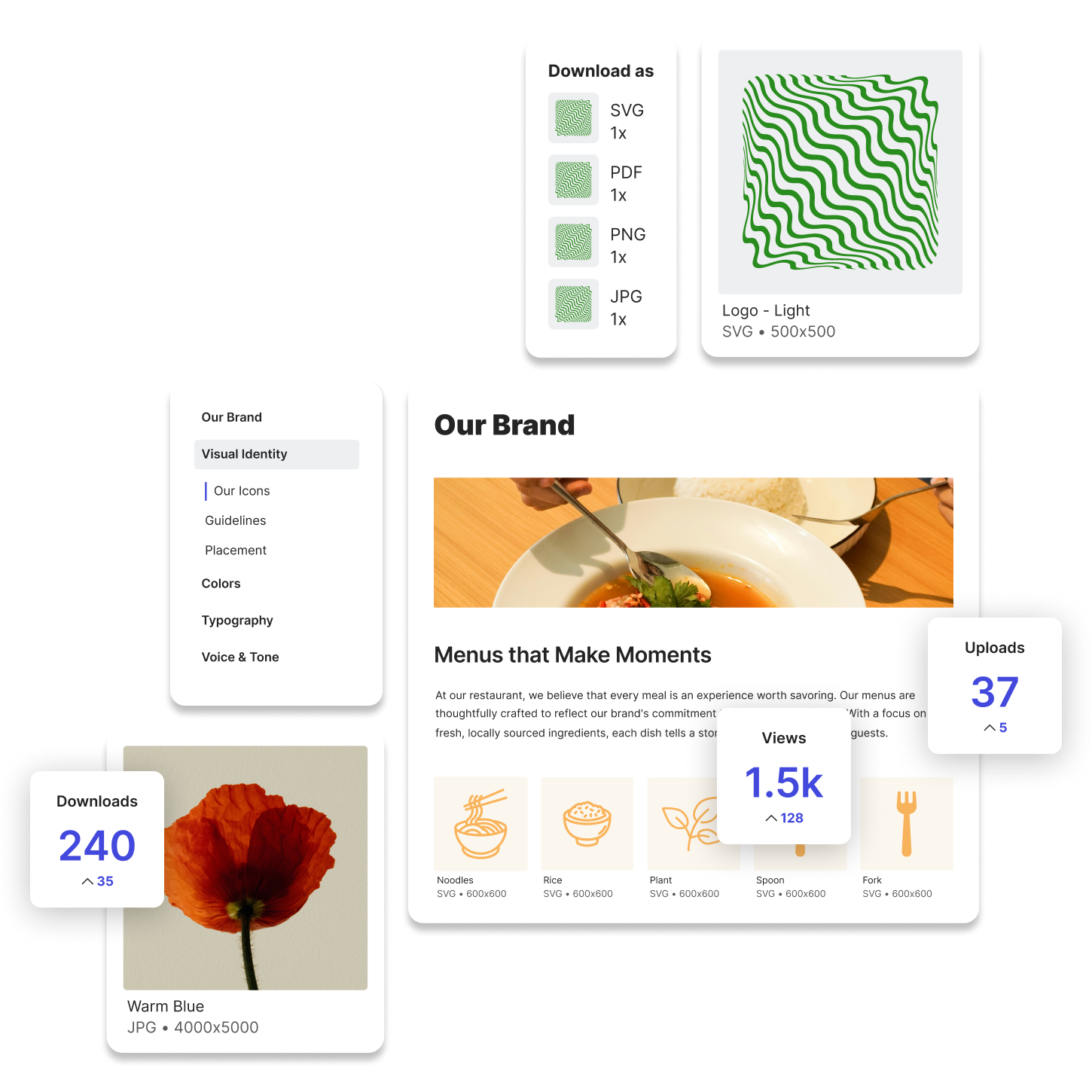
Once assets are approved, Lingo helps teams organize them into Kits. Each Kit acts as a curated collection of assets tied to a specific campaign, product, or function. These Kits are more than just folders. They provide:
- Visual previews
- Usage guidance
- Download-ready formats
- Descriptions or notes
Try Lingo for free.