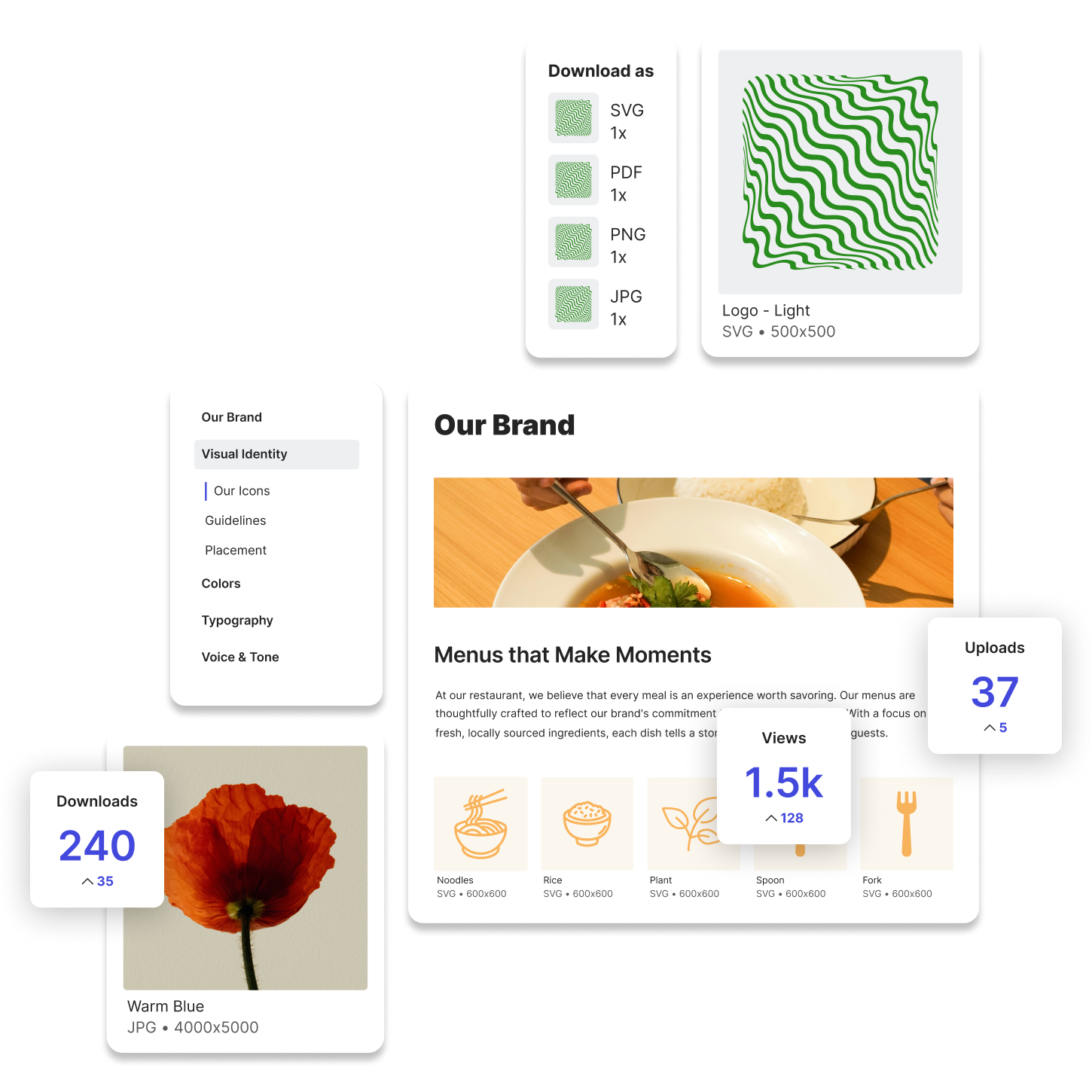
DAM storage refers to the way digital asset management platforms store, organize, and make digital content available to users. Unlike traditional file storage solutions, DAM storage is optimized for rich media assets such as images, videos, graphics, templates, and brand documents. These systems go beyond file storage by combining storage with metadata, permissions, search, and context.
At its core, DAM storage enables teams to keep their most valuable brand and marketing assets centralized, searchable, and governed within a secure cloud-based environment.
In growing organizations, especially those with distributed teams, assets can quickly become disorganized. Files may live across multiple systems like Google Drive, Dropbox, Figma, internal servers, or local desktops. This makes it difficult to locate the right version, ensure proper usage, or control access.
DAM storage addresses this challenge by providing:
It transforms file storage into a structured system that supports both creative collaboration and brand governance.
Lingo’s DAM platform is purpose-built to solve the challenges of storing and accessing brand assets in fast-moving environments. We’re known for aligning content and context in the same flexible canvas. Here’s how it improves the storage experience for creative and marketing teams:
Lingo organizes files into Kits, which are curated collections built around specific themes, campaigns, departments, or asset types. Unlike folders, Kits provide a visual and contextual way to store assets. Users can preview images, read descriptions, and access relevant guidelines all in one place.
Each Kit is structured for clarity, helping users find assets quickly without needing to dig through complex folder trees or remember specific file names.
All kits allow you to combine content and context together. This is really helpful as it helps reduce errors associated with having a PDF of the context and a ZIP file with the content.

Lingo doesn’t treat assets as static files. The digital media library includes a thumbnail preview, tags, and optional notes or usage instructions. This visual-first approach makes it easier for teams to browse, scan, and select the correct version.
Context is a key part of the storage experience. Files are not only visible, they’re explained. For example, a logo asset might include notes on which file type is best for print versus web, or which version is approved for co-branding.
Lingo is fully cloud-based, which means files are accessible from anywhere and always up to date. Users no longer have to worry about versioning issues, downloading the wrong asset, or asking design teams for the “latest file.”
All updates are reflected in real time, and old versions can be archived to avoid confusion.
Every asset stored in Lingo can be tagged with metadata, making search fast and intuitive. Teams can filter by file type, tag, keyword, or asset category. This is especially valuable for large libraries with seasonal content, multiple product lines, or assets that need to be reused frequently. Plus, you can use metadata to create a view and power a gallery, which is a collection of content that might be used as a look book or product catalog.
As companies grow, so does the volume of their content. Lingo’s DAM storage is designed to scale without losing structure. New Kits can be added as departments, products, or campaigns expand. Portals can group Kits for specific audiences, such as partners or regional teams.
The platform stays organized no matter how much content is added, ensuring that asset access remains fast and intuitive.
Not all users need access to all assets. Lingo’s permissions allow admins to control visibility at the Kit or Portal level. Whether it's a press-ready media kit or an internal campaign in development, teams can decide who gets access and in what capacity (view only, download requests, or admin).
This provides peace of mind for brand managers, legal teams, and marketing leads who need to protect proprietary or embargoed content.
Lingo’s approach to DAM storage is more than just putting files in the cloud. It is about making brand assets useful, discoverable, and safe. By combining visual organization, metadata tagging, secure access, and cloud delivery, Lingo helps companies move faster while keeping their brand consistent.
You don't want storage just for the sake of it. You want to empower teams to do their best work without second-guessing if they have the right file.
For creative and marketing teams that need clarity, speed, and control, Lingo offers DAM storage that works the way modern organizations actually operate.