Brand Style Guide: Bringing Brand Consistency to Life
Every brand needs guardrails to stay recognizable. Without them, your messaging and visuals can start to drift, especially as more people create content across teams, platforms, and partnerships. That is where a brand style guide becomes essential. It gives everyone a clear, shared understanding of how to present the brand with consistency and clarity.
Whether it is a logo placement rule or a preferred writing tone, a strong style guide empowers your team to make decisions that are on-brand, without requiring constant oversight from the design or marketing team.
What Is a Brand Style Guide?
A brand style guide is a document or system that outlines how a brand should be represented. It typically includes:
- Logo usage and variations
- Color palette with HEX, RGB, and CMYK values
- Typography rules and font pairings
- Image and photography direction
- Iconography and graphic elements
- Voice and tone guidelines for written content
- Examples of what to do and what to avoid
Some guides also include motion, accessibility, layout spacing, or brand values, depending on the complexity of the brand.
At its core, a style guide is about consistency. It gives everyone who touches your brand the confidence to use its visual and verbal elements the right way, every time.
Why Static Style Guides Fall Short
Many companies still use static PDFs to share their brand style guide. These documents often look beautiful but quickly become outdated or buried in folders. Designers update brand elements, but the guide may not reflect those changes. New hires may not know where to find it. Partners may not understand how to apply what it says.
This creates brand drift, which is when elements like logo sizing, color choices, or tone start to vary across campaigns or departments. Even small inconsistencies can erode trust in your brand and create friction between teams.
The style guide should not be a reference document that is used only during onboarding. It should be an active tool that is accessible and embedded into daily creative workflows.
How a DAM Like Lingo Puts Style Guides to Work
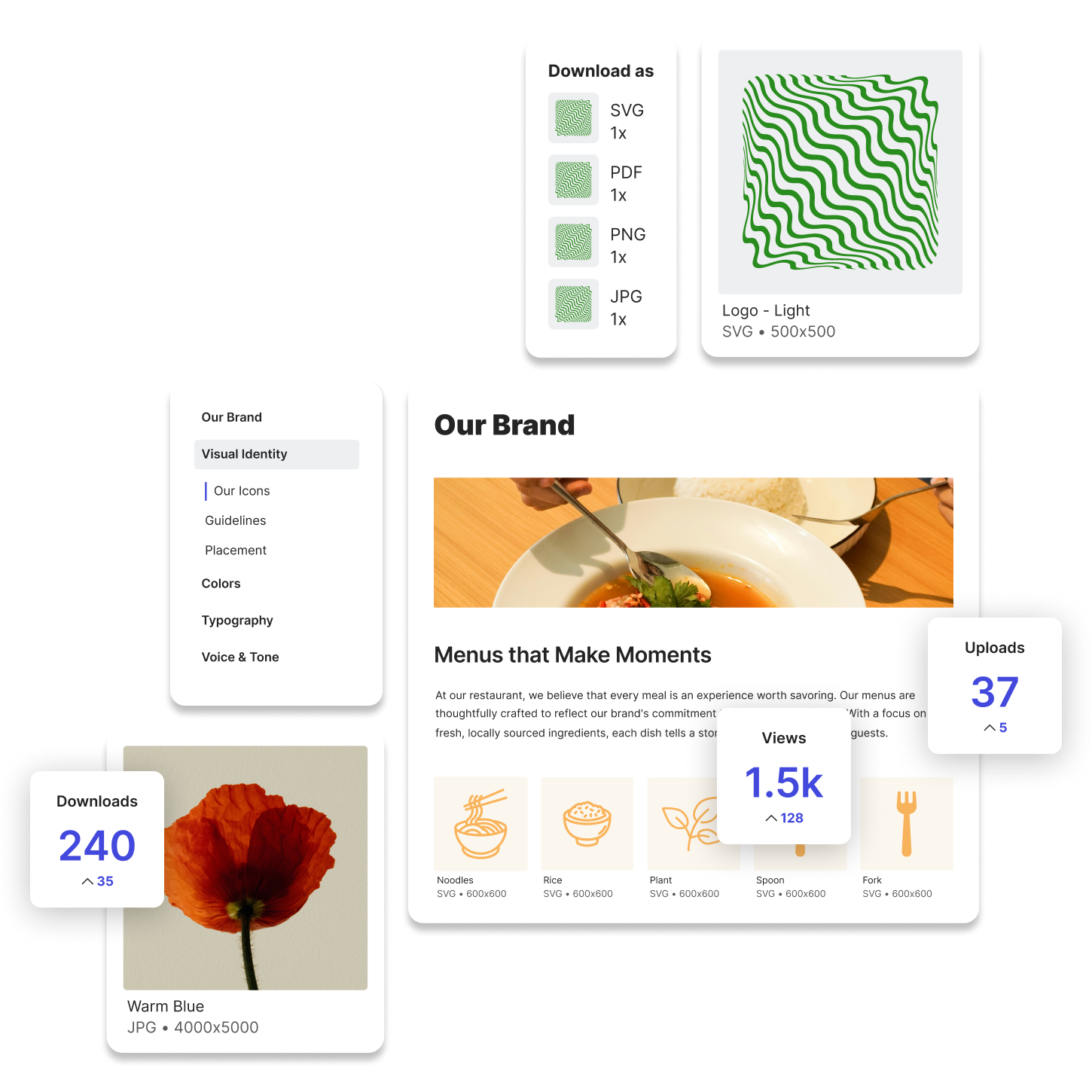
Lingo helps transform the style guide from a static resource into a living, usable part of your brand system. Rather than separating the rules from the content, Lingo allows teams to place guidance directly alongside brand assets in visual kits.
Instead of flipping between a PDF and a shared drive, users can:
- View logo usage guidelines and notes while downloading the file
- See color swatches with their code values inside the brand kit
- Access writing guidelines in the same space as marketing templates
- Read context notes attached to icons or photography libraries
- Search and filter assets by type, audience, or campaign
Try Lingo for free.