Usage guidelines are documented rules that define how brand assets, content, and materials should be used to ensure consistency, accuracy, and compliance across all platforms. These guidelines provide instructions on everything from logo placement and typography to tone of voice and imagery usage, helping businesses maintain a unified brand identity.
For marketers and designers, usage guidelines serve as a critical resource for ensuring that branding remains consistent across marketing campaigns, social media, advertising, and internal communications. Without clear guidelines, teams may unintentionally misuse brand assets, leading to inconsistencies that can weaken the overall brand image.
Usage guidelines are essential for maintaining a strong and recognizable brand. When multiple teams, agencies, or partners work on marketing and creative projects, having a defined set of rules helps ensure that all materials align with the company’s visual and messaging standards.
For example, a global retail brand may have different teams handling regional marketing campaigns. Without clear usage guidelines, a logo might be resized incorrectly, colors could be altered, or messaging could deviate from the brand’s established tone. By providing detailed brand guidelines, the company can prevent these inconsistencies and maintain a unified identity across all markets.
Guidelines should specify how logos can be used, including approved variations, placement rules, and minimum size requirements. They should also outline restrictions, such as not distorting or recoloring the logo.
Example: A technology company may require that its logo always appear on a white or dark blue background and never be placed over complex images.

Brands establish a specific set of colors that should be used across all materials. Usage guidelines define primary and secondary brand colors, along with details on color codes such as HEX, RGB, and CMYK values.
Example: A fashion brand may use a signature pastel color palette and require that no unapproved colors be introduced into marketing materials.
Typography guidelines specify which fonts should be used for headlines, body text, and subheadings. This helps ensure that text remains visually consistent across print and digital materials.
Example: A luxury brand may use an elegant serif font for headlines and a clean sans-serif font for body text to maintain a sophisticated look.
Usage guidelines should include rules for photography, illustrations, and iconography to ensure visual cohesion. These guidelines help teams select images that align with the brand’s tone and aesthetic.
Example: A wellness brand may require all marketing images to feature natural lighting, neutral backgrounds, and diverse representation to align with its brand values.
Written content plays a significant role in brand perception. Guidelines should outline how messaging should sound, including preferred vocabulary, sentence structure, and the level of formality.
Example: A playful and youth-focused brand like Duolingo may use a friendly, informal tone with light humor, while a financial services company may adopt a professional and informative voice.
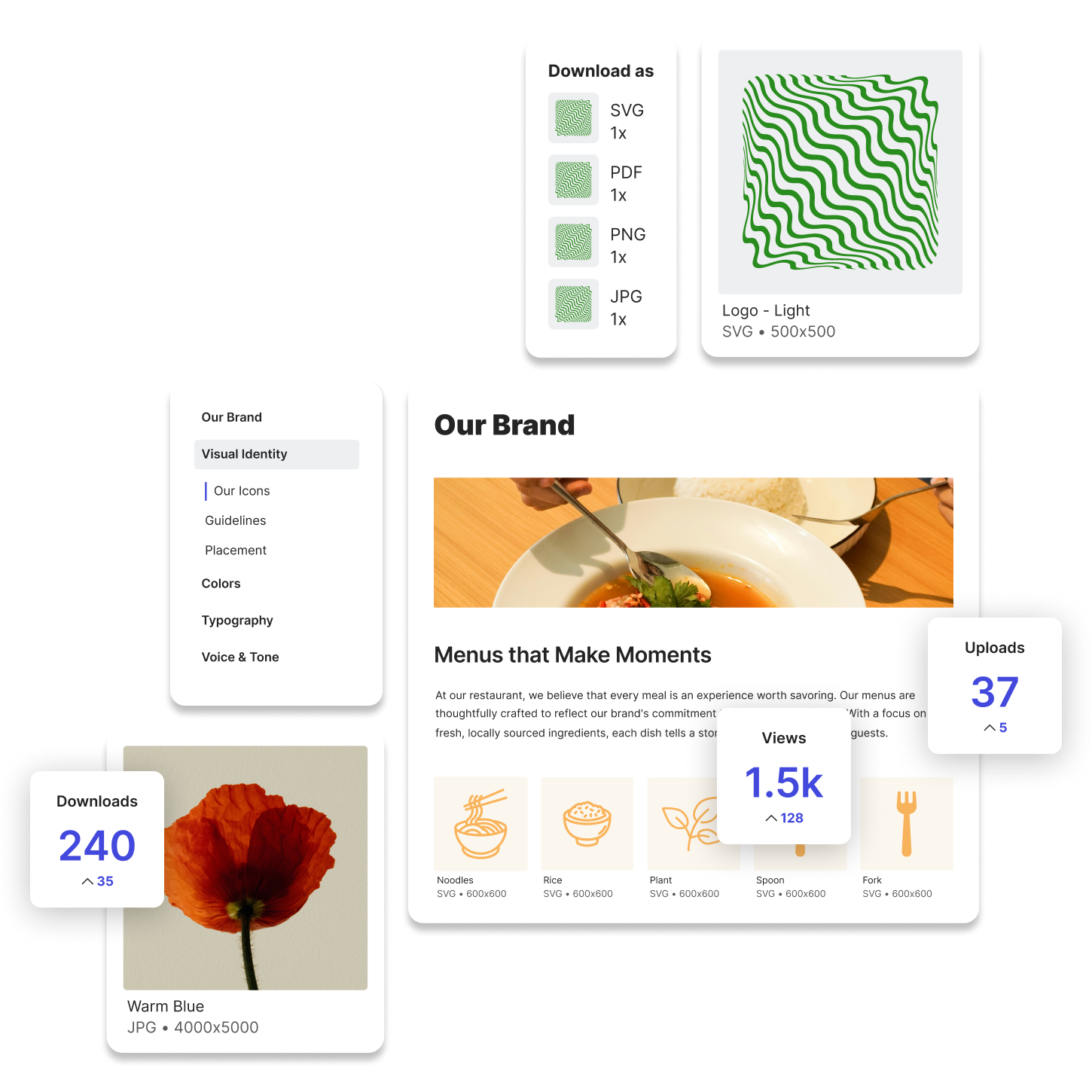
A digital asset management (DAM) system helps teams manage and enforce usage guidelines by storing them alongside brand assets. Instead of searching through PDFs or outdated documents, users can access the latest guidelines directly within the DAM platform.
For example, a marketing agency working with a corporate client can log into a DAM system to retrieve approved logos, brand color codes, and content templates. This ensures that all team members have access to the correct assets and instructions, reducing the risk of inconsistencies.
Usage guidelines are a fundamental part of any brand strategy, providing structure and clarity to marketing and creative efforts. By defining how brand assets should be used, businesses can maintain a cohesive and professional image across all channels.
For marketers and designers, following usage guidelines ensures that their work aligns with the brand’s vision, preventing costly errors and reinforcing a strong market presence. When combined with digital asset management, these guidelines become even more effective, offering an organized and accessible way to manage brand identity across teams and projects.