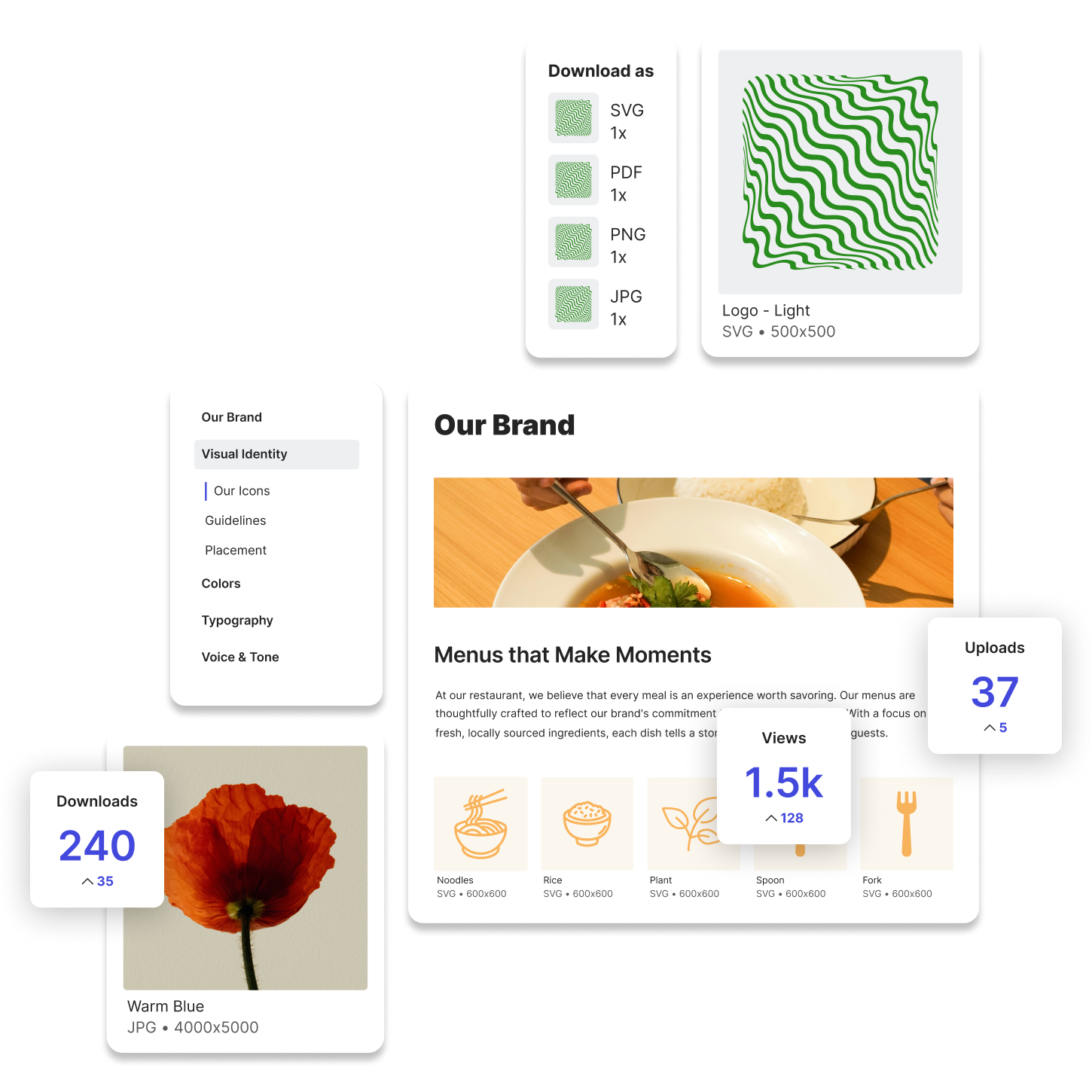
What is Brand Awareness?
Brand awareness is the level of familiarity and recognition that a target audience has with a brand, including its name, logo, messaging, and overall identity. It determines how easily people can recall and recognize a brand when making purchasing decisions. Strong brand awareness helps businesses build trust, attract new customers, and differentiate themselves from competitors.
Brand awareness is not just about recognition, it’s about creating positive associations and ensuring that a brand remains top-of-mind when consumers are looking for solutions in a specific industry. Companies with high brand awareness benefit from higher engagement, increased customer loyalty, and stronger word-of-mouth marketing.
The Two Types of Brand Awareness
1. Aided Brand Awareness
This refers to a consumer’s ability to recognize a brand when prompted with its name or logo. For example, if someone is asked whether they’ve heard of Lingo and they recognize it as a digital asset management platform, that’s aided awareness.
Some other examples include:
- Salesforce – Many professionals recognize it as a CRM solution but may not think of it immediately.
- Airbnb – People recognize the name when discussing vacation rentals, but they might think of "hotels" first.
- Dove – A well-known skincare brand, but consumers might think of "soap" before the brand name itself.
2. Unaided (Top-of-Mind) Brand Awareness
This occurs when consumers think of a brand on their own, without being prompted. For example, when someone automatically thinks of Nike when considering athletic shoes, that brand has strong top-of-mind awareness.
Some other examples include:
- Coca-Cola – A dominant name in soft drinks, often the first brand people associate with soda.
- Google – The first company that comes to mind for internet search.
- McDonald’s – In fast food, McDonald’s is one of the most instantly recognized global brands.
How Digital Asset Management (DAM) Supports Brand Awareness
For a brand to achieve strong awareness, its visual identity and messaging must remain consistent across all platforms and touchpoints. This is where digital asset management (DAM) plays a crucial role.
1. Ensuring Brand Consistency Across Channels
Brand awareness grows when consumers encounter consistent visuals, logos, and messaging across different platforms, whether it’s on a website, social media, advertisements, or product packaging. A DAM system ensures that:
- Teams always use approved logos, fonts, and images in marketing materials.
- Brand guidelines are easily accessible to all departments and partners.
- Old or outdated assets are eliminated, preventing inconsistencies.
2. Speeding Up Content Creation and Distribution
In today’s fast-paced digital landscape, brands must be able to quickly produce and distribute branded content to maintain visibility. DAM platforms help marketing teams:
- Retrieve and repurpose branded assets instantly for campaigns.
- Distribute pre-approved marketing materials to social media managers, advertisers, and content creators.
- Avoid duplicate work by ensuring all teams access a centralized asset library instead of requesting files from designers.
3. Strengthening Brand Visibility in Advertising and Media
Brand awareness is often built through paid and organic marketing efforts, including social media ads, PR campaigns, and influencer collaborations. A DAM system:
- Stores high-resolution, media-ready assets for press releases and news coverage.
- Helps advertising teams quickly access the right images and videos for campaigns.
- Ensures that brand visuals remain high-quality and on-brand across all platforms.
4. Supporting Global and Multi-Location Brand Expansion
For brands expanding into new markets or franchises, brand awareness must remain strong across different locations. DAM helps businesses:
- Maintain regional variations of logos, packaging, and advertising while keeping core branding intact.
- Provide teams in different locations with localized marketing materials while ensuring brand consistency.
- Prevent brand dilution by restricting access to only approved brand assets.
Try Lingo for free.