Strong brands do not happen by accident. They are built through repetition, clarity, and consistency across every touchpoint. Whether your team is developing a landing page, sending an email campaign, or creating social graphics, they rely on a set of creative standards to stay on brand. These standards are captured in your brand guidelines.
Brand guidelines are more than a style reference. They are a communication tool that keeps your teams aligned and your message cohesive. In today’s fast-moving, multi-channel marketing environment, they are essential.
While every organization’s guidelines will vary in depth and tone, most include a few core elements:
Some brands go even further, including audience personas, motion guidelines for video, or accessibility standards. Whether your brand is buttoned up or expressive, the goal is to give clear direction so creators can confidently produce content without reinventing the wheel.
Traditionally, brand guidelines have been shared as PDFs. Designers might export a polished document and store it on a shared drive or link it in an onboarding email. It looks great on day one, but it quickly becomes outdated or buried. People either cannot find it or do not trust it as the most recent version.
Even when someone does locate it, it may not help them apply the brand effectively. A PDF might explain which colors to use, but if those swatches are not easily accessible or linked to tools like Canva or Figma, the guidance gets overlooked. When people are unsure, they take shortcuts.
This is a common challenge for growing teams. They have invested time and effort defining their identity, but struggle to maintain it across the organization. The outcome is inconsistent branding, duplicated work, and a steady stream of requests asking for "the latest version" of everything.
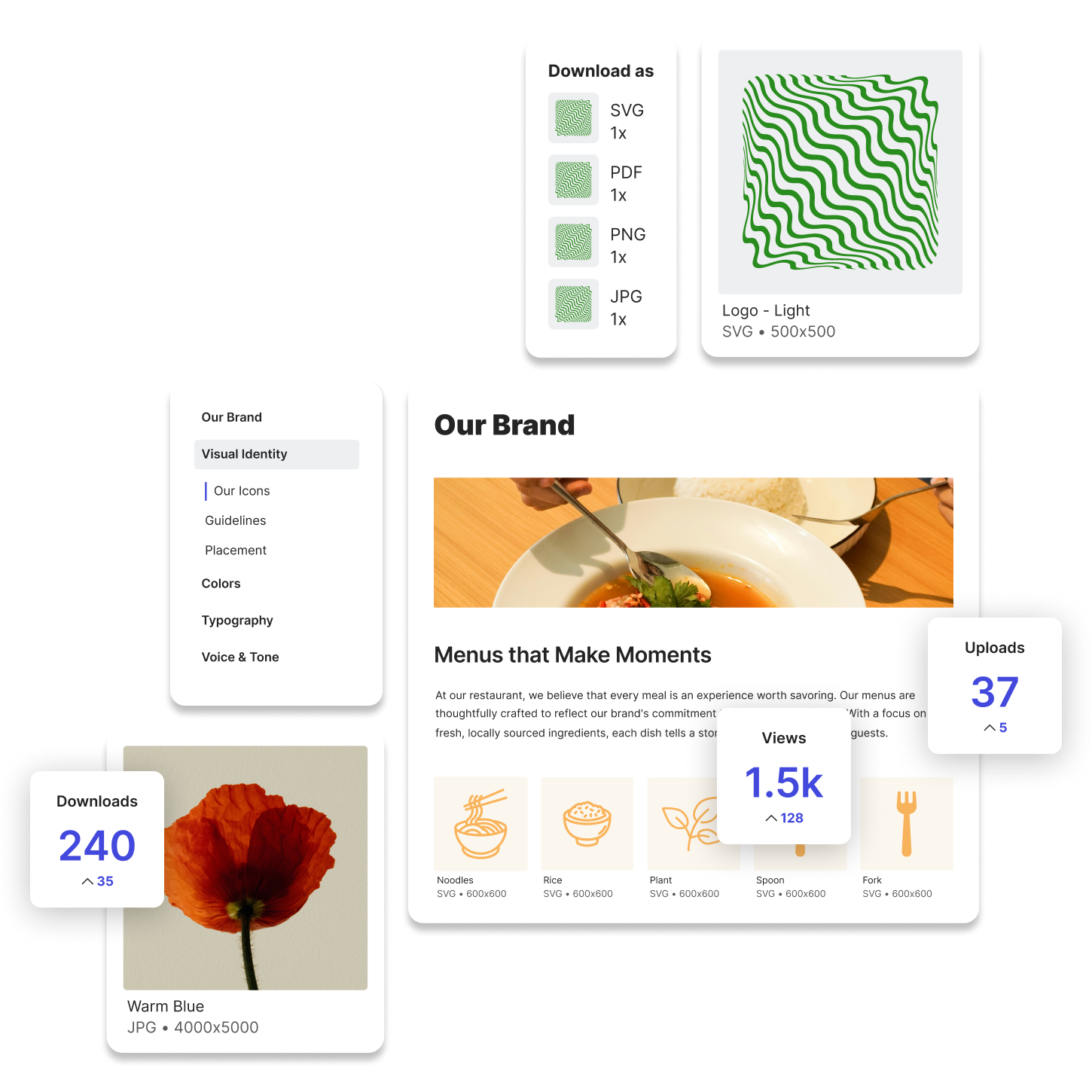
Digital asset management systems provide a more effective solution by combining brand guidelines and brand assets in one place. Instead of switching between folders, PDFs, and shared links, users can find the assets they need along with the information that tells them how to use those assets correctly.
Lingo takes this a step further by allowing you to pair content with context. That means you can show someone a logo file and explain exactly when and how to use it. You can organize guidelines into structured kits and portals, each tailored to a specific team, project, or external partner.

Assets can be tagged, versioned, and automatically converted to different formats, saving creative teams time and reducing mistakes. Most importantly, updates are made in one place and reflected everywhere, so your teams are always working with the most current guidance.
Louisiana State University Athletics is a great example of how digital brand guidelines work in practice. LSU's brand touches a wide range of audiences, from internal staff and athletes to media partners and fans. Maintaining consistency across that ecosystem is no small task.
Before using Lingo, LSU relied on static documents and scattered storage to manage their brand. Guidelines lived in PDFs. Assets were distributed by email or shared drives. It was hard to keep track of versions, and even harder to ensure everyone followed the right guidance.
With Lingo, LSU created a dynamic digital brand hub. Their teams can now browse kits that include logos, templates, photography, and color palettes. Each file is paired with clear usage guidance, which appears directly alongside the asset. Instead of guessing, users know exactly what is approved, what it should be used for, and how to apply it.
This setup has saved LSU countless hours, reduced asset requests, and allowed the athletics department to maintain a strong, consistent visual identity across all platforms.
Making the shift from static documents to a dynamic DAM unlocks several benefits:
Teams no longer need to ask for the correct logo or image format. They can access everything on their own, with built-in instructions.
Clear guidelines help teams move quicker. They know what to use and how to use it, which reduces back-and-forth and delays.
When everyone is working from the same source of truth, the risk of off-brand content drops significantly. A DAM that supports a digital brand guidelines platform is ideal for the strongest brand consistency.
Agencies, media, and contractors can be granted secure access to brand kits that include everything they need. There is no need to send assets manually or create temporary folders.
Avoid long paragraphs of brand philosophy. Instead, focus on practical, everyday guidance that helps your teams do their jobs. Use visuals, examples, and real use cases whenever possible.
Brands evolve. So should your guidelines. Lingo makes it easy to update files and instructions in real time, which keeps everyone aligned.
Not every team needs everything. Create kits based on roles or use cases. For example, press kits, campaign templates, or product-specific assets.
Clear guidelines help teams move quicker. They know what to use and how to use it, which reduces back-and-forth and delays.
When everyone is working from the same source of truth, the risk of off-brand content drops significantly.
Agencies, media, and contractors can be granted secure access to brand kits that include everything they need. There is no need to send assets manually or create temporary folders.
Avoid long paragraphs of brand philosophy. Instead, focus on practical, everyday guidance that helps your teams do their jobs. Use visuals, examples, and real use cases whenever possible.
Brands evolve. So should your guidelines. Lingo makes it easy to update files and instructions in real time, which keeps everyone aligned.
Not every team needs everything. Create kits based on roles or use cases. For example, press kits, campaign templates, or product-specific assets.