Edward Boatman • Oct 7th
Interactive brand guidelines are replacing static brand books. Instead of a dusty PDF buried in someone’s email, they give your team a live hub where assets and rules always stay current. For creative and marketing teams, this shift makes it easier to stay consistent, save time, and avoid costly mistakes.
Interactive brand guidelines are digital hubs that store your brand rules and assets in one place. They are always current, searchable, and easy for teams, partners, and agencies to use.
PDF brand books were the standard for years, but today they create more problems than they solve. They are hard to update, disconnected from the assets people actually need, and slow to use. Teams often forget to download the latest version or waste time scrolling through dozens of pages to find a color code or logo.
When brand rules are unclear, mistakes spread quickly. Brands that stay consistent across platforms can see a 10 to 20 percent revenue increase compared to those that don’t. PDFs make that consistency harder, not easier.
PDF guidelines and interactive guidelines take very different approaches. A PDF requires resending files every time there is an update, while an interactive hub updates once for everyone. Assets in a PDF often get separated or outdated, while interactive guidelines keep rules and assets side by side. PDFs are read-only and frequently ignored, but an interactive digital brand hub invites engagement with downloads, embeds, and templates.
Interactive brand guidelines give teams the clarity and speed they need to keep brands strong. Everyone sees the most up-to-date logos, templates, and messaging, which improves consistency at scale. Designers spend less time fielding requests for assets and more time creating.
Employees spend at least two hours each day searching for files when systems are poorly organized. Agencies, vendors, and media outlets also benefit because they get the right files and rules instantly, without waiting on emails. And built-in usage rules prevent old or off-brand content from slipping out.
“Brands don’t need another PDF. They need a living guide that shows people not just what the brand looks like, but how to use it the right way.” - Edward Boatman, CEO & Co-Founder of Lingo.
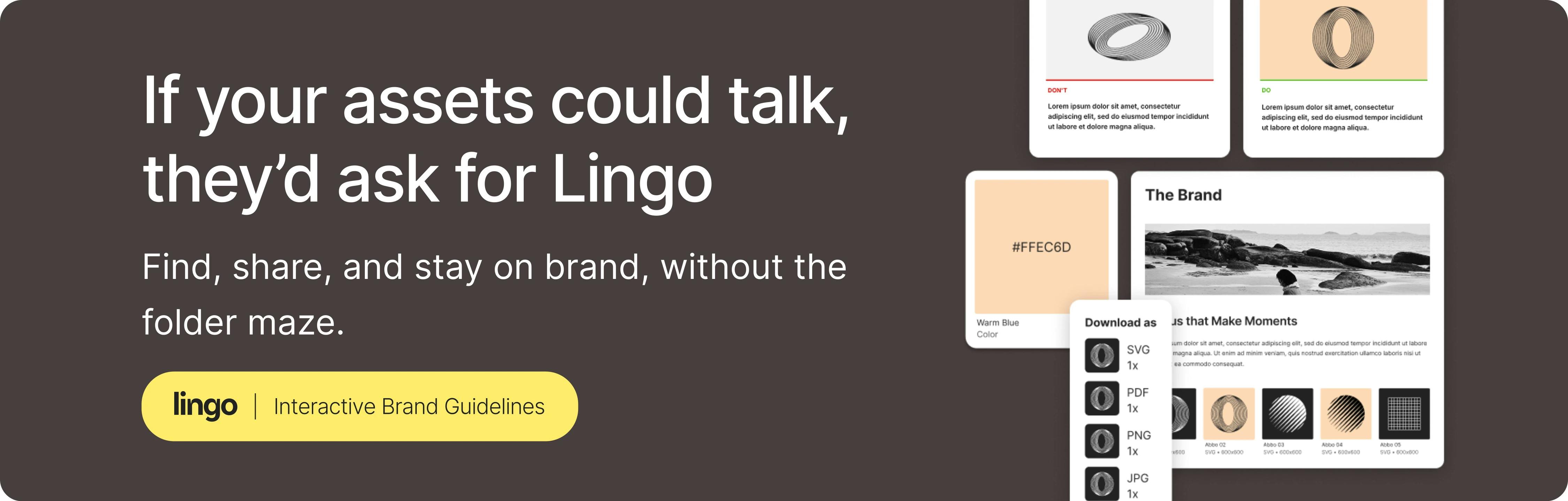
Interactive brand guidelines bring brand rules to life. Updates happen once and everyone sees them right away, eliminating the need to resend PDFs or decks. Guidelines link directly to logos, icons, and templates, so teams can download or embed the exact file they need.
Smart search and metadata save hours every week by helping people find the right asset quickly. Role-based access lets admins control what internal teams, agencies, or partners can see. Analytics and governance tools show which assets are being used and how often, which helps teams track adoption and prove ROI.
Lingo is more than a DAM system. It is a digital brand hub designed for creatives and marketers. It keeps guidelines and assets side by side, providing context to support your assets that PDFs never could.
Direct links make it easy to drop logos and visuals into websites, decks, and campaigns, while keeping them all universally updated. The interface is simple and visual, which drives adoption. Lingo is trusted by retail, higher education, athletics, and cannabis brands to manage brand complexity at scale.
“When you combine assets with live brand guidelines, you create clarity for every designer and partner. That’s why we built Lingo—to make brand consistency simple at scale.” - Edward Boatman, CEO & Co-Founder of Lingo.
Interactive brand guidelines are not limited to one sector. From retailers and universities to cannabis companies and local governments, organizations of all kinds use them to keep teams aligned and assets consistent. The examples below show how different industries put interactive guidelines to work.
Retail brands need brand assets ready for both in-store displays and digital campaigns. Hanni uses interactive brand guidelines to give their teams and partners quick access to updated visuals, ensuring seasonal and promotional campaigns stay consistent across every channel.
Cannabis companies face strict state-by-state regulations, which makes asset control critical. Curaleaf uses Lingo to centralize packaging files, product photography, and marketing materials so teams and dispensaries always use the most up-to-date and compliant versions.
Read the Curaleaf Case Study >>
Universities often struggle with brand consistency across departments. Denison University uses interactive brand guidelines to provide a central hub where logos, templates, and photography are easy to access. This makes it simpler for staff, students, and outside partners to represent the university consistently.
Read the Denison University Case Study >>
Athletics programs manage high volumes of photography, logos, and media requests. LSU Athletics built interactive guidelines with Lingo to deliver media kits and branded assets quickly to coaches, athletes, and press. The result is a smoother game-day operation and a consistent brand across all sports.
Read the LSU Athletics Case Study >>
Fast-growing tech companies like Lime need brand systems that scale globally. With interactive brand guidelines, Lime’s creative team keeps logos, illustrations, and campaign assets aligned across continents. This allows their small design team to maintain brand control while empowering local teams to move quickly.
Read the Lime Case Study >>
Finance brands must balance creativity with compliance. Sunday relies on interactive brand guidelines to keep teams aligned on visual standards, messaging, tone of voice, and approved templates. By centralizing these assets, they reduce the risk of off-brand or non-compliant content slipping into campaigns.
Public agencies often need to share assets with internal departments and external partners. Pitt County uses interactive brand guidelines to provide a clear, central hub for their communications team. This ensures consistent branding across community programs, public services, and press outreach.
Read the Pitt County Case Study >>
Unlike heavy enterprise DAM systems that can take months, interactive brand guidelines with Lingo can launch quickly. Many of our small to mid-size teams can have Lingo up and running in under a week or two. They audit current PDF brand books and remove outdated assets before passing them into Lingo.
Core assets are uploaded into Lingo and live brand guidelines are created in some instances on day one. Within the first month, Lingo has onboarded admins, reviewed analytics, and refined brand guidelines with the team. And teams have connected Lingo to tools like Figma and created direct links to act as a CDN for images on websites and other needs.
You can really pace yourself as quickly or slowly as you choose.
Interactive brand guidelines connect content and context with your assets, making interactive brand guidelines easier to follow than PDFs. They save time, reduce errors, and support compliance, especially with distributed teams, vendors, and media contacts. Most importantly, they make brand consistency simple, which is proven to drive revenue growth. With Lingo, teams of any size can create interactive brand guidelines without the headaches of static documents.
They are online hubs that keep your rules, assets, and templates in one place. Unlike PDFs, they update instantly and are searchable.
PDFs get outdated fast and do not connect to assets. Interactive guidelines ensure your team and partners always have the right files and rules.
Yes. With permissions and version control, they ensure only approved, current assets are used.
Interactive platforms like Lingo are the modern choice because they link assets directly to rules, making them easy to follow and use.
Most teams can launch interactive basic brand guidelines in under a week with a structured rollout plan. If you come in with more robust guidelines, it will take a little longer to implement but Lingo makes it easy to align content and context together for all brand teams.
Google Drive and PDFs were never built for the pace of modern creative work. Interactive brand guidelines put your rules and assets in one place, make them easy to find, and help teams stay consistent. For enterprises, retailers, schools, and regulated industries, Lingo delivers a digital brand hub that scales with your team and protects your brand everywhere.
Start your free trial of Lingo and see how easy it is to create interactive brand guidelines your whole team will actually use.