What Are Digital Asset Management Services?
Digital Asset Management services are the people-powered and process-driven layers that support the setup, optimization, and ongoing success of a DAM platform. These services typically include onboarding, asset organization, metadata planning, brand governance, system training, and integration support. While the DAM software provides the foundation, services ensure that the system is actually used, trusted, and maintained.
Think of DAM services as the operational muscle behind the platform. They help turn a static file repository into a structured, searchable, and scalable system that improves how teams manage creative and brand assets.
Why Digital Asset Management Services Matter
Most organizations adopt a DAM to solve clear problems: disorganized content, inconsistent branding, repeated asset requests, and creative bottlenecks. But adopting a DAM is not just a software decision. It requires thoughtful setup, consistent organization, and cross-team adoption.
DAM services help teams:
- Launch faster with a clean, usable structure
- Create clarity around who owns what and who sees what
- Embed brand guidance where it is needed most
- Train teams to use the system correctly from day one
- Avoid shelfware by building a DAM that matches real workflows
Without these services, even the best DAM platform can become a dumping ground for files or a tool that only one or two people know how to use.
How Digital Asset Management Services Are Used Today
Today, DAM services come in many forms. Some organizations hire outside consultants to guide implementation. Others lean on internal brand and marketing ops teams to manage setup and onboarding. Some DAM vendors include strategic services in their offering, while others provide only the platform.
The most common DAM service areas include:
- Implementation planning: Mapping how the DAM should be organized around teams, products, or campaigns
- Asset migration and cleanup: Moving content from shared drives, renaming files, and removing duplicates
- Metadata and taxonomy design: Creating a tagging system that supports fast search and easy filtering
- Brand guideline embedding: Placing visual and written brand guidance directly within the DAM
- Training and enablement: Teaching internal teams and external partners how to use the system effectively
While some companies benefit from highly customized service engagements, others need something lighter. The key is to match the services to the team’s actual needs and bandwidth.
Why Digital Asset Management Services Matter to Marketers and Designers
Lingo’s audience includes designers, marketers, brand managers, and creative operators. These are fast-moving teams who are often responsible for scaling content and maintaining consistency with lean resources. For them, time is limited and creative energy is valuable. They do not need a six-month rollout or a rigid, top-down deployment plan.
Lingo’s users are often looking for a system that can:
- Get set up quickly without IT dependency
- Stay clean and organized as new assets are added
- Empower non-designers to find and use content correctly
- Adapt as the brand evolves
In this context, DAM services are not optional. They are the difference between adoption and abandonment. Whether built into the product management experience or delivered through lightweight onboarding support, services help users get value without becoming administrators.
Where Lingo Fits In
Lingo was designed to reduce the burden of DAM implementation and maintenance. Many of the services that would normally require outside support are built directly into the product or supported by Lingo’s team.
Here is how Lingo approaches digital asset management services in a way that aligns with how creative teams actually work:
Quick, visual setup
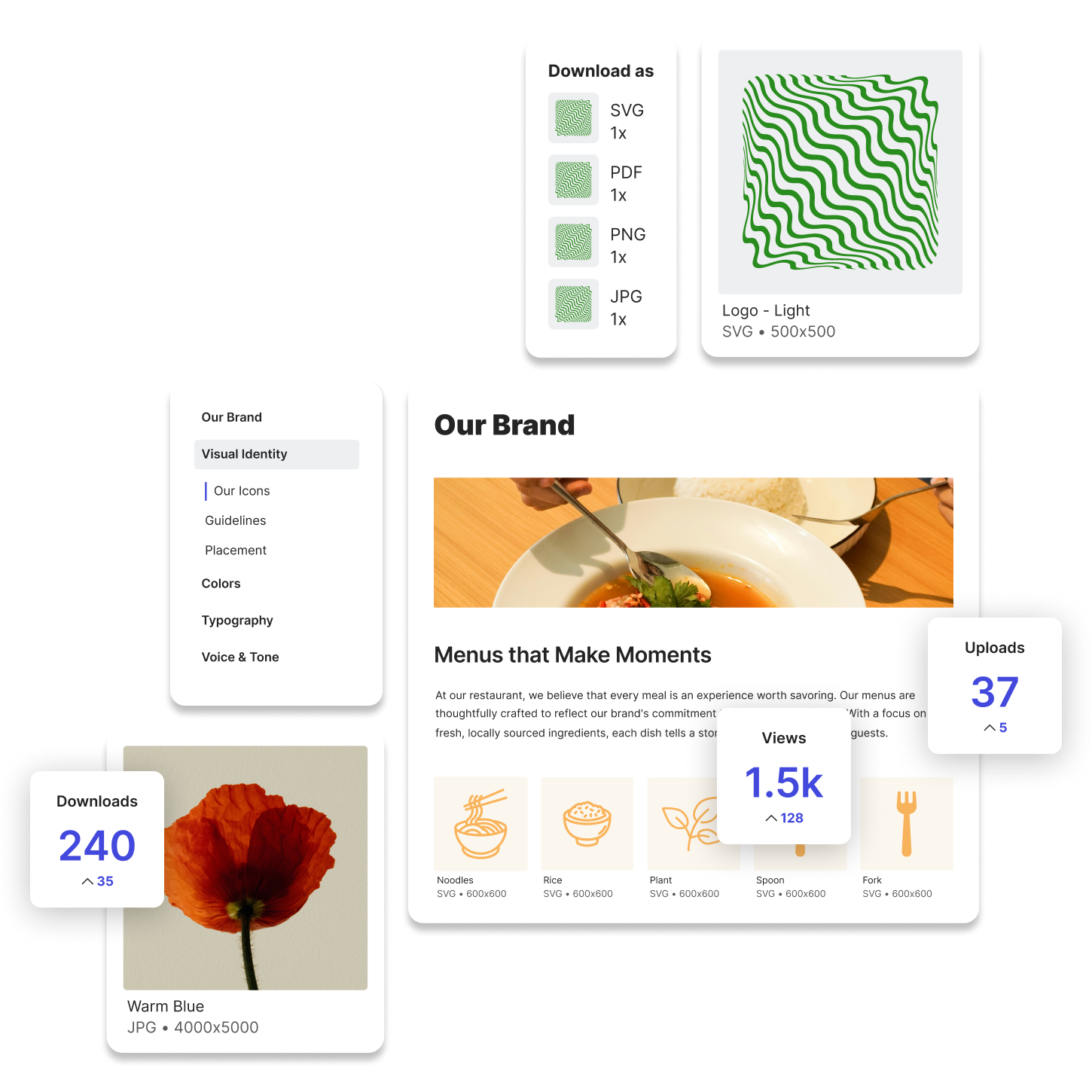
Lingo uses Kits to organize content into clear, visual collections. Setting up a Kit is fast and intuitive, with drag-and-drop functionality, thumbnails, and custom notes. Unlike folder systems, Kits are designed to reflect how creative professionals think and search.
All assets go into an asset library and from the asset library, you choose what kits that asset should belong to. This is different from a structured folder solution because a single asset can be uploaded once but appear in several different kits. Likewise, kits feed portals, meaning a single kit can appear in several portals.
With this setup, you're using DAM as digital media library software that powers a visual interface, which makes it easier for others to find visual files at scale. This is a much more intuitive way to think about asset management.
This removes the need for external configuration or weeks of structural planning. Teams can go from zero to a usable DAM in hours instead of days or weeks.
Embedded brand guidance
One of the most valuable services in DAM is embedding brand guidelines where they matter. Lingo makes this easy by allowing teams to add context directly into Kits. This might include:
- Instructions on when and how to use an asset
- Legal or compliance disclaimers
- Logo usage rules or placement guides
- Color palettes, font support and guidance
Try Lingo for free.