How Digital Asset Management Organizes Modern Brands
Digital Asset Management (DAM) is the process of storing, organizing, managing, and distributing digital assets in a centralized system. These assets include logos, videos, images, documents, marketing collateral, design files, product photography, brand guidelines, templates, and more.
DAM provides structure and accessibility for these assets by making them searchable, secure, and consistently available to the right people. More than a storage solution, DAM is a strategic tool that supports brand consistency, operational efficiency, and creative collaboration across departments and stakeholders.
Why Digital Asset Management Exists
As organizations scale, the number of digital assets they produce increases rapidly. Without a dedicated system, assets end up spread across cloud drives, desktop folders, email threads, or lost in old versions. This creates unnecessary asset requests, redundant work, inconsistent branding, and time wasted searching for the right file.
Digital Asset Management solves this by giving teams one place to access approved, up-to-date content. It supports brand governance while reducing dependency on designers, creative teams, or marketing leaders to locate and distribute files.
What Makes a DAM System Different From File Storage
Unlike tools like Dropbox, Google Drive, or OneDrive, a DAM platform is purpose-built for managing rich media with visual previews, embedded metadata, permissions control, and built-in usage guidance. Key differences include:
- Asset tagging, categorization, and metadata for fast search
- Visual browsing and previews for better discovery
- Role-based permissions and access controls
- Version control and expiration management
- Embedded guidelines and context for asset usage
A digital asset management system turns disorganized assets into a curated, governed environment that supports efficient content use.
Who Uses Digital Asset Management
DAM is used across many roles and industries. Common user types include:
- Designers who create brand assets and want to protect creative integrity
- Marketing teams who deploy campaigns and need approved content fast
- Sales and field teams who rely on up-to-date presentations and visuals
- Partners and vendors who need access to product photos, logos, or templates
- Brand managers who ensure consistency across departments and markets
The system serves as a source of truth for all brand-facing content, regardless of who is using it or where they are located.
Lingo’s Approach to Digital Asset Management
Lingo is a modern DAM platform designed for teams who want to organize, share, and scale their creative and brand assets without adding complexity.
Here’s how Lingo delivers on the core value of Digital Asset Management:
Kits for visual, organized access
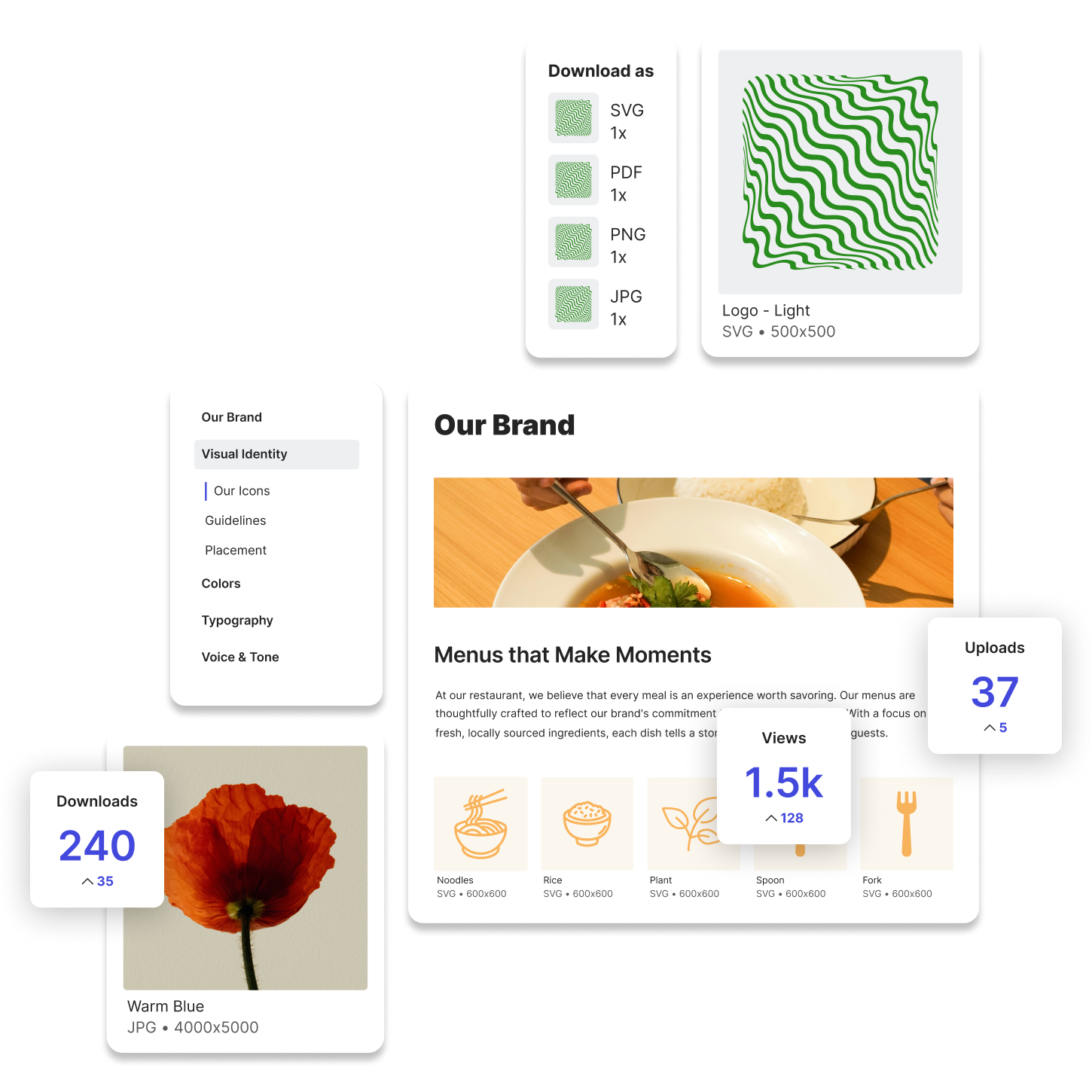
Lingo organizes content into Kits, which are curated collections of assets grouped by campaign, department, brand, theme, or use case. Kits are easier to navigate than folders and provide visual previews, metadata, and guidance all in one place.
This helps users find what they need faster, while giving administrators more control over how assets are presented and accessed.
Try Lingo for free.