What is Cloud Digital Asset Management?
Cloud Digital Asset Management (Cloud DAM) is a centralized, online system that allows organizations to store, organize, access, manage, and distribute digital assets in the cloud. These assets typically include logos, marketing collateral, sales materials, images, videos, templates, PDFs, and other brand-related files. A cloud-based DAM eliminates the need for on-premise servers and enables real-time collaboration, permission control, and secure sharing, all within an accessible, scalable platform.
But defining Cloud DAM only scratches the surface. At its core, it's about solving operational friction. It’s about ensuring everyone, from a junior designer to a channel partner, has access to the correct version of a file, at the right time, in the right format, and with the right usage context.
Why Cloud DAM Matters More Than Ever
Modern teams are flooded with content. Designers create, marketers deploy, partners adapt, and sales teams rely on timely visuals and documents. Without a centralized, intelligent system to manage this content, brands end up suffering from version control issues, lost productivity, brand inconsistency, and manual asset requests that interrupt creative flow.
This is where Cloud DAM comes in. It serves as the operational backbone for digital asset control, empowering teams with visibility, efficiency, and autonomy. But while the DAM category is mature, many solutions are overly complex or bloated with features that SMBs and mid-market companies don’t need. That’s where Lingo becomes more than just a DAM. It becomes a right-sized solution built to solve real-world operational headaches.
Common Problems That Lead Teams to Cloud DAM
Before diving into how Lingo addresses these problems, it’s helpful to surface the challenges that lead organizations to seek a Cloud DAM in the first place.
Dispersed and disorganized asset storage
Teams often rely on Google Drive, Dropbox, SharePoint, or desktop folders to manage brand assets. These systems were not designed with digital asset governance in mind. Files go missing, folder structures get outdated, and no one is quite sure which version is the most recent.
Version confusion and brand inconsistency
Marketing and design teams routinely deal with off-brand decks, misused logos, and outdated templates being distributed across the company. Static PDFs containing brand guidelines often go ignored or unused entirely, and assets are shared without context for how they should be used.
Endless asset requests and creative interruptions
Designers spend a disproportionate amount of time responding to asset requests, finding links, resizing images, or granting access to files buried in personal cloud storage. These distractions reduce creative content output and stall broader team momentum.
Difficulty distributing assets externally
Sharing brand assets with resellers, press, or external partners becomes a manual process of sending WeTransfer links, sharing folders, or attaching large files to email. None of these approaches offer proper permission control or the ability to marry content with usage guidance.
Overly complex DAM solutions
Many DAMs promise the world, but once deployed, they create more friction than they solve. For smaller teams or mid-sized businesses, enterprise-grade DAM platforms often introduce overwhelming interfaces, unnecessary workflows, and a heavy lift in onboarding and maintenance.
How Lingo Solves These Problems With Its Cloud DAM
Lingo was purpose-built to address the exact pain points that modern creative, marketing, and brand teams face. Here's how it stands apart as a Cloud Digital Asset Management platform, not in theory, but in execution.
Centralized access without the chaos
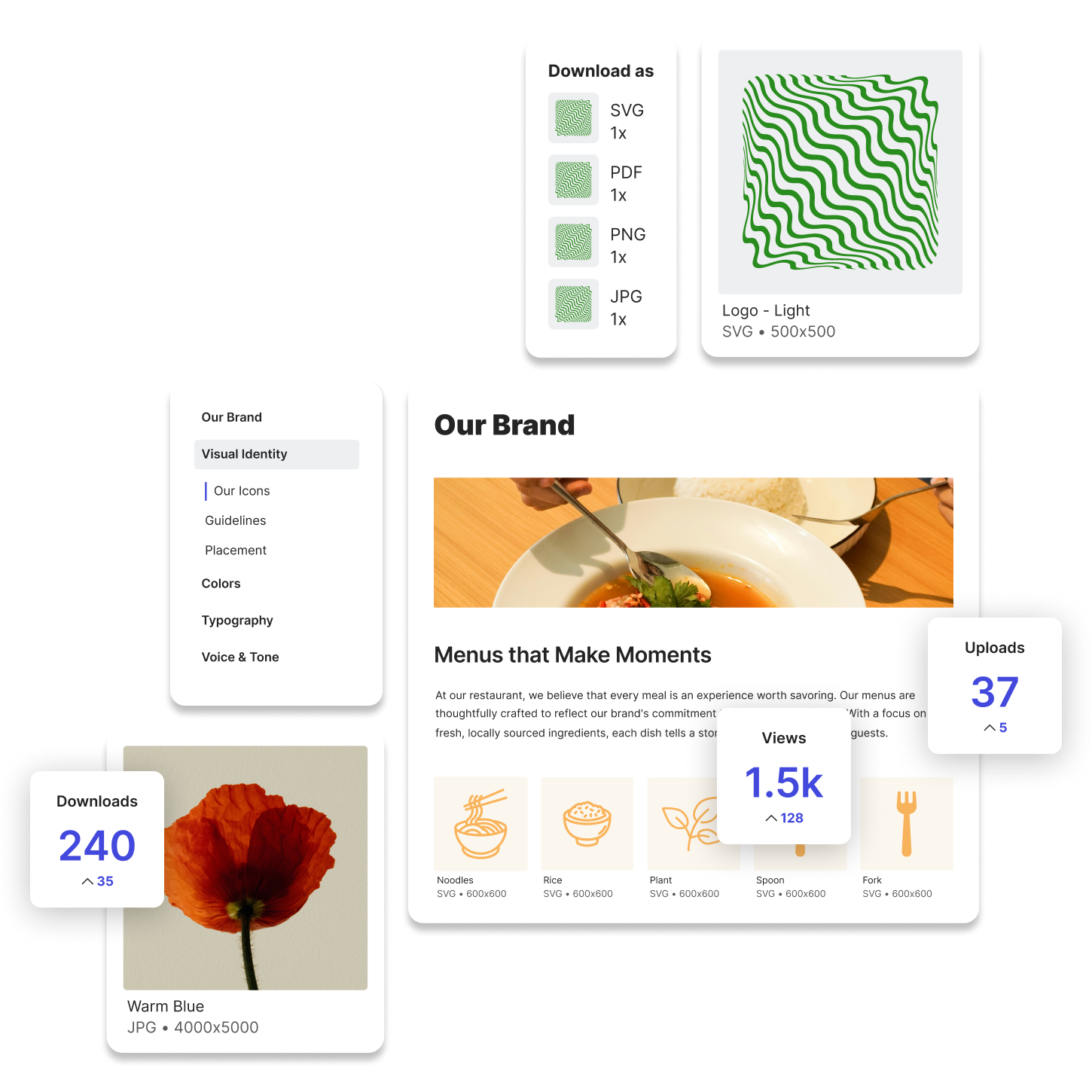
At the core of Lingo is a centralized cloud-based asset hub. Assets live in organized, searchable Kits. Each one functions as a container for brand-approved files. Whether it's logos, videos, product photos, or brand templates, everything has a home in Lingo. Users don’t dig through nested folders. They search, browse, and find exactly what they need in seconds.
Every file is searchable by metadata, tags, file name, and visual thumbnail. A visual-first interface that was designed for how creative professionals actually look for assets.
Try Lingo for free.