Edward Boatman • Apr 14th
If you're running marketing or operations at a multi-state cannabis company, you already know the drill. Somewhere on your desktop, or worse, shared across a Google Drive folder nobody's fully updated in three months, there's a spreadsheet. It has columns for strain art, product names, terpene profiles, effects, flavor notes, brand names, state-specific descriptions, and about a dozen other fields that someone has to manually enter. And update. And re-enter when the packaging changes in Missouri but not in Massachusetts. And, chances are, you’re the one updating it.
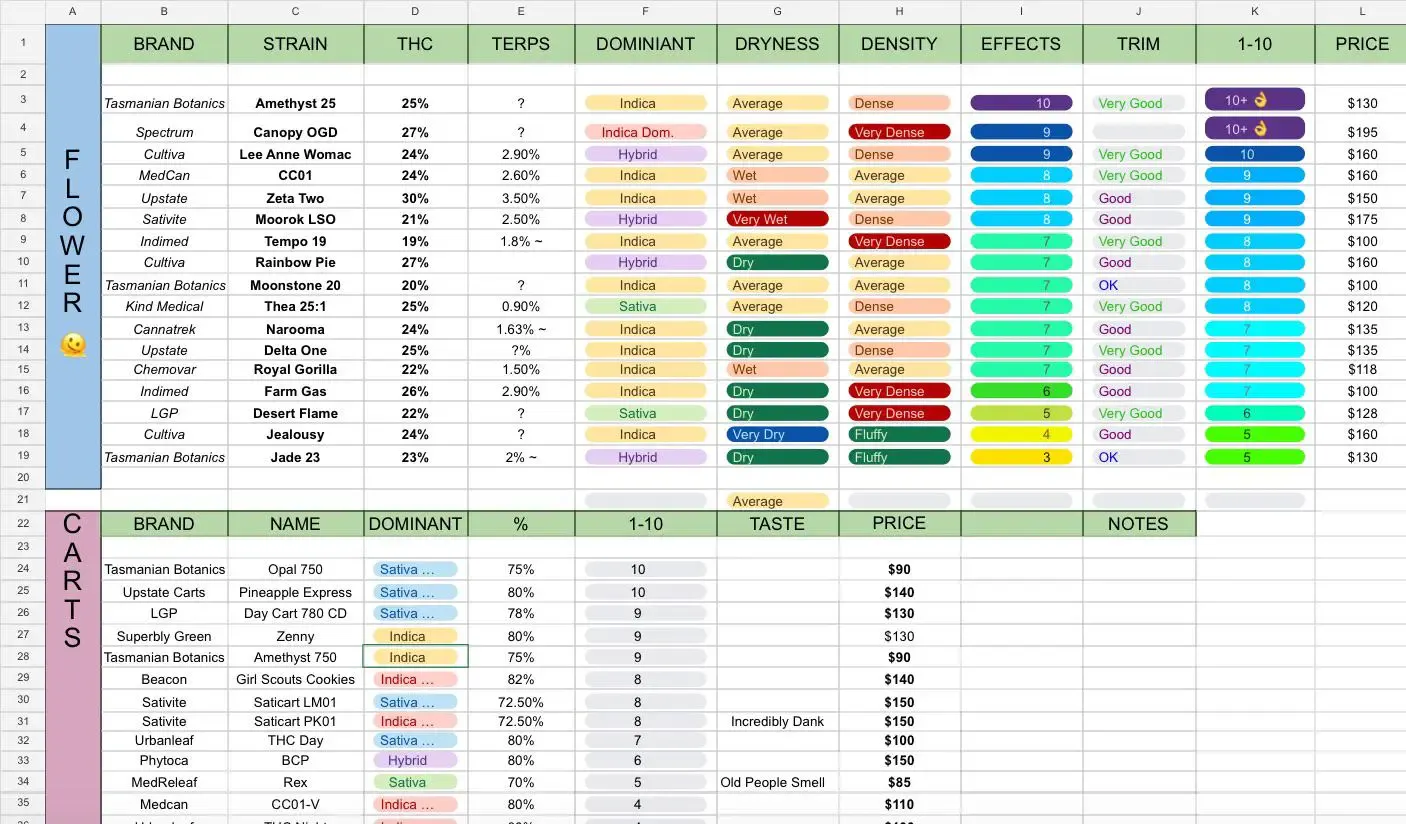
That spreadsheet is the backbone of your brand. And it's being held together with hope.
This is where multi-state operators (MSOs) are losing ground, not in cultivation, not in retail, but in the operational layer that holds everything together. The brands that are pulling ahead aren't just building better products. They're building better systems for managing and distributing the assets behind those products.
We’re breaking down exactly how leading MSOs are structuring their digital asset management in Lingo, which models work at different scales, why the biggest operators in the country have built the way they have, and how you can think through the right structure for your team. You’ll walk away with real-life examples of how other brands structure their space to give you ideas on where to start with yours.
Before we get into structure, let's talk about why this is such a mess to begin with.
Cannabis is not like other consumer goods industries. For example, have you seen a basil plant being sold at your local grocer? That plant may be sold in New York, Los Angeles, and even St. Louis. Three different parts of the country but the same brand, the same image, the same product description, and the same SKU. You manage one asset for a number of retailers. You're done.
Cannabis doesn't work that way.
A single product, say, a one-gram live resin cart, might be sold in Missouri, California, and Massachusetts under the same brand. But the packaging is different in each state because compliance requirements are different in each state. Which means the SKU is different. Which means the description might be different. And all of that needs to be updated, tracked, approved, and distributed to wholesale partners, dispensary buyers, field marketing teams, and retail point-of-sale systems, simultaneously, without error.
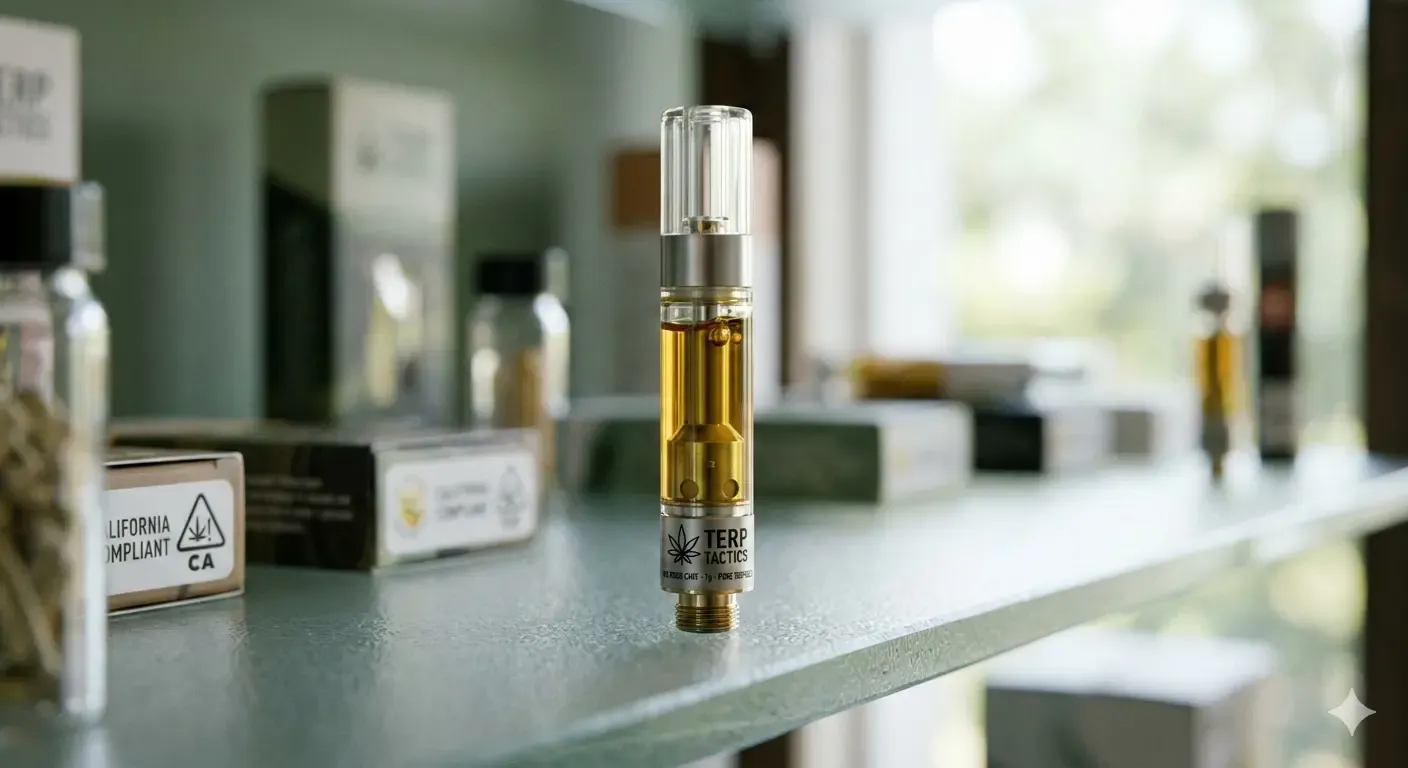
Now multiply that by your full product catalog. Then multiply it by however many states you operate in.
The result is what most cannabis operators are living with today: a Google Spreadsheet with CDN image links, manually updated columns, broken permissions, and zero visual context for the person trying to use it. It's not a system. It's a workaround that became a standard.
The pain isn't just organizational; it bleeds into compliance risk. Field teams pull the wrong asset for the wrong state. Wholesale partners use outdated imagery. A dispensary in Illinois runs a promotion with packaging that was only approved for California. These aren't hypothetical problems. They're weekly problems for teams operating across multiple state lines.
There's a better way to build this. And the operators already doing it are worth studying.
Not all MSOs are the same, and the distinction matters when you're thinking about how to structure your assets.
Confirmed MSOs own and operate physical facilities (dispensaries, cultivation, processing) across multiple states. Think Curaleaf, Trulieve, AYR Wellness. These are large, complex organizations with state-specific compliance teams, regional field staff, and wholesale operations that vary dramatically by market.
Multi-State Brand Operators (MSBOs) are national brands that partner with local processors for production. They don't own the real estate, but they need to maintain consistent brand identity across markets they don't fully control. Their challenge is less about internal team permissions and more about brand consistency at the edges of their distribution network.
The right Lingo structure looks different for each. But the core problem, managing compliant, current, accessible digital assets across multiple markets, is the same.
An important note: Lingo allows for unlimited Kits and Portals. This means you can truly use Lingo to structure any combinations of digital assets based on who needs to engage with them.
There is no single correct way to build your Lingo instance. The right model depends on your team size, how you distribute assets, your compliance requirements, and how much operational overlap exists between your markets. Here's how leading operators have approached it.
Who's doing it: Curaleaf, Trulieve
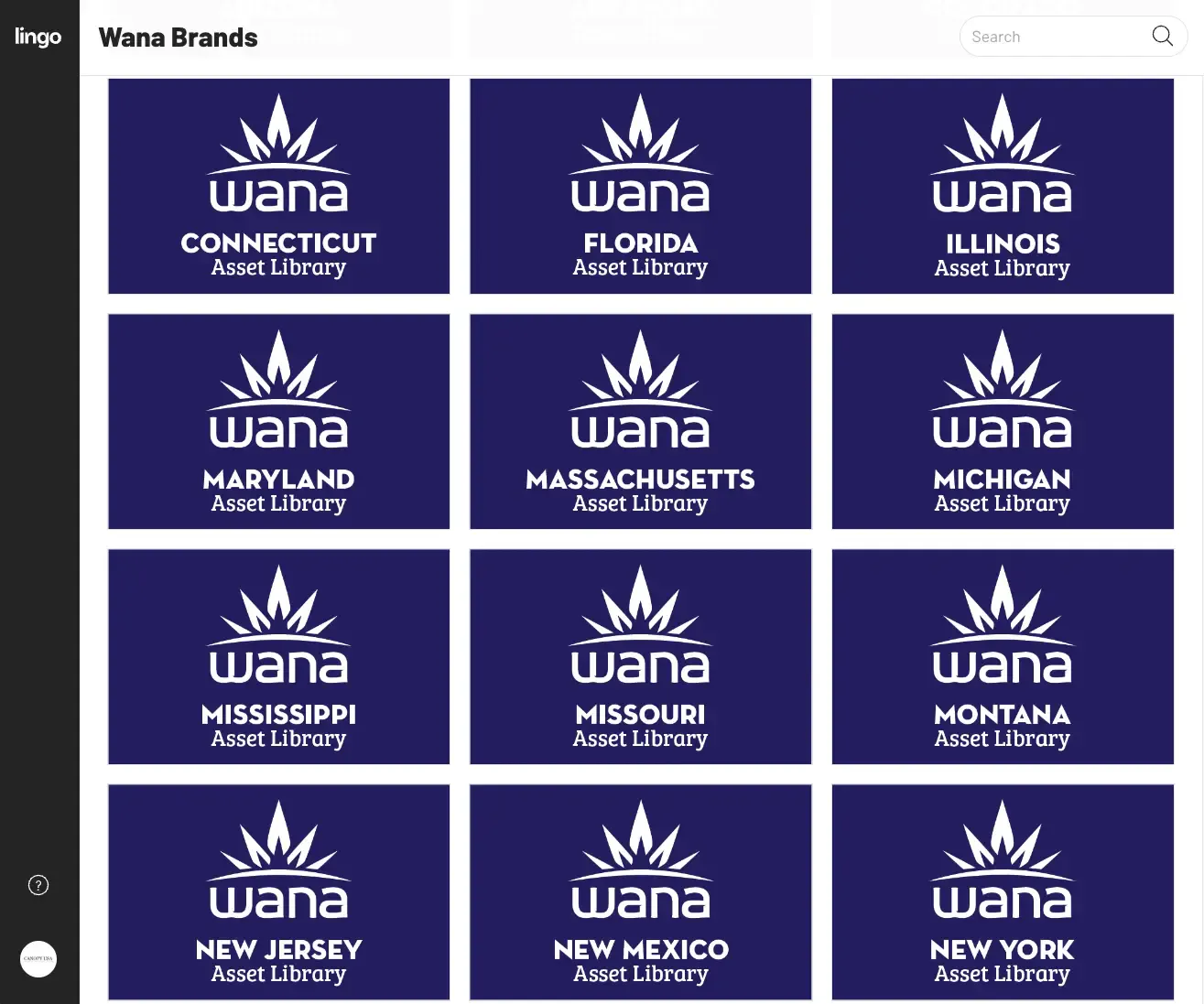
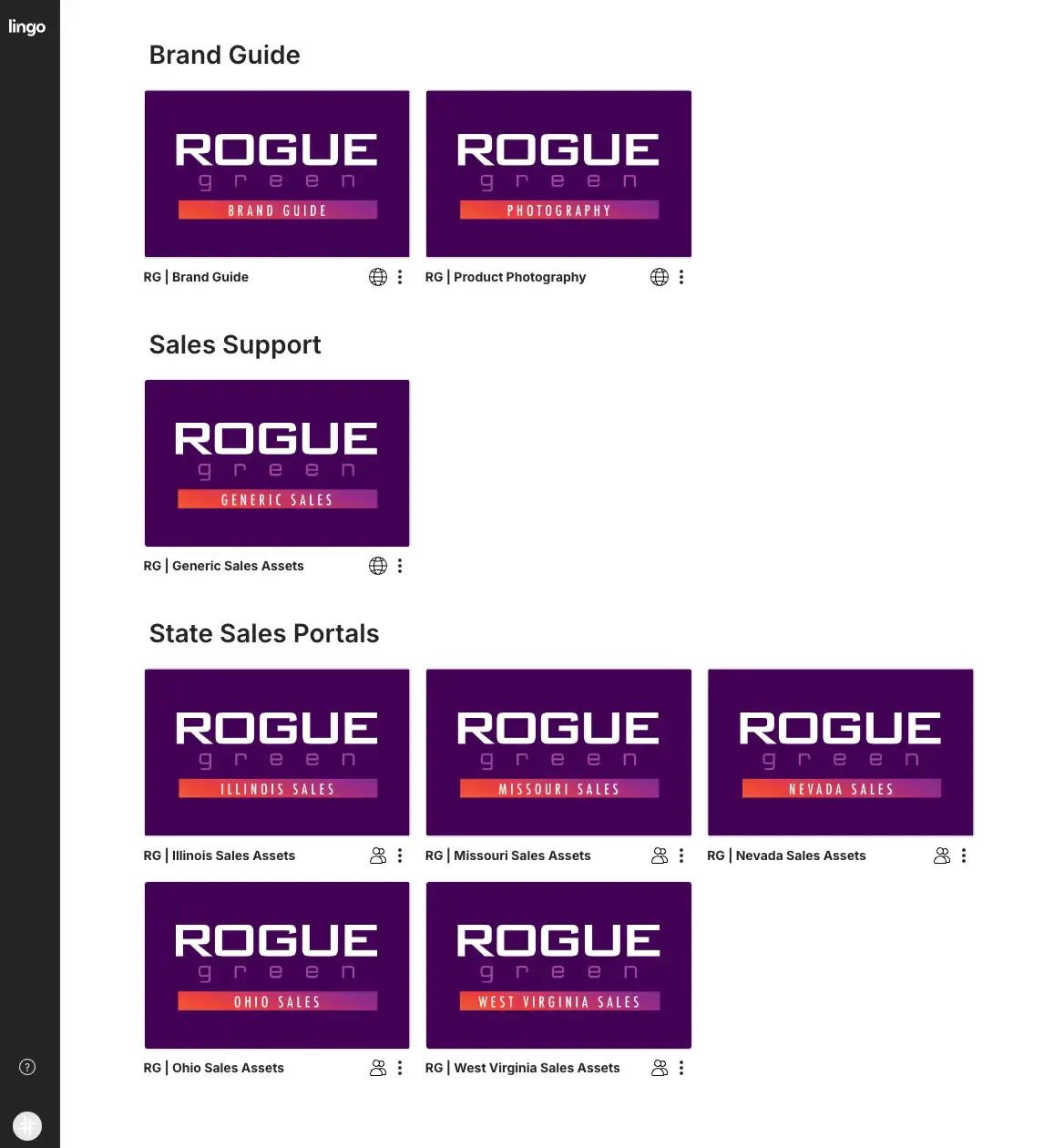
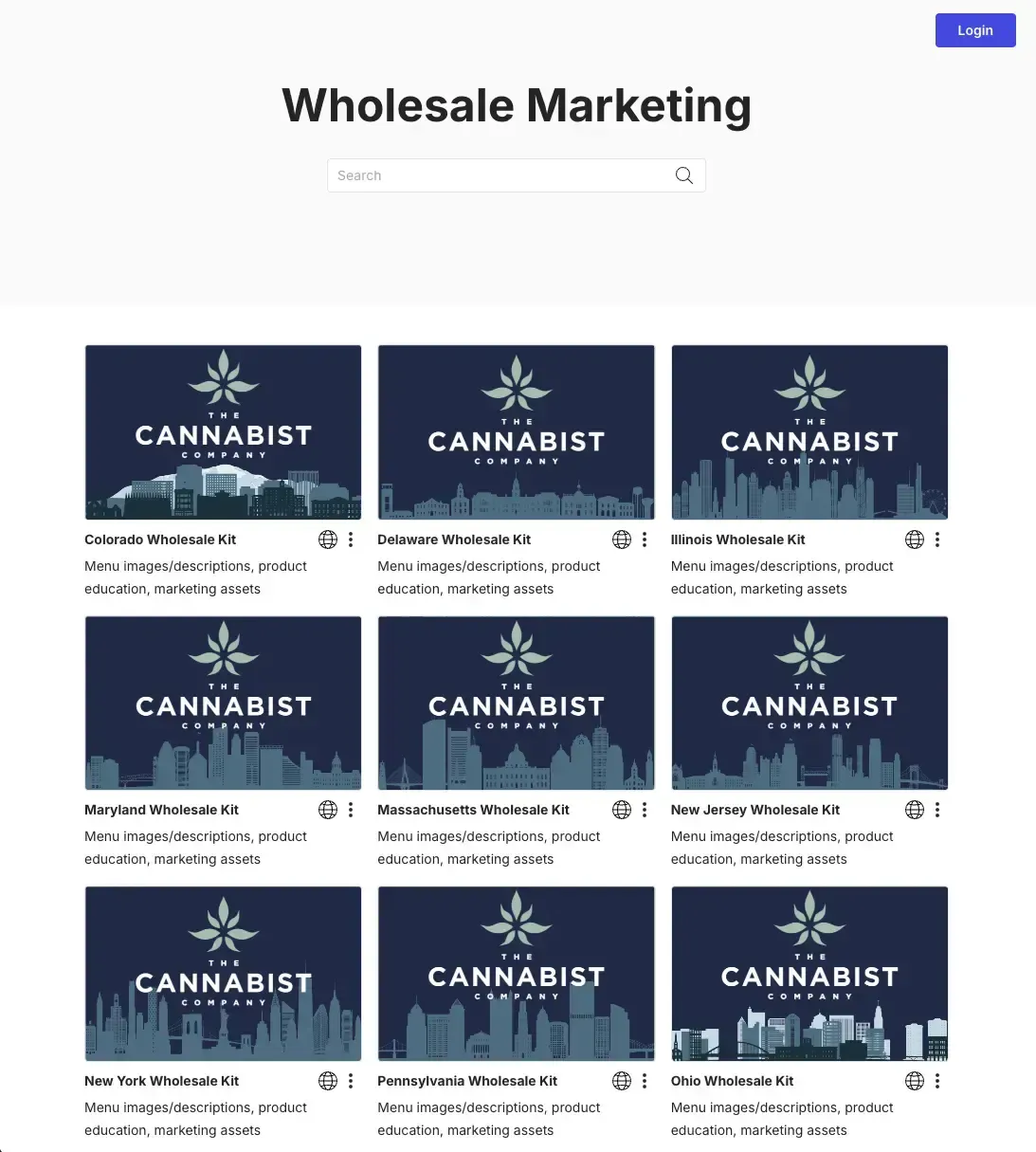
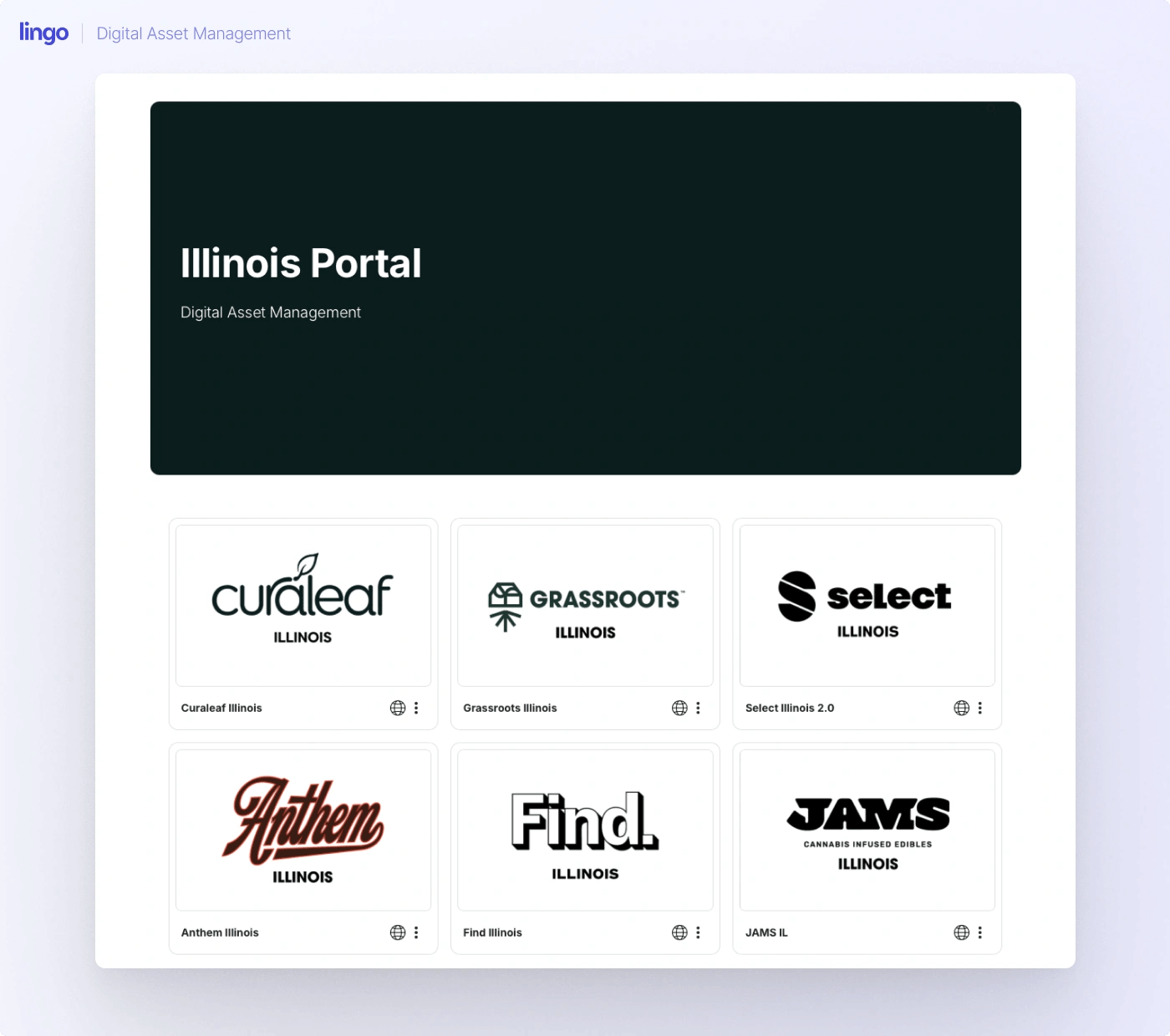
This is the enterprise model. Each state gets its own dedicated Portal, and that Portal is populated with brand Kits containing content specific to that state. Team members only have access to the Portal that's relevant to their market; the same is true for any third-parties.
Here's the logic behind it: Curaleaf and Trulieve are examples of mega-brands in the cannabis space, and have a number of employees, vendors, and third-party providers that need access to their brand assets. Assets get distributed downstream to wholesale partners, field marketing teams, and dispensary buyers who need direct access to approved, state-specific materials. Rather than sharing this information brand by brand on different links, they create a Portal containing all of that information for each state (or region), and share a link to the portal.
For example:
Think about what that means operationally. Your field marketing team in Illinois needs access to Illinois-approved assets, Illinois-specific compliance language, and Illinois wholesale contacts. They don't need Massachusetts materials. In fact, giving them access creates confusion and confusion at that scale creates errors.
By building state-specific Portals, these operators eliminate an entire category of human error. The Illinois team only sees Illinois assets. The Massachusetts team only sees Massachusetts assets. Everyone is working from compliant, current, state-appropriate materials without having to filter through everything else.
Best for: Large teams with state-specific compliance requirements, regional wholesale operations, and field marketing staff working in distinct markets.
The tradeoff: This model requires meaningful administrative overhead. Someone has to maintain each state portal, keep permissions current, and ensure assets are uploaded to the right place. Usually the corporate entity develops the template or base asset, and it is shared to the field marketing manager to make the state-specific adjustments. At Curaleaf and Trulieve's scale, that investment is absolutely worth it. For a smaller operator, it might be more structured than you need right now.
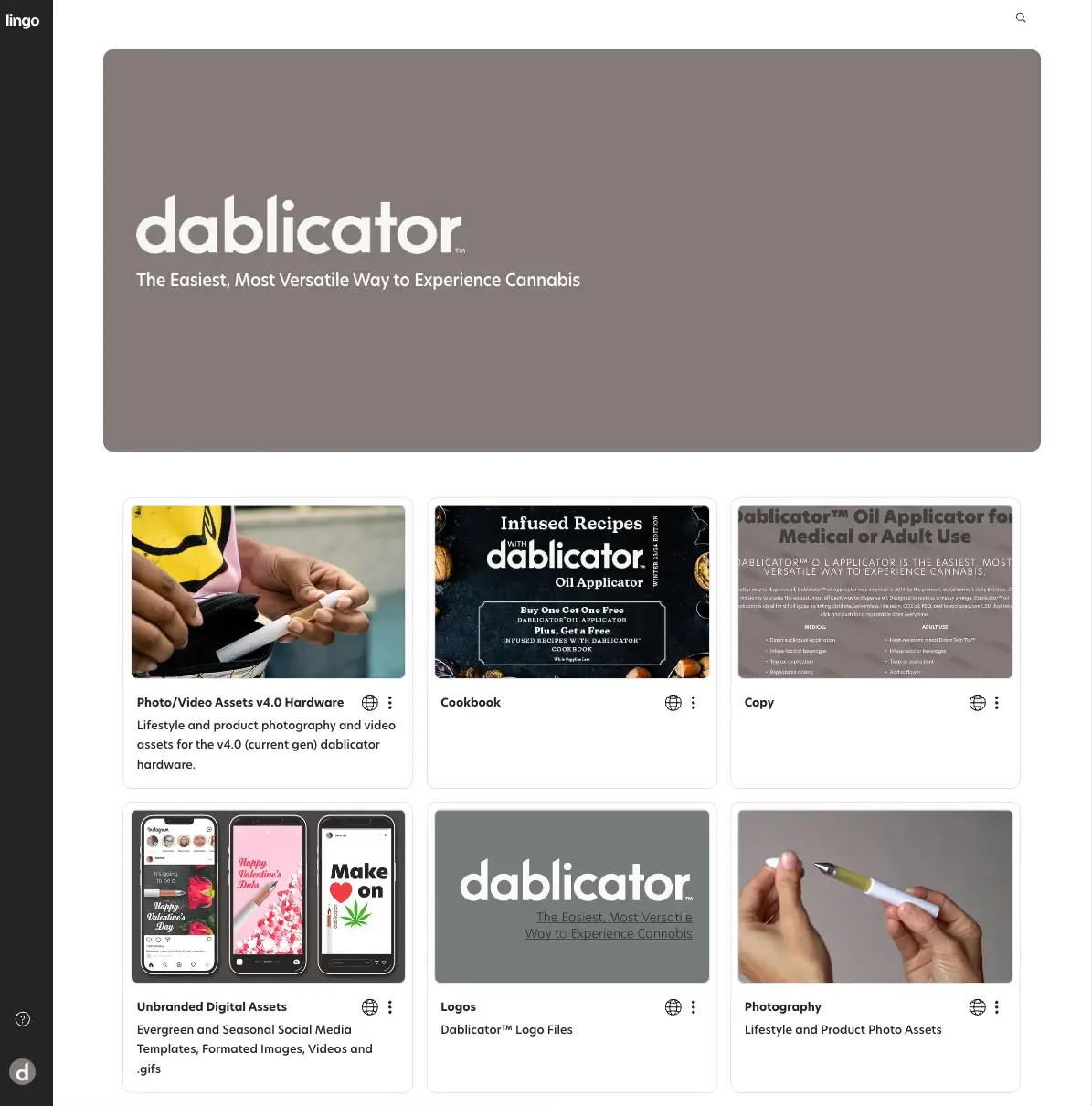
Visit the Dablicator Brand Portal
Who's doing it: Aeriz, Dablicator, BLOOM, Glorious Cannabis
This model flips the logic. Instead of organizing by geography, you organize by brand identity. One brand, one Portal, multiple Kits for different needs. Visual headers within the Portal guide users to the right assets without requiring separate portals for each market.
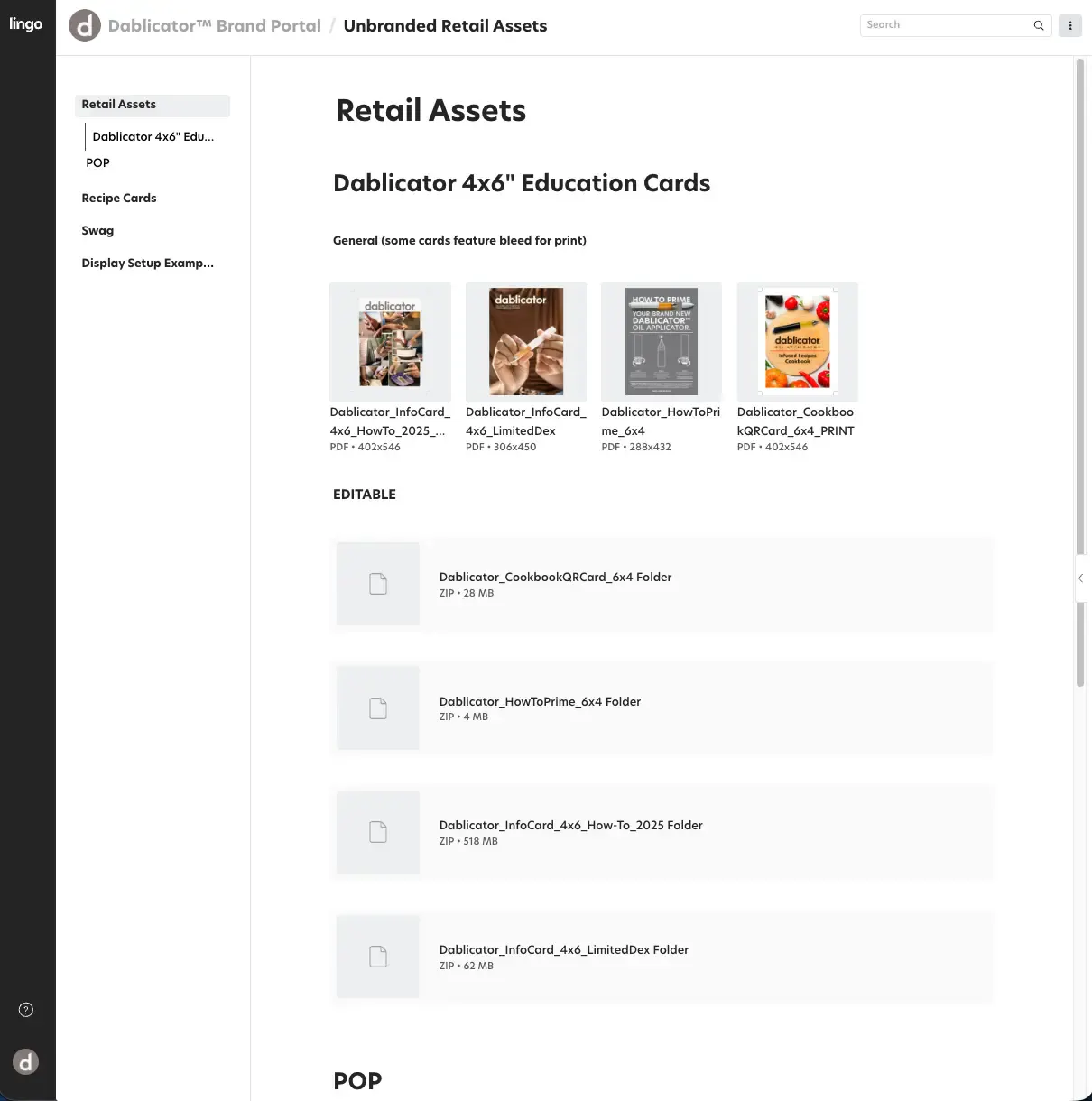
This works well for leaner teams where a single admin is managing the library. The benefit is that brand identity stays front and center. Everyone who accesses the Portal experiences the brand the same way, which matters enormously for wholesale partners and retail buyers who are forming impressions every time they interact with your materials. It also allows the brands to create a space for unbranded retail assets that can be modified at the dispensary level.
Best for: Brands with smaller teams, centralized asset management, and a strong emphasis on consistent brand presentation across markets.
The tradeoff: As your team grows and your compliance requirements get more complex by state, this structure can get harder to maintain cleanly. The visual headers help, but they're not the same as state-specific access controls.
Who's doing it: Canopy USA (Acreage Holdings), AYR Wellness
This is the most granular model. It combines state-level organization with brand-level organization so you're managing "Brand X in State Y" as a distinct unit. For complex conglomerates operating multiple brands across multiple states, this level of specificity is necessary. It's where you house state-specific disclaimers alongside brand-specific assets. It's where localized product catalogs live next to national brand guidelines. It's the model that handles the highest level of operational complexity without collapsing into chaos.
Best for: Multi-brand operators in multiple states who need to manage both compliance and brand integrity at the intersection of geography and identity. It’s an alternative way of presenting Portals by state, with the focus first on the brand rather than the state.
The tradeoff: This is the most complex model to build and maintain. It requires clear internal governance about who owns what and where things live. This model can work well when there is a point person in charge of each brand and the assets associated with it.

Who's doing it: The Doghouse, Cali Extract, Elevate Cannabis
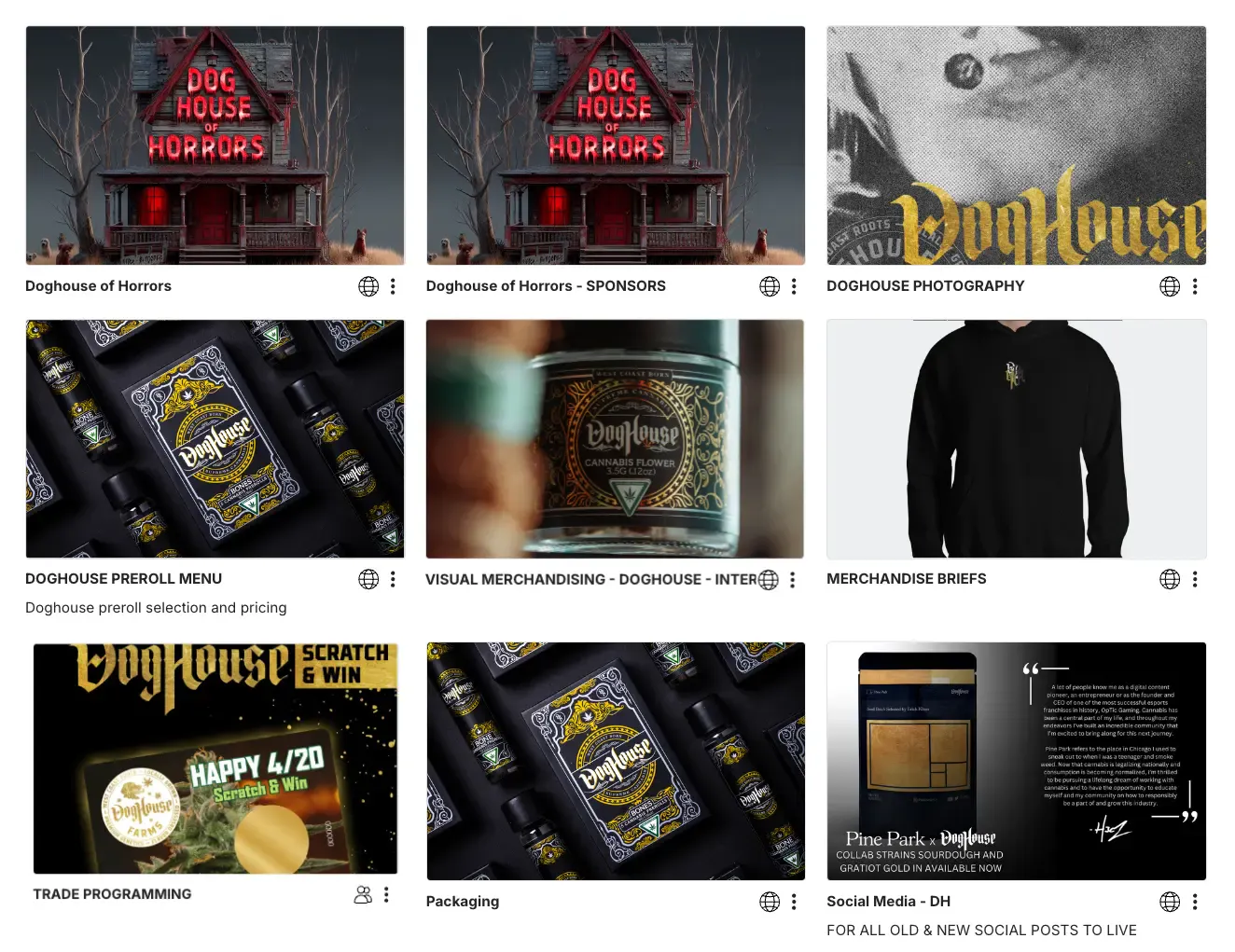
Sometimes you don't need portals at all. This model uses a flat Kit structure, fast, accessible, zero friction. It's built for teams that are moving quickly on social content, press outreach, and creative collaboration. There are no complex permissions, no state-specific silos. Just a clean library of assets that the right people can get to immediately. For brands that are focused on velocity, pumping out content, getting press kits to media partners, and feeding the social machine, this model keeps things moving without getting in the way.
Best for: Agile brands with small, unified creative teams and a focus on high-velocity content output.
The tradeoff: You're trading governance for speed. If compliance is a major consideration in your markets, this model alone won't give you the control you need.

Who's doing it: Greenlight Dispensary, Calyx Peak
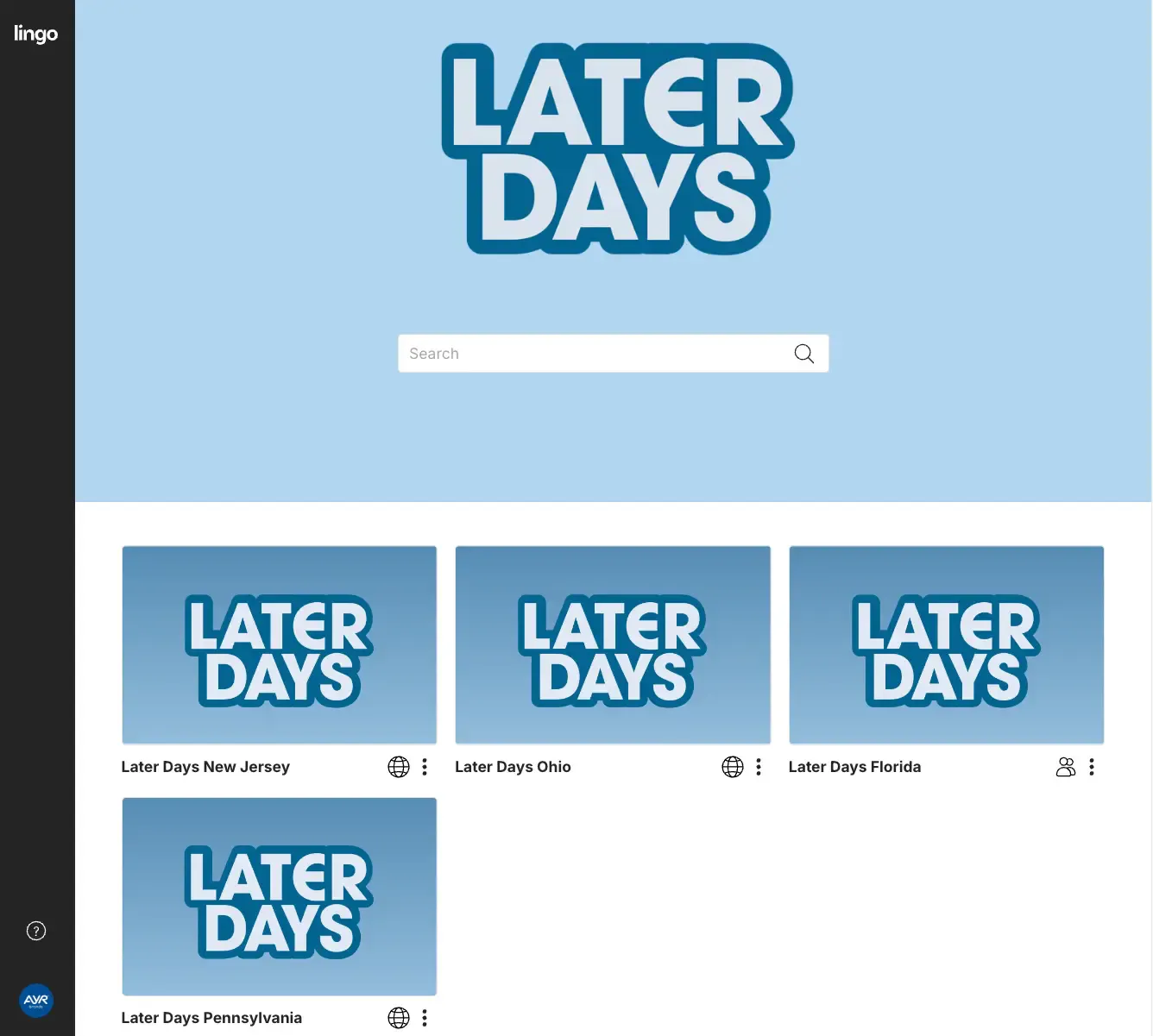
This model is the best of both worlds for brands that want global identity with local execution. The parent Portal protects core brand assets and allows you to easily present brand guidelines and budtender sales enablement. State-level Kits handle the regional execution: localized menus, state-specific promotions, and regional wholesale materials. All materials are connected together with a single link to all assets.
It works because it maps to how these brands actually operate. Corporate owns the brand. Regional teams own the execution. The structure reflects that reality instead of fighting it.
Best for: Brands with a strong national identity that need to empower local teams to execute without putting core brand assets at risk.
The operators who are getting the most out of Lingo aren't just using it to store photography. They're using it as the connective tissue of their entire wholesale and compliance operation.
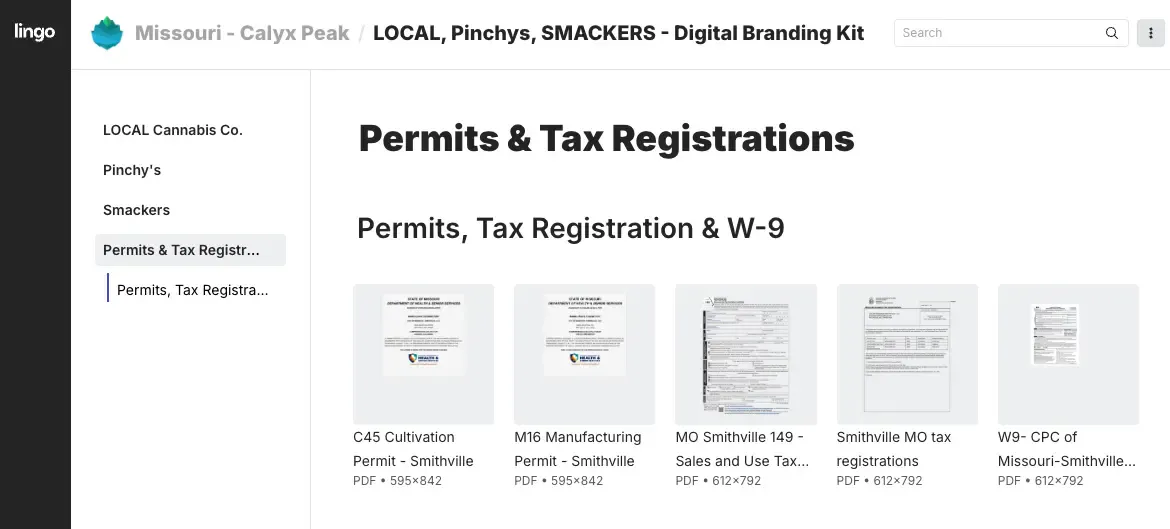
Local Cannabis Co. uses Lingo to house permits, tax registrations, and W9s in the same place as their marketing assets. When a wholesale partner needs to close a deal, everything they need, the brand assets, the compliance paperwork, the product documentation, is in one link. No back and forth. No chasing down PDFs over email.
View the Calyx Peak permits and registrations in a Lingo Kit.
This is a small operational decision with a large downstream impact. Wholesale relationships move faster when partners aren't waiting on documentation.
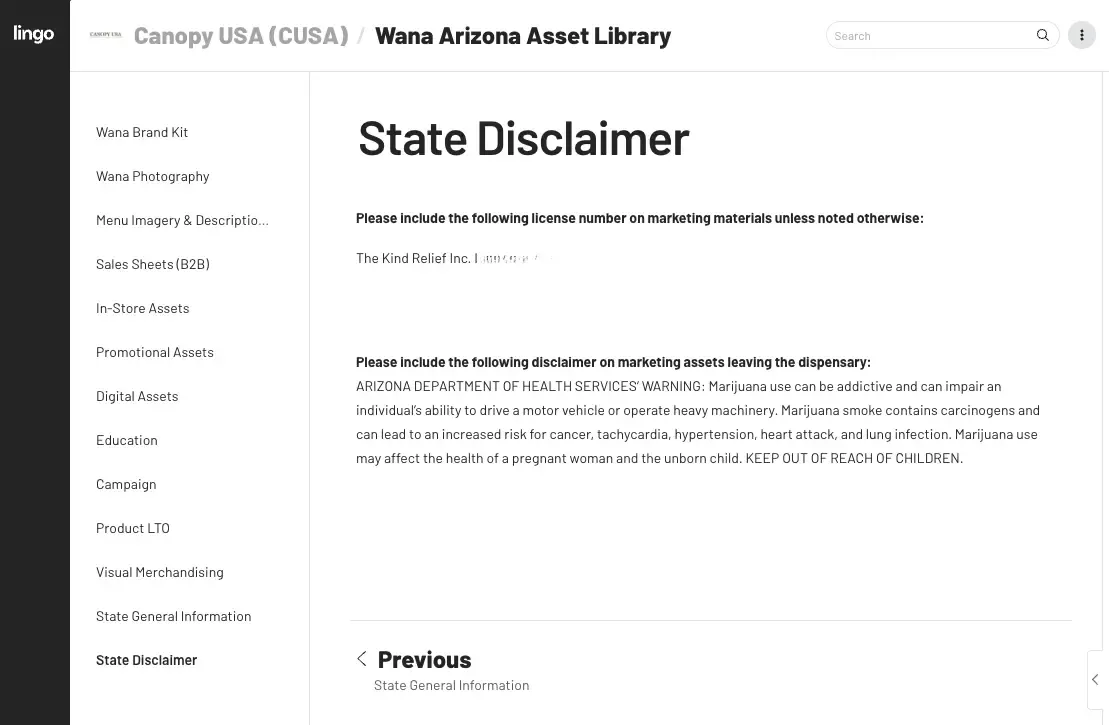
Canopy USA has built a dedicated compliance section that gives its dispensary partners the exact, legally-vetted language and license numbers they need to run regional marketing. It's hosted as a Lingo Note, a copy-paste blueprint that ensures every piece of regional marketing stays within the bounds of local law.
Think about what this replaces. Without this, a dispensary partner in a new state is either guessing at the right language, emailing corporate for approval, or running something that hasn't been reviewed. Any of those options is slower and riskier than having the approved language sitting next to the assets it applies to.
Firelands Scientific and The Cannabis Company treat their Portals as digital showrooms for wholesale buyers. Their regional groupings cater to specific market cultures, allowing for the seamless communication of branding, menu images and descriptions, digital marketing, budtender education, and more.
When a buyer is evaluating a new brand, the quality of that first interaction matters. A clean, well-organized Portal with deep product information signals that this is a brand worth working with. A Google Drive link with a folder full of unlabeled JPGs signals something else entirely.
View The Cannabis Company Wholesale Kits.
One thing worth understanding about Lingo: you're not locked into a single model. Lingo gives you unlimited Kits and unlimited Portals.
If you build a brand-first structure today because you're a lean team, and you scale into a regional fortress model in two years because you've expanded into six states, that transition is possible. You're not rebuilding from scratch. You're evolving a structure that was already working.
This matters because the cannabis industry doesn't move in straight lines. Operators get acquired. Brands expand into new states. Compliance requirements shift. Your asset management structure needs to be able to move with the business, not become a constraint on it.
Here's the honest version of where this industry is right now: most cannabis operators are managing their most critical brand assets in a tool that was never designed for the job.
Google Sheets is a spreadsheet. It's great for what it was built for. But it was not built to be a product information management system for a multi-state cannabis brand with state-specific SKUs, compliance requirements, and a wholesale distribution network.
The spreadsheet has columns for strain art links, product names, category classifications, terpene profiles, effect descriptors, flavor notes, brand names, regional descriptions, and compliance notes. Someone entered that data. Someone has to update it. Someone has to make sure the CDN link in column C still points to the right image after the Missouri packaging change. Someone has to know which version is current.
That someone is probably you, or someone on your team, and they are spending a meaningful amount of their week on a job that should be automated. Or they’re relying on the dispensaries to enter it as you intend, and quite likely have consistency issues or discrepancies from one listing to the next.