Edward Boatman • Mar 31st
If you’re running marketing or brand operations at a single-state cannabis brand, the pressure is increasing the velocity of your sell through in your own state.
Somewhere in your "Marketing" folder (or a Dropbox link you’ve reshared so many times you’ve lost track of who has access), there is a disconnect. You have the latest product photography, the new terpene profiles, and the brand-compliant descriptions, and share them diligently with retail partners. Yet, when you check a retailer's menu, they’re still using the same flower picture for every listing even though they know it’s incorrect, it’s just convenient.
The spreadsheet problem exists here, too, but it’s more intimate. It’s the constant friction of being a lean team trying to show up as a top-tier brand across local dispensaries, all while wearing five different hats.
Katie Burrell, Marketing Manager at Glass Meadows, is responsible for marketing strategies and launching cannabis brands in the New Jersey market. She recently spoke with Lingo about her day-to-day life and the complexities of managing the menu. “Our digital marketing coordinator counted something like 50 SKU drops in a single month on top of the brand change with the Glass Meadow’s brand. That’s a lot for any team.”
Many brand operators or single-state distributors have a very lean team. The person managing the brand is often the same person managing the social media, the sales collateral, and sometimes even the design work. Couple that with aggressive launch schedules, and you’ll find yourself stretched thin.
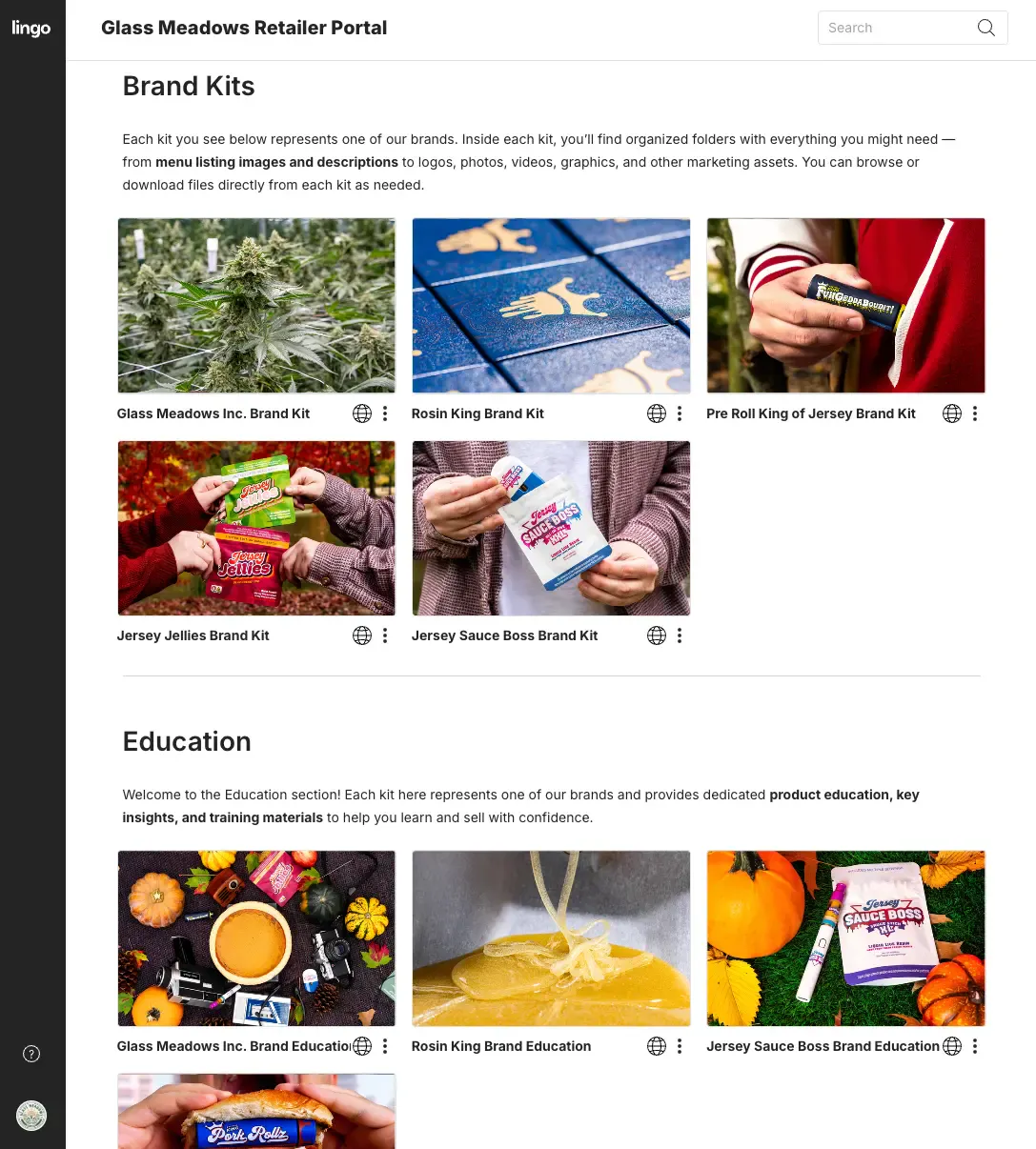
Visit the Glass Meadows Retailer Portal. Glass Meadows tries to ward off consistent link requests by including a link to this portal in all of their email signatures, giving everyone instant access to all Glass Meadows brand information.
Cannabis retail is a hungry machine. It needs high-res assets for Dutchie menus, lifestyle shots for Instagram, and technical data for budtender education. When you don't have a dedicated asset manager, you become the bottleneck. You spend unnecessary time fielding requests for links to images or descriptions rather than fueling your growth.
The result is what we call brand erosion. When it’s too hard for a dispensary or a distributor to find the right asset, they use the wrong one. Your brand starts to look different or is presented in a way that leaves you out of searches for your specific brand. This isn't just an organizational headache; it’s a loss of professional polish at the exact moment a customer is deciding whether to buy your flower or the one sitting next to it.
For example, New Jersey is not a deli-style state. Customers cannot open jars in-store. They have no product to smell or inspect, so correct menu images and listings are especially important. Katie explains these images are so important that New Jersey consumers have taken to Reddit. Here they post actual flower just so that consumers can better understand what they’re purchasing. Correct images truly matter when you’re purchasing a product sight unseen.
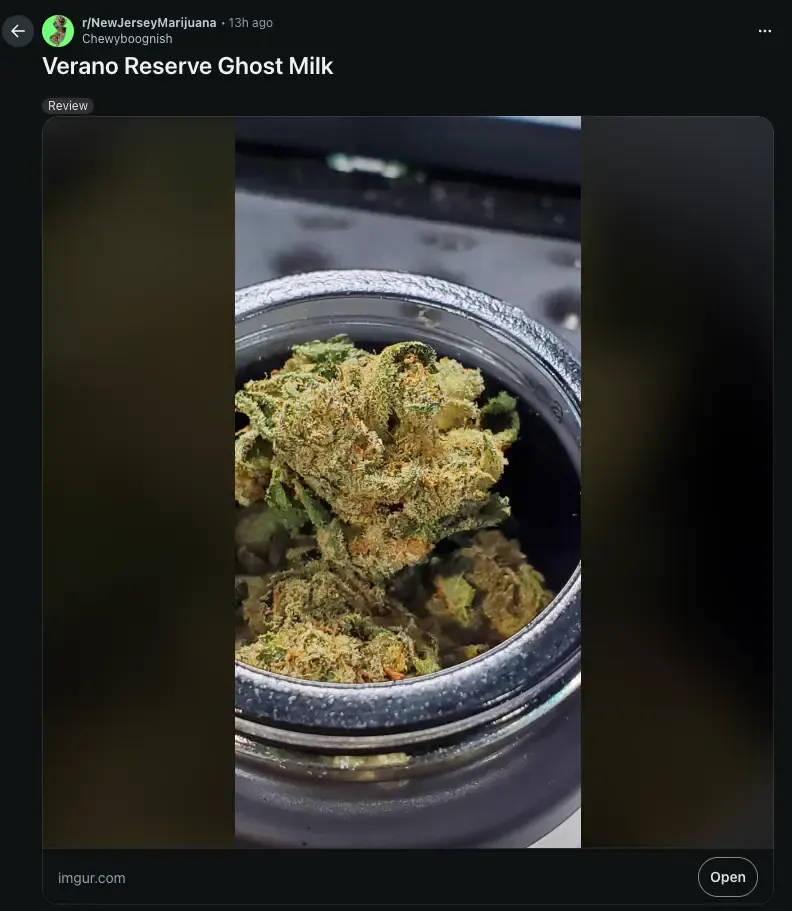
Image from r/NewJerseyMarijuana showing Verano Reserve Ghost Milk.
One of the most striking differences between how MSOs and Single-State Operators (SSOs) use Lingo is the level of internal collaboration.
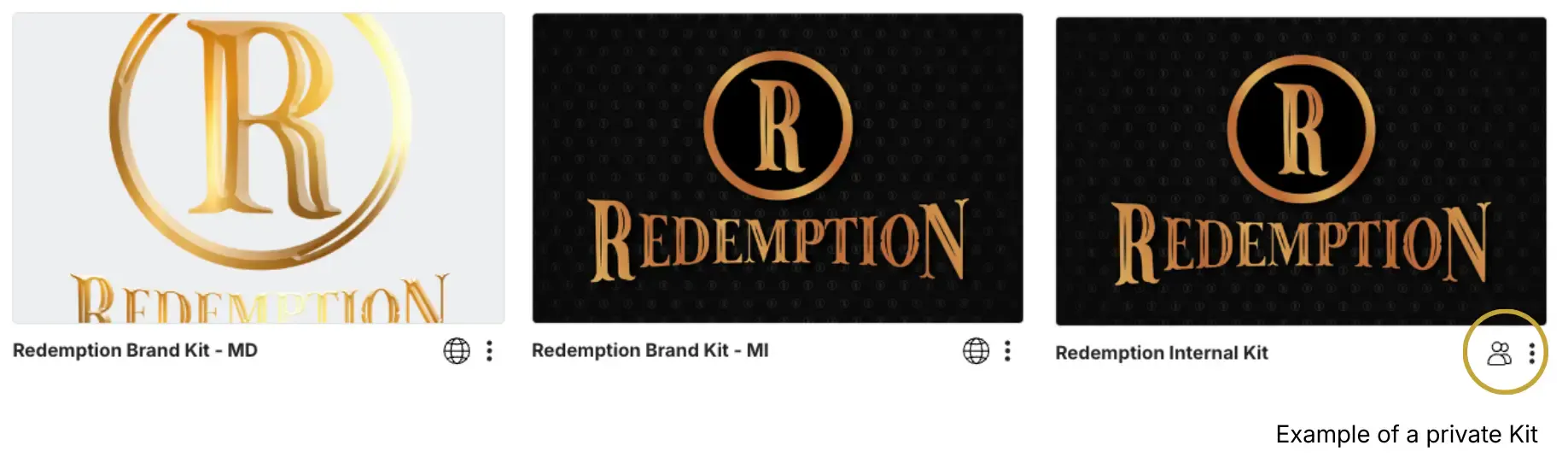
While MSOs typically use Lingo as a one-way distribution pipe, meaning corporate sends assets down to regional teams, single-state brands use it as their active engine. We see an abnormally high number of private Kits and Portals in this segment because the SSO is managing the vault, or their internal IP, but they are also the ones managing the showroom, or the public-facing assets. They just happen to manage both in the same place.

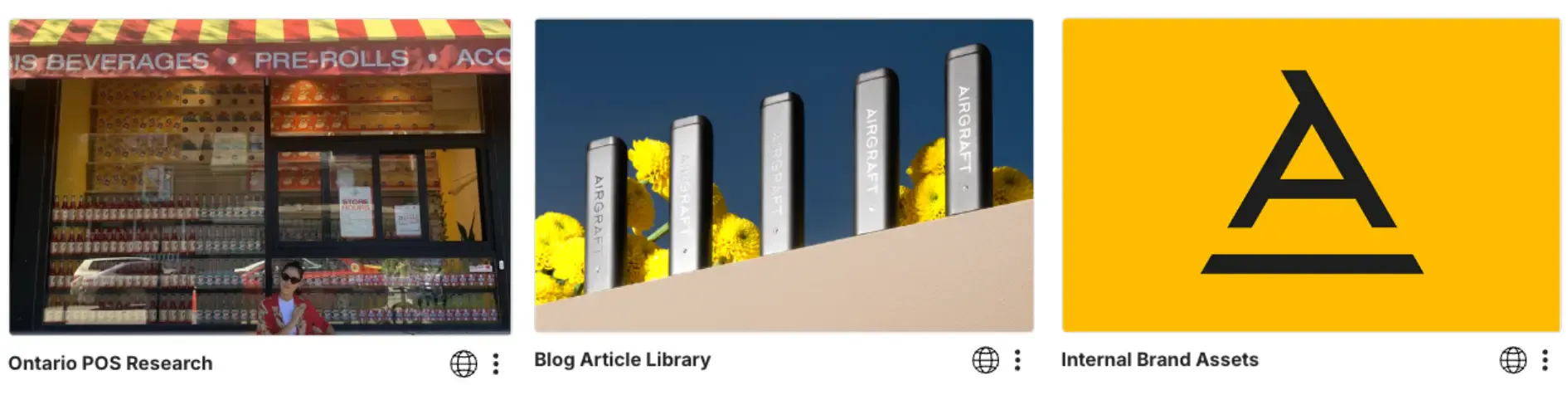
An example of three Kits housed with Airgraft: Ontario POS Research, Blog Article Library, and Internal Brand Assets.
Lingo is used to house their package raw files, trademark documentation, and internal production research in secure, private Kits. Once an asset is approved, they in essence ‘move it to the floor’ of the public showroom where retailers can access it. This unified workflow prevents the common asset drift that happens when teams are forced to hop between internal storage apps and external sharing links. This workflow keeps a small team from losing their minds between different storage apps.
There is no single "correct" way to build your space, but the most successful local brands and distributors have moved away from the one big folder approach and toward these specific models.
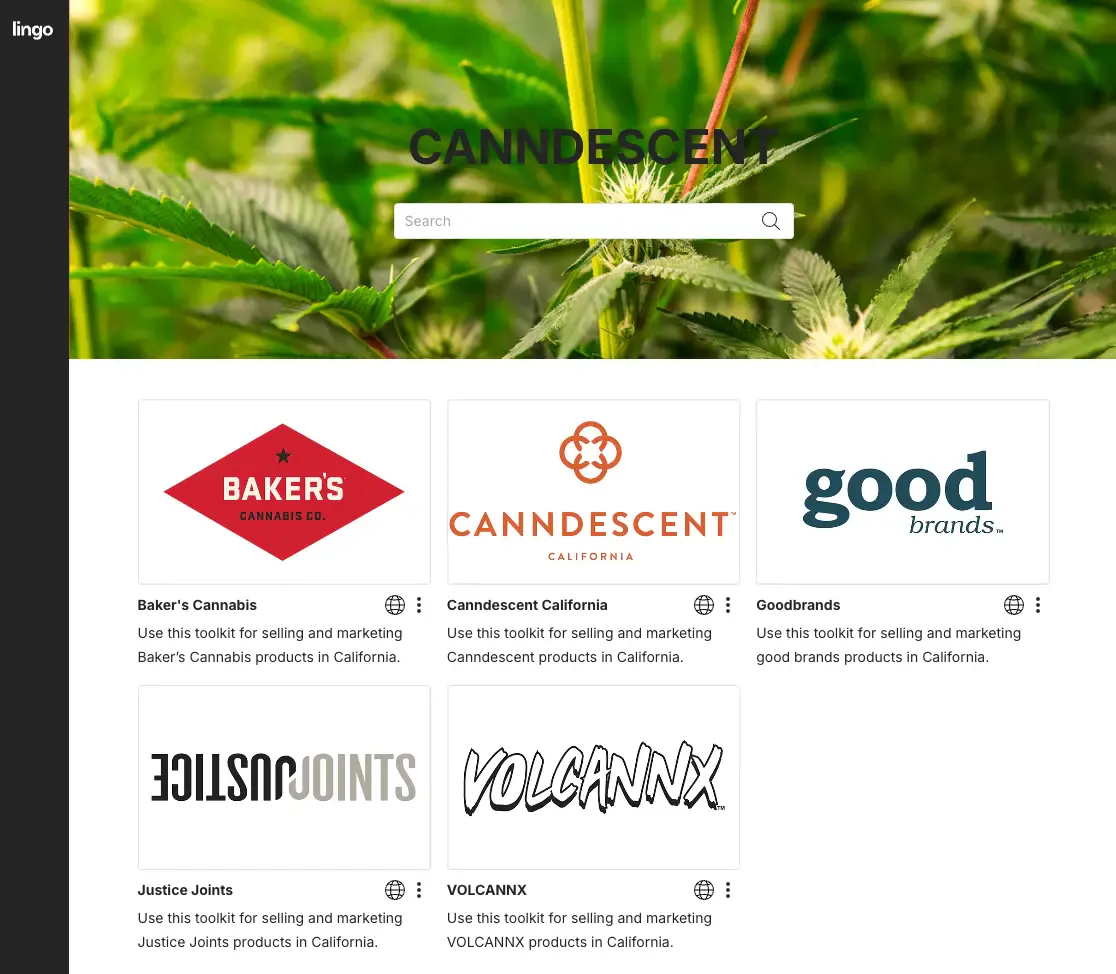
The Canndescent Brand Portal with multiple brands available in Kits.
Who’s doing it: Candescent, Goldkine, Soul
For operators managing a portfolio of brands within a single state, the umbrella model is the standard. Instead of one giant library, each brand gets its own dedicated Kit.
The logic here is about immersion. When a buyer or a budtender clicks into the Goodbrands Kit, they shouldn't see Justice Joints branding. By separating the identities at the Kit level, you ensure that the visual language stays pure. It allows a lean marketing team to act like a much larger agency, providing a tailored experience for every brand they touch without the administrative overhead of multiple separate accounts.
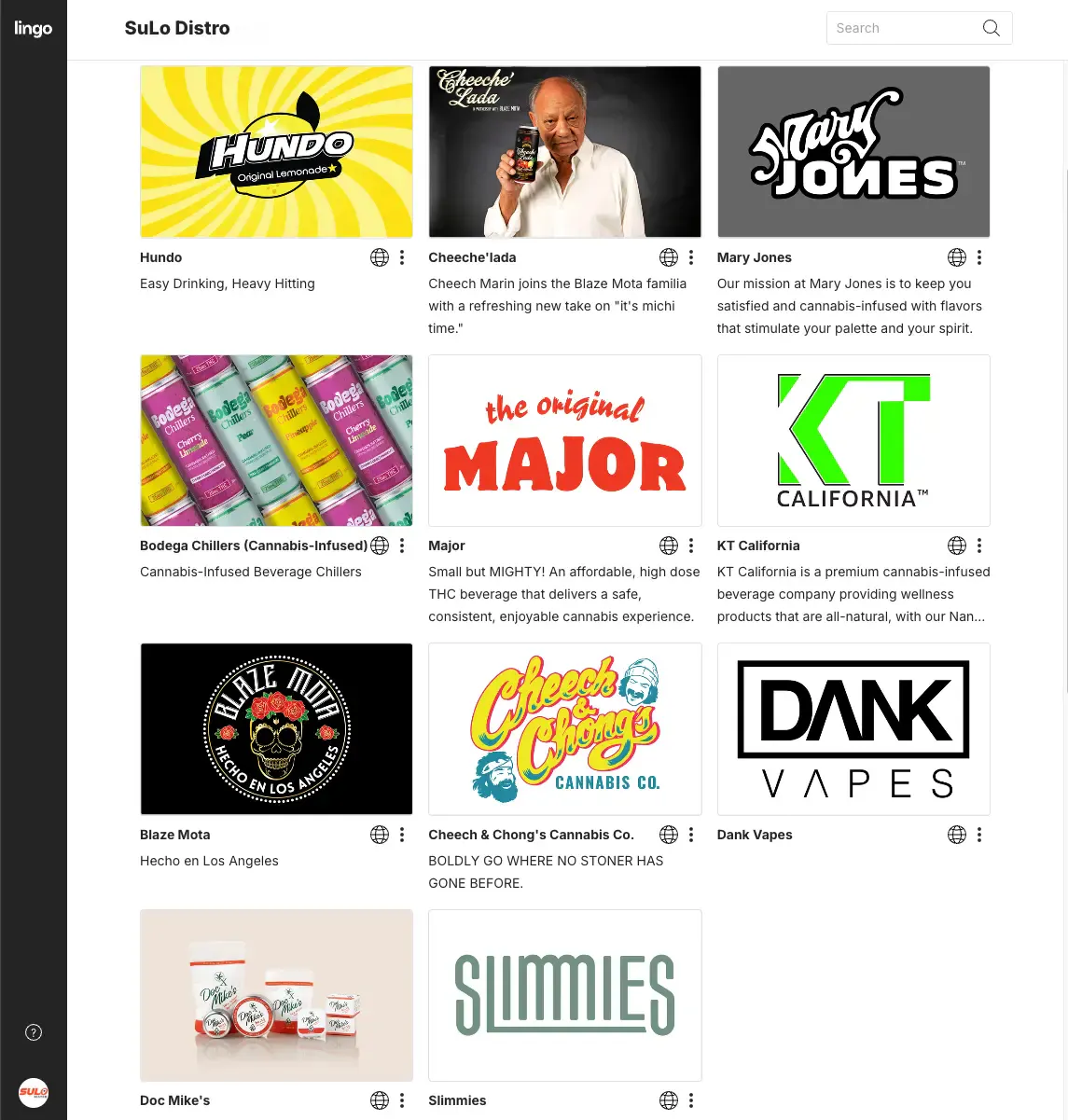
The Sulo Distro Portal is represented in Lingo.
Who’s doing it: Sulo Distro
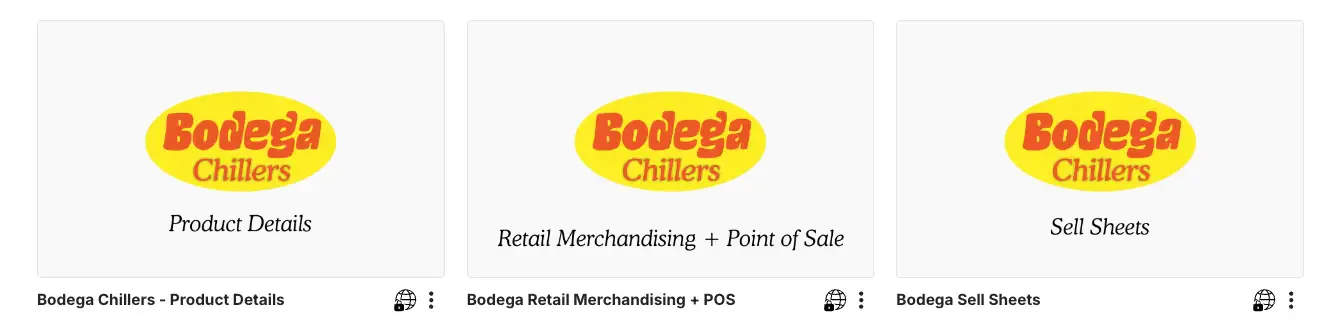
Distributors face a unique challenge: they represent brands they don't own. Their Lingo structure has to be a department store of brands they represent. They often use a single Public Portal to house multiple Kits for one brand (like you see with Bodega Chillers) or Portals to house all available distribution brands. They’ll then take it a step further and call out their new arrivals in a Kit by itself, while providing a full product catalog to end users.

By structuring this way, the distributor becomes the "easy button" for the dispensary. A buyer can see everything new across different brands in one single Kit, rather than opening several different emails. It turns the digital asset library into a value-add service for the brands they represent.
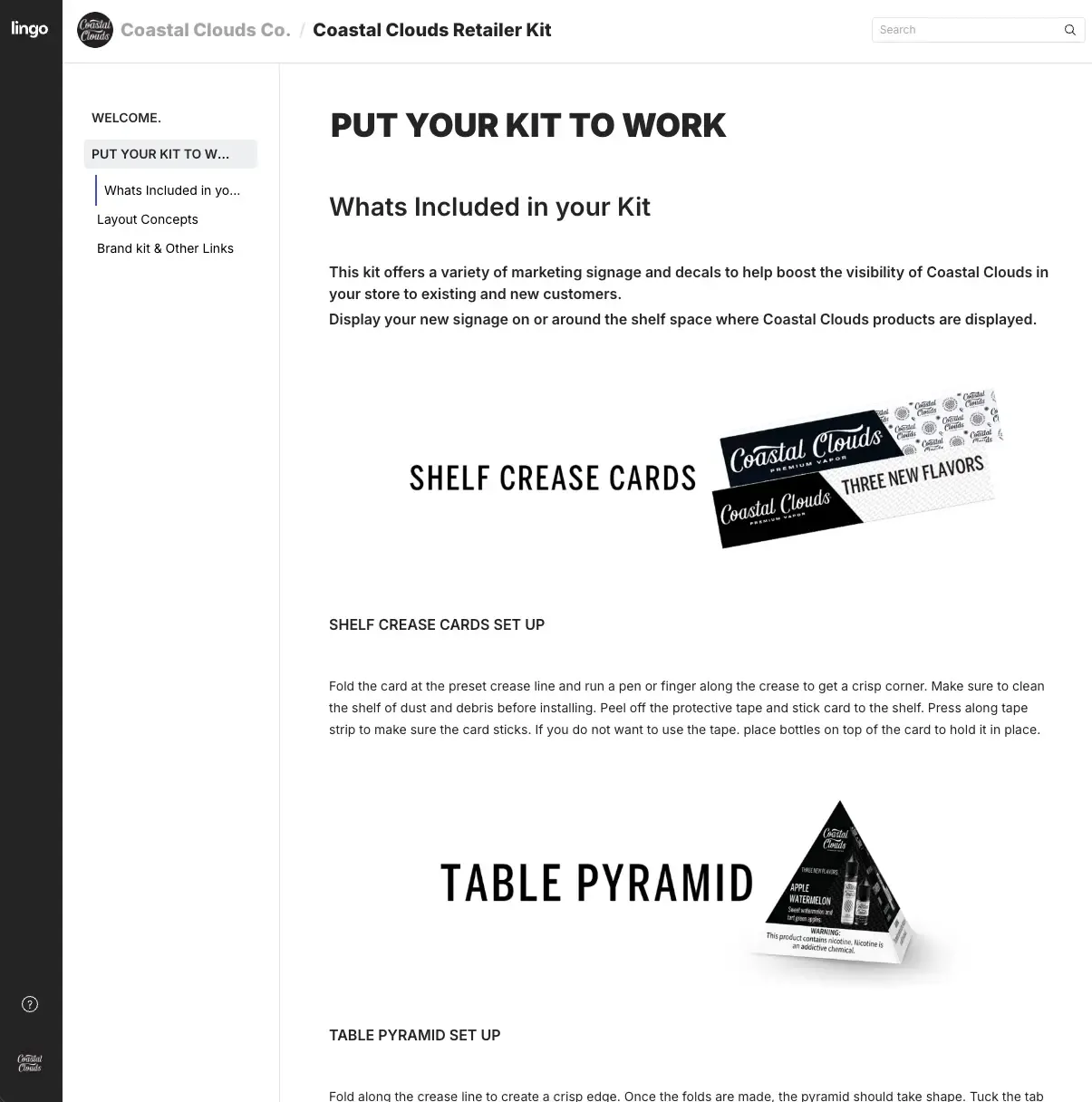
Coastal Clouds uses one of their Lingo Kits to show retailers how to best represent the Coastal Clouds brand.
Who’s doing it: Coastal Clouds, Cann Social Tonics, Airgraft, Glass Meadows
This model treats Lingo as a brand warehouse for brand kits and catalogs, but also as a tool for the field team. Instead of organizing by product type, these brands organize by activity or use case. They build Kits specifically for retailers, trade shows, social media, or even brand ambassador needs.
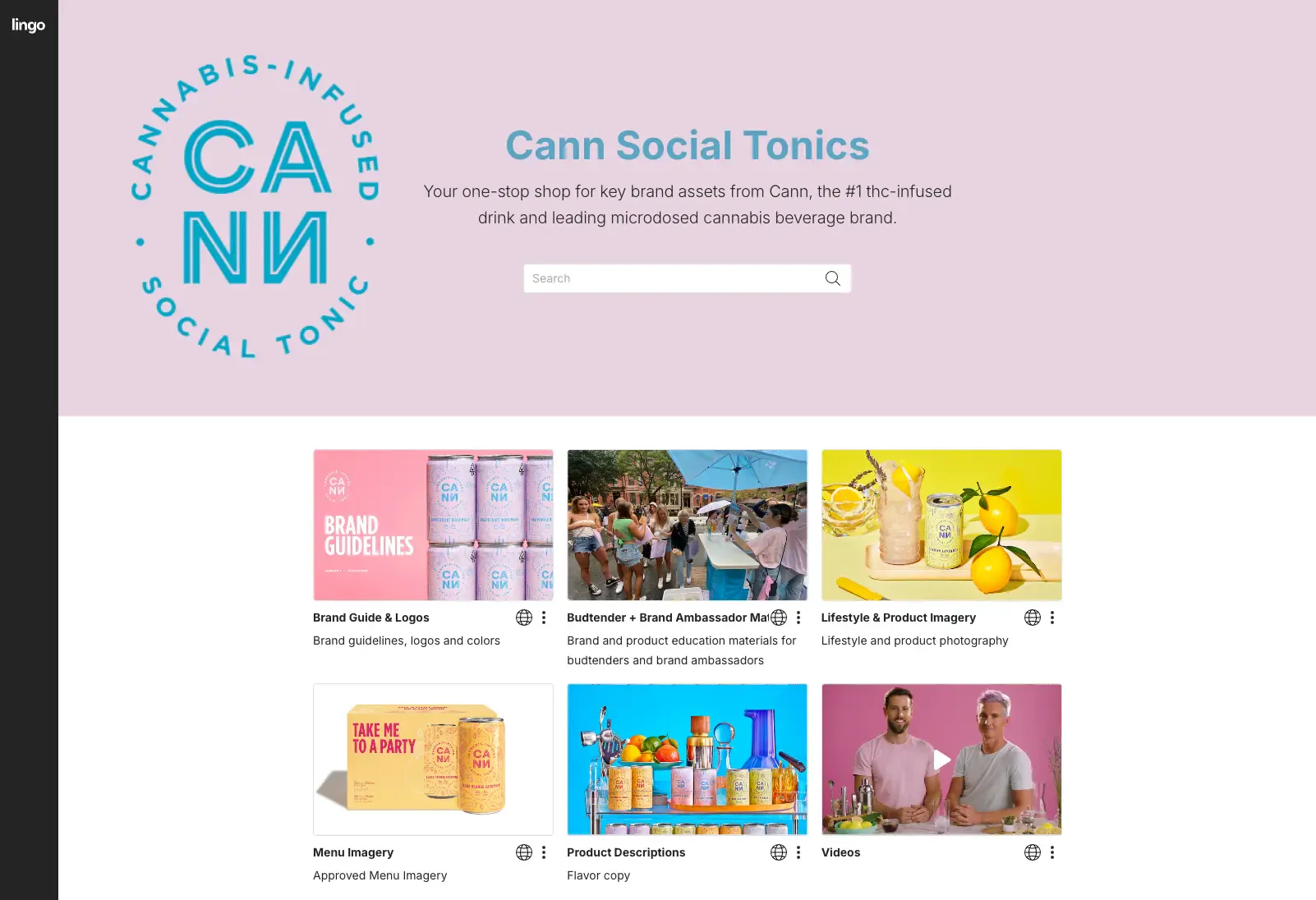
Cann Social Tonics use their Lingo Portals to communicate product descriptions along with menu imagery, brand guidelines, and sales enablement like videos and images.
Glass Meadows also leans into Lingo to house a retailer portal to set their retailers up for success. With these retailer portals, dispensaries can access:
This is just one of several Portals they use to distribute their brand to New Jersey retailers.
Visit the Glass Meadows Retailer Portal to see how they structure their Kits.
Think about the friction this removes. Everything someone needs to best promote Cann Social Tonics or Glass Meadows is present in the Portal and made available to everyone. This structure maps to how the business actually moves. It’s built for speed, ensuring that the people on the front lines have exactly what they need for the task at hand, with zero fluff.
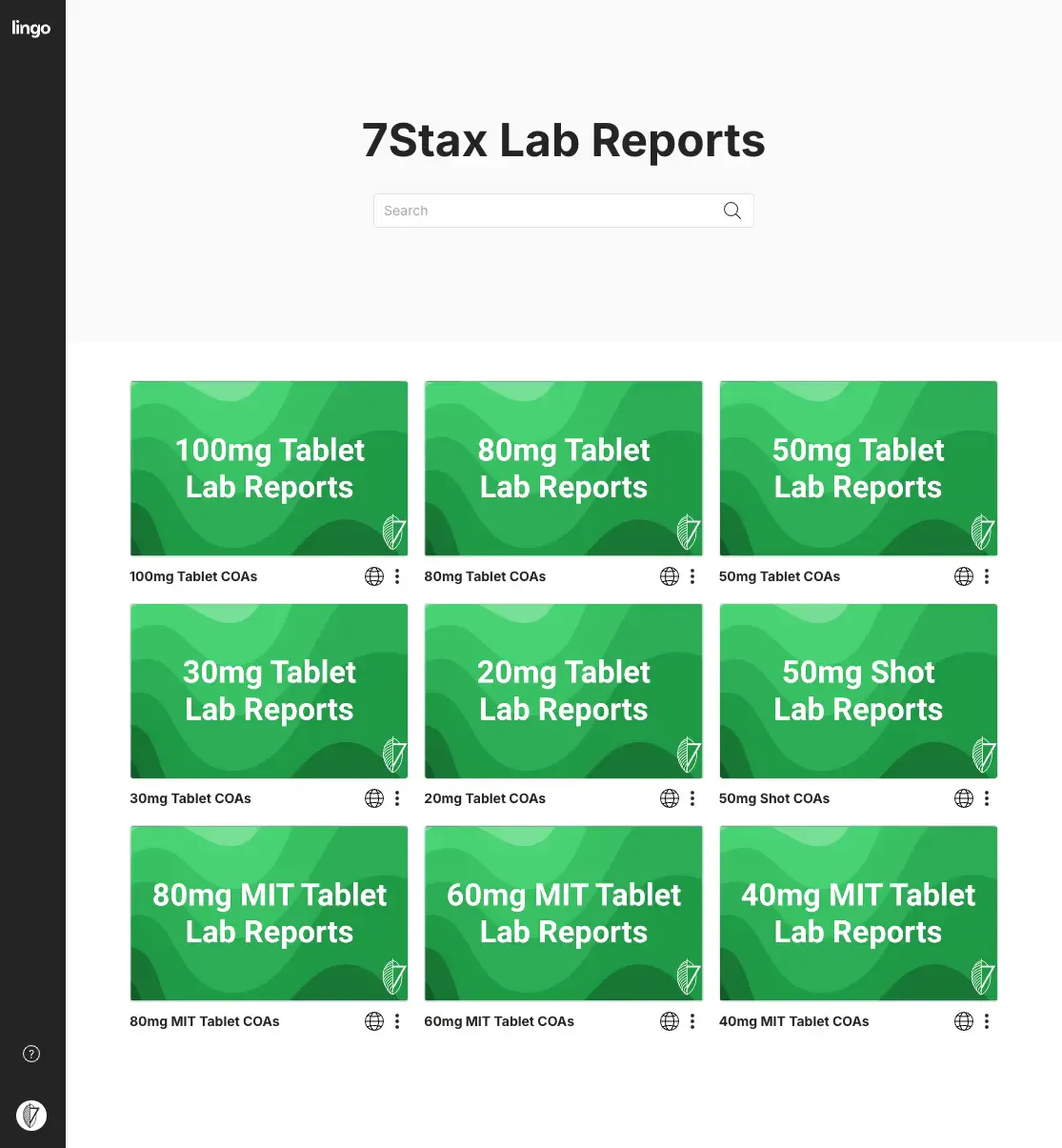
See how 7Stax uses Lingo Portals for COA records.
Who’s doing it: 7Stax
For brands where transparency and education are the north star, the structure is much more granular. They don't just have a logo folder; they have Kits organized by unit size and batch-specific lab reports for certificates of analysis.
In a market where competition is fierce, being the most transparent brand wins shelf space. If a dispensary manager knows they can find the exact COA for a 3.5g jar in three clicks in your Lingo space, you become their favorite partner. You’ve removed the administrative tax of learning about the safety and transparency of the products you sell.

Who’s doing it: Yada Yada, Waypointe Brands
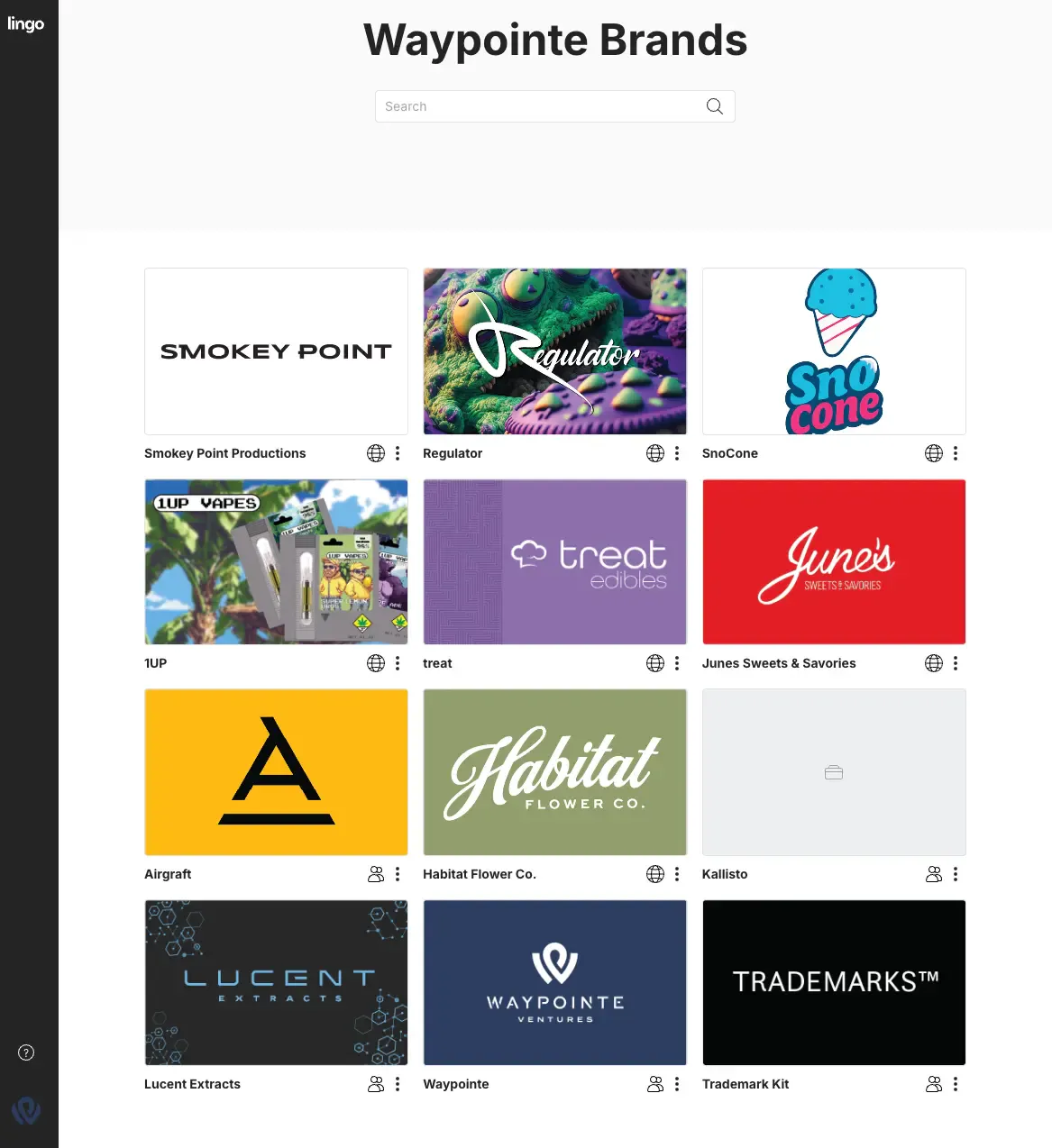
This is the "Work-in-Progress" model. These teams utilize Lingo’s private permissions to house internal needs—packaging design, new brand Kits, corporate communications, and trademark Kits—but then restrict sensitive information to only specific users. But, they also use Lingo in the traditional sense that each Kit is a brand represented, and all of these Kits may appear in a single Portal.
They use the same platform to store their corporate design needs as they do their marketing assets. The benefit is a central source of truth. While third-parties need access to menu images, descriptions, and sales enablement materials, they do not need access to corporate decks or internal documentation. They train everyone to go to the same source of truth, but lock down Kits when it should only be seen by specific people.
Even with the best laid strain libraries and menu listing assets, dispensaries still go rogue.
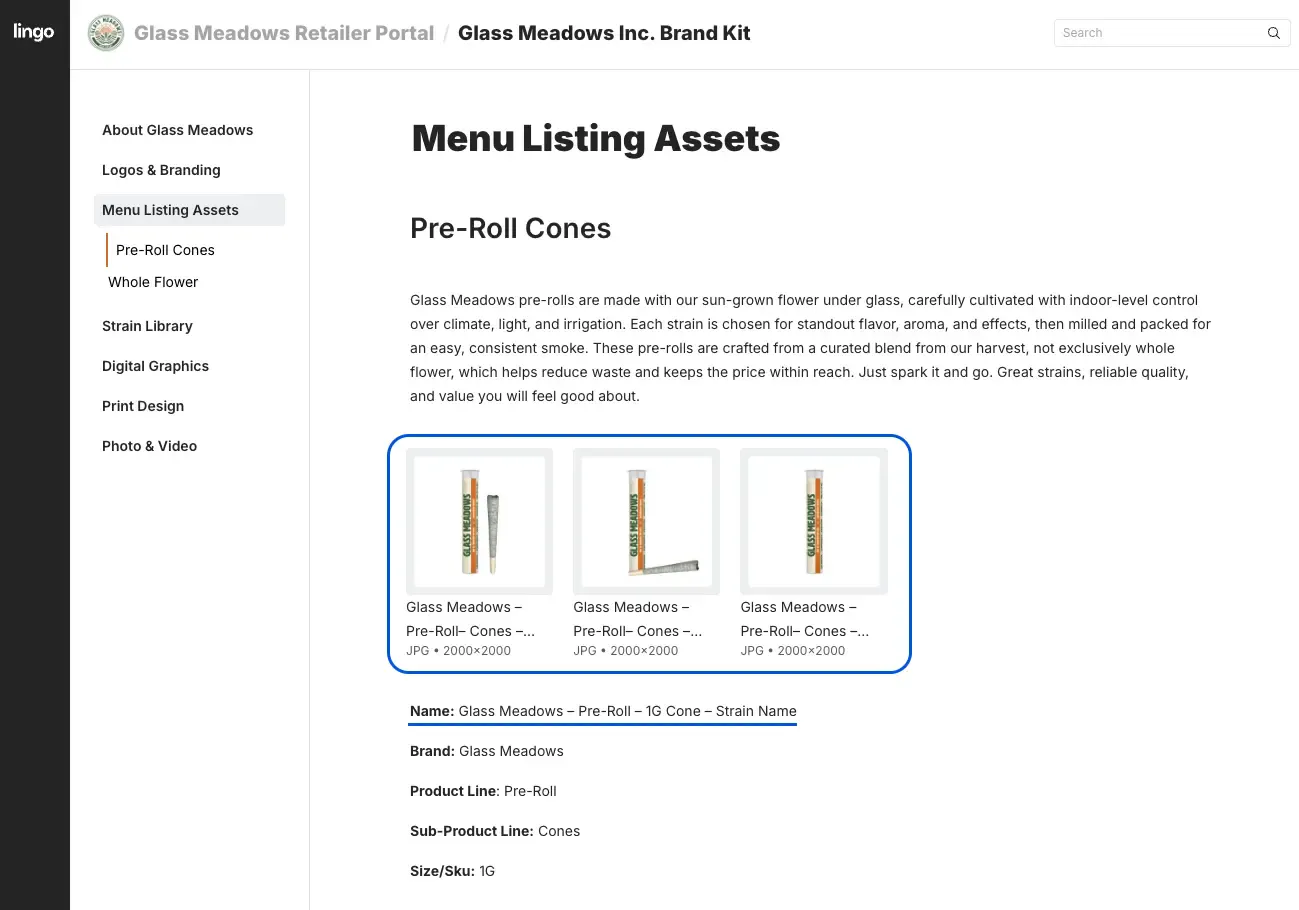
Even if you only operate in one state, you still face the menu mess. Every dispensary uses a different point-of-sale platform, and every platform has different requirements. Plus, some point-of-sale systems will import the product information on behalf of the brand, and in others, the dispensary will enter it into the system when they receive their inventory. It starts to look a little like this, an example we found with a pre-roll cone from Glass Meadows.
Brand Expectations:
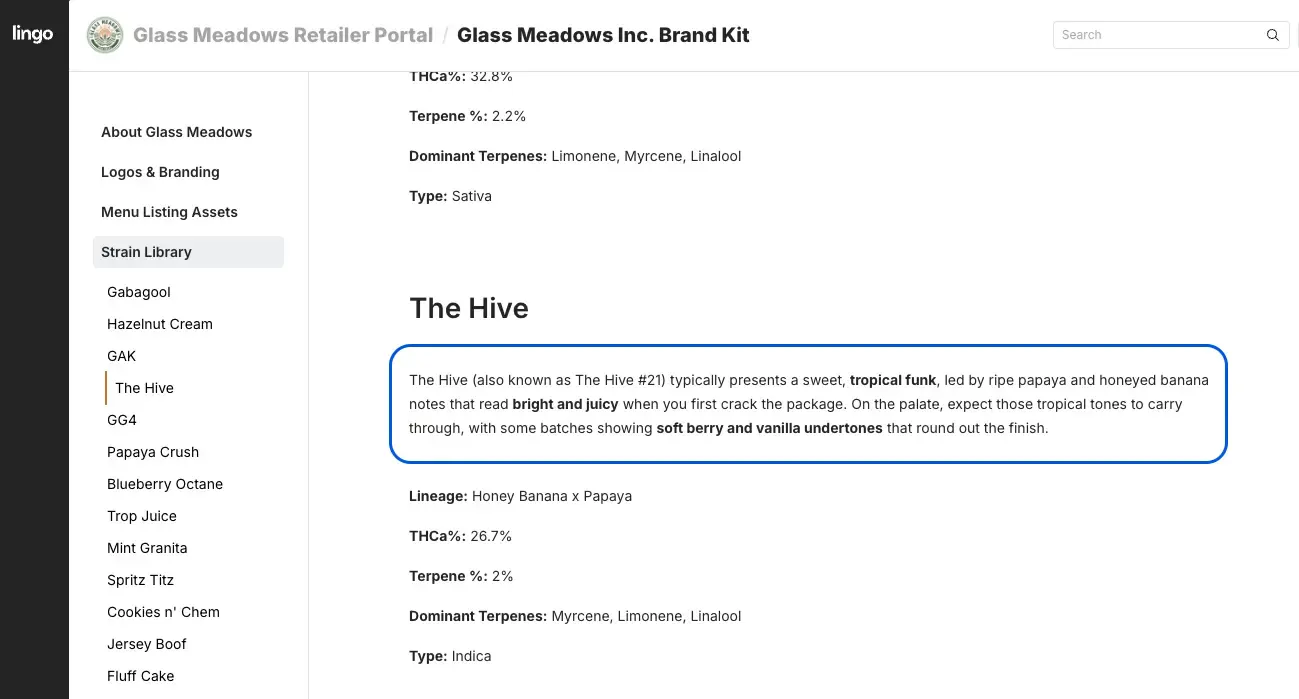
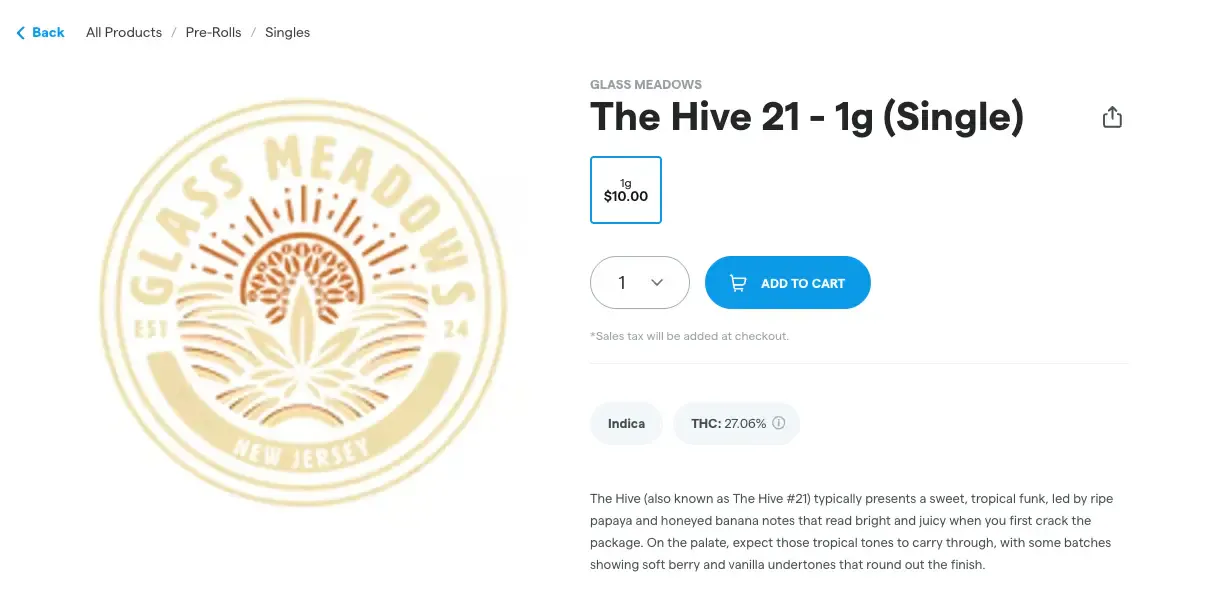
The brand indicates the naming convention of their product which is how it should appear in the title. Glass Meadows indicates the name should read: Glass Meadows - Pre-Roll - 1G Cone - [strain name] so in this example, it’s “Glass Meadows - Pre-Roll - 1G - The Hive.” They also provide the images to be used on the menu for the pre-roll cones and the subsequent description. This is how Glass Meadows wants to show up in dispensaries.
Brand Reality:
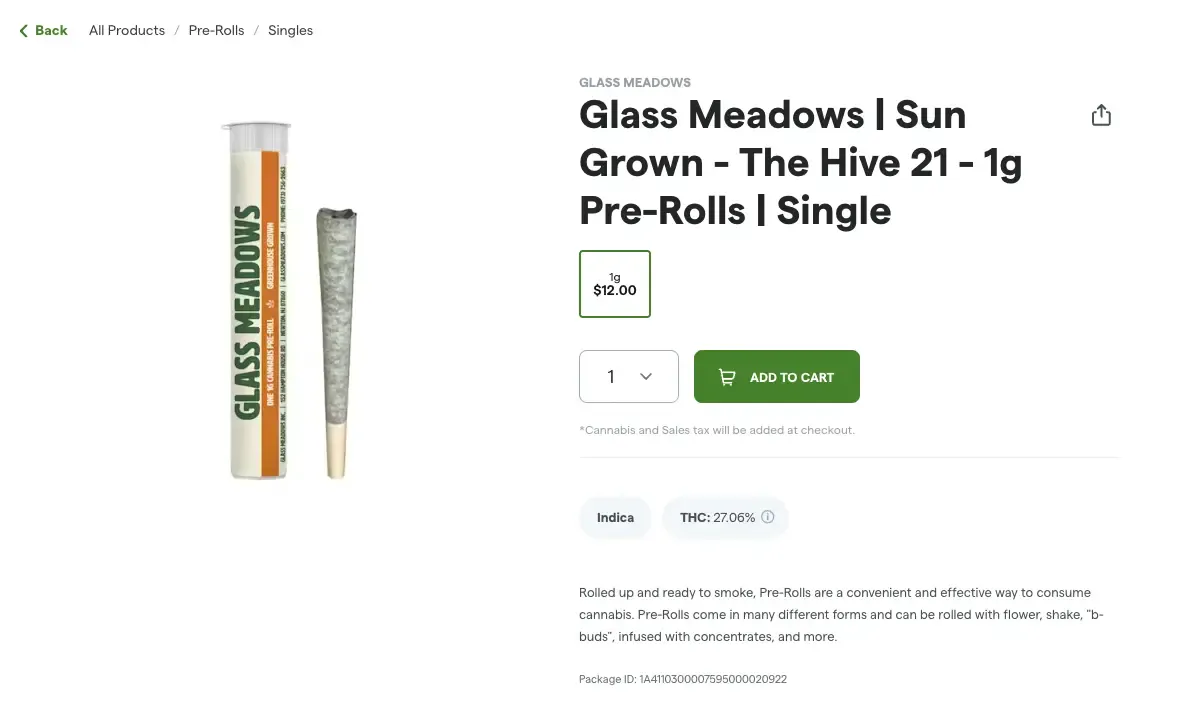
In a quick audit of three New Jersey dispensaries, no one listing is exactly how Glass Meadows wants to show up. For example, this one gets the image correct but the title and description are not how they want to be represented.

Likewise, in a different dispensary, the image is correct and the title is close, but the description is not how Glass Meadows wants The Hive brands to be represented.

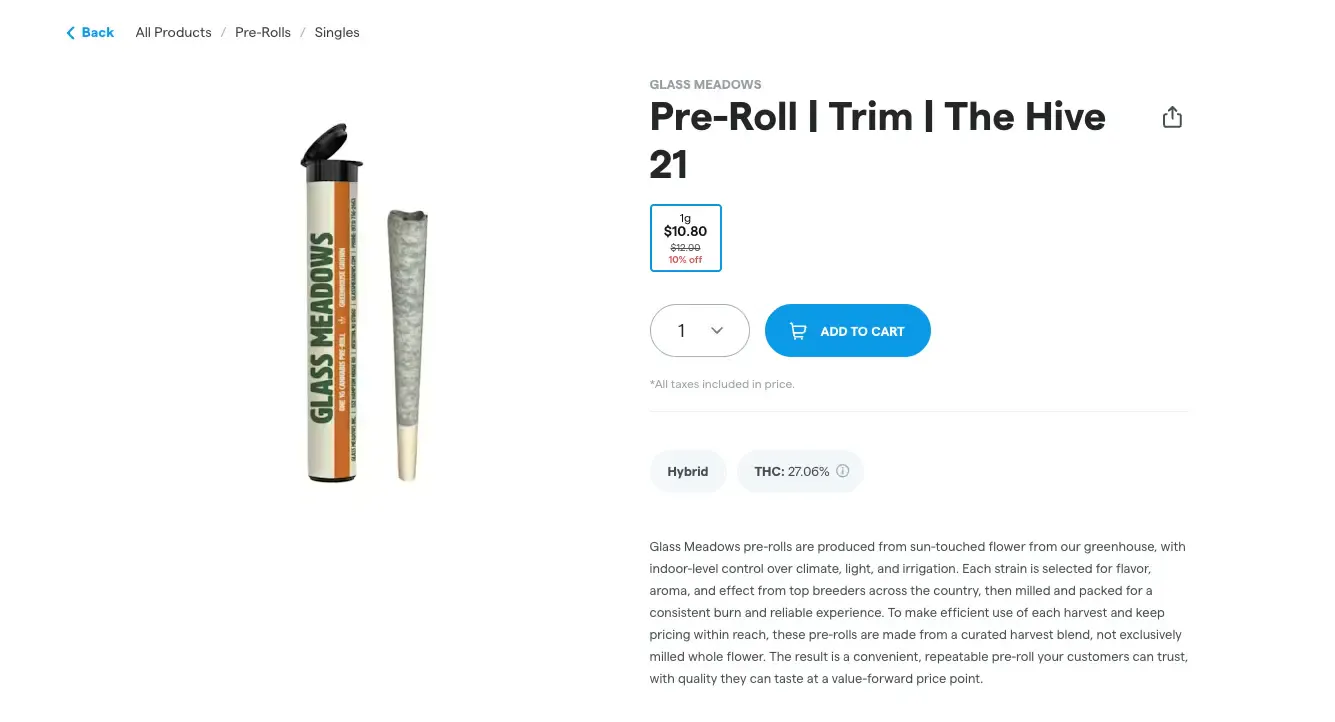
And in this last dispensary example, the title could be seen as close to correct in the sense it’s under Glass Meadows and under the Pre-Roll category with the strain and type simply swapped. This is also the only description that is correct, but the image isn’t helping to present this product in the best light.

This is where brands are tearing their hair out—they provide menu listings to all parties selling their product and yet there is still misalignment. Tackling this menu remediation isn’t because the brand is presenting themselves in a confusing way or using outdated links, it's because adoption by third-parties, be it the POS platform or the dispensary, is disconnected.
Lingo has set out to solve this problem for cannabis brands, too.
The next frontier for the SSO is the same as the MSO: Product Information Management.

Lingo’s cannabis-first PIM is being built to solve this menu remediation issue. Brands are at a loss, doing all the right things to get the correct images, menu assets, and descriptions in the hands of the correct people at the right time. But, your best laid plans are left up to the interpretation of others.
With the Lingo PIM, you’ll add a link to the asset, the data, and the description together, allowing images and asset meta data to flow from one system into another. One update in Lingo flows everywhere. Your team stops being a data entry clerk and focuses their time and attention on being a brand builder. Now when you communicate how you want your brand to show up in the world, it shows up as expected in all the platforms that matter.
Before you build, ask yourself:
The operators pulling ahead are building better systems, not just better products. By organizing your digital world, you’re making it easier for the world to see your brand exactly as you intended.
A Single-State Operator (SSO) is a cannabis company that cultivates, processes, or retails within a single legal state. Unlike Multi-State Operators (MSOs), SSOs focus on deep market penetration and local brand loyalty. Their operational challenge is often managing high-velocity asset requests from a large network of local dispensaries rather than navigating multiple state compliance laws.
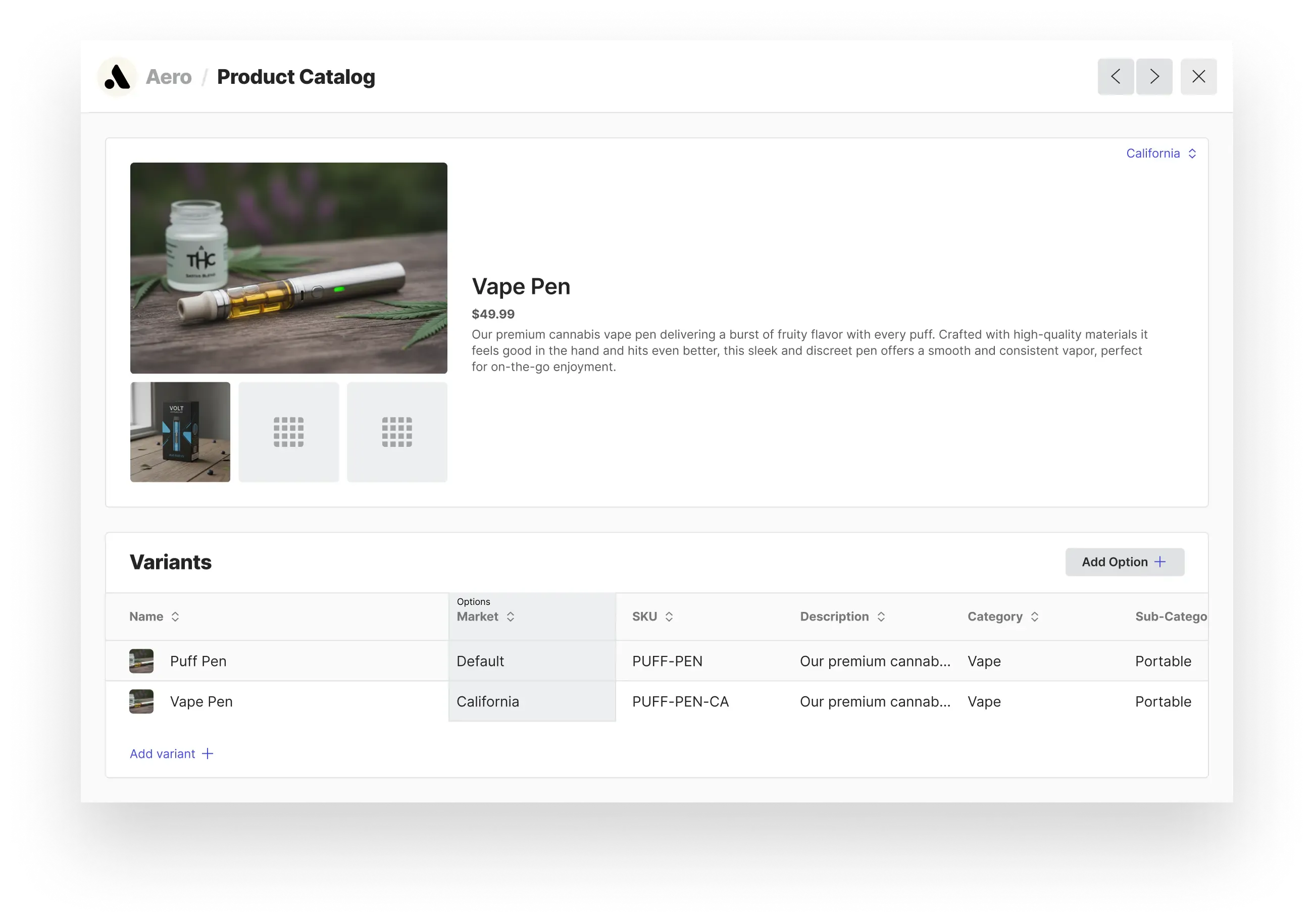
A Product Information Management (PIM) system for cannabis is a centralized hub that links digital assets (like product photography) with technical product data (like terpene profiles, THC percentages, flavors, and effects). Because cannabis products vary by batch, and local point-of-sale vendors have different requirements, a cannabis-first PIM ensures that every dispensary menu displays consistent and accurate information, regardless of the platform or product.
Leading single-state brands use a Hybrid Model. They maintain Private Kits for internal work-in-progress items like unapproved packaging designs, trademark documents, or simply assets they do not want accessible to anyone outside the company. Once assets are finalized, these assets are moved to a Public Portal where retailers can access them. This prevents the common industry error of a dispensary using an unapproved or outdated logo, or announcing a product that isn’t quite ready to launch.

Yes. By using Lingo as a single source of truth, you can provide retailers with a single link containing the exact descriptions and high-resolution images they need for platforms like Dutchie, Jane, and Leafly. Plus, with the new PIM system, you’ll eliminate the menu mess caused by budtenders manually entering inconsistent product data.
Even a single brand with a small SKU count benefits from a Digital Asset Management (DAM) system. The value isn't just in storage; it’s in sales enablement. When your sales team can instantly share a professional brand kit with a new retail partner, it signals a level of operational maturity that helps you win shelf space over disorganized competitors.
The difference between a craft brand and a professional brand is often just the infrastructure behind it. Stop hunting through Google Drive and start showing up for your retailers like a top-tier operator.