What is Dropbox?
Dropbox is a cloud-based file storage and collaboration platform that allows users to save, share, and sync files across devices. It is widely used by individuals, businesses, and teams to store documents, images, videos, and other digital assets while ensuring accessibility from anywhere with an internet connection.
Designed primarily as a document-focused storage solution, Dropbox offers tools for file organization, version control, and sharing. Users can create folders, set permissions, and collaborate on files in real time. However, for teams managing large volumes of creative assets or complex brand guidelines, Dropbox’s rigid folder structure can become limiting.
How Dropbox Works
Dropbox operates as a cloud drive, meaning users can upload and access files from multiple devices without taking up local storage. Key features include:
- File Syncing – Changes made to a file update automatically across all linked devices.
- Folder Sharing – Users can share entire folders with teams or external collaborators.
- Version History – Older file versions are stored for a limited time, allowing recovery if needed.
- Integrations – Connects with apps like Microsoft Office and Google Workspace for enterprise document management.
Dropbox vs. Creative Asset Management
While Dropbox is a powerful tool for file storage and document management, teams that handle brand assets, marketing materials, and creative workflows often find it too rigid for their needs. Many businesses outgrow Dropbox because:
- It lacks a visual, intuitive way to manage creative assets. Instead of searching through lists of filenames, creative teams prefer a more dynamic way to browse brand elements like logos, fonts, and design files.
- File-sharing controls are limited. Teams often struggle with maintaining up-to-date brand assets, as Dropbox does not offer built-in governance for approved materials like a dedicated digital asset management (DAM) system.
- Resizing and format conversion require additional tools. Dropbox stores files but does not allow teams to automatically convert, resize, or repurpose assets within the platform.
Why Teams Move from Dropbox to Lingo
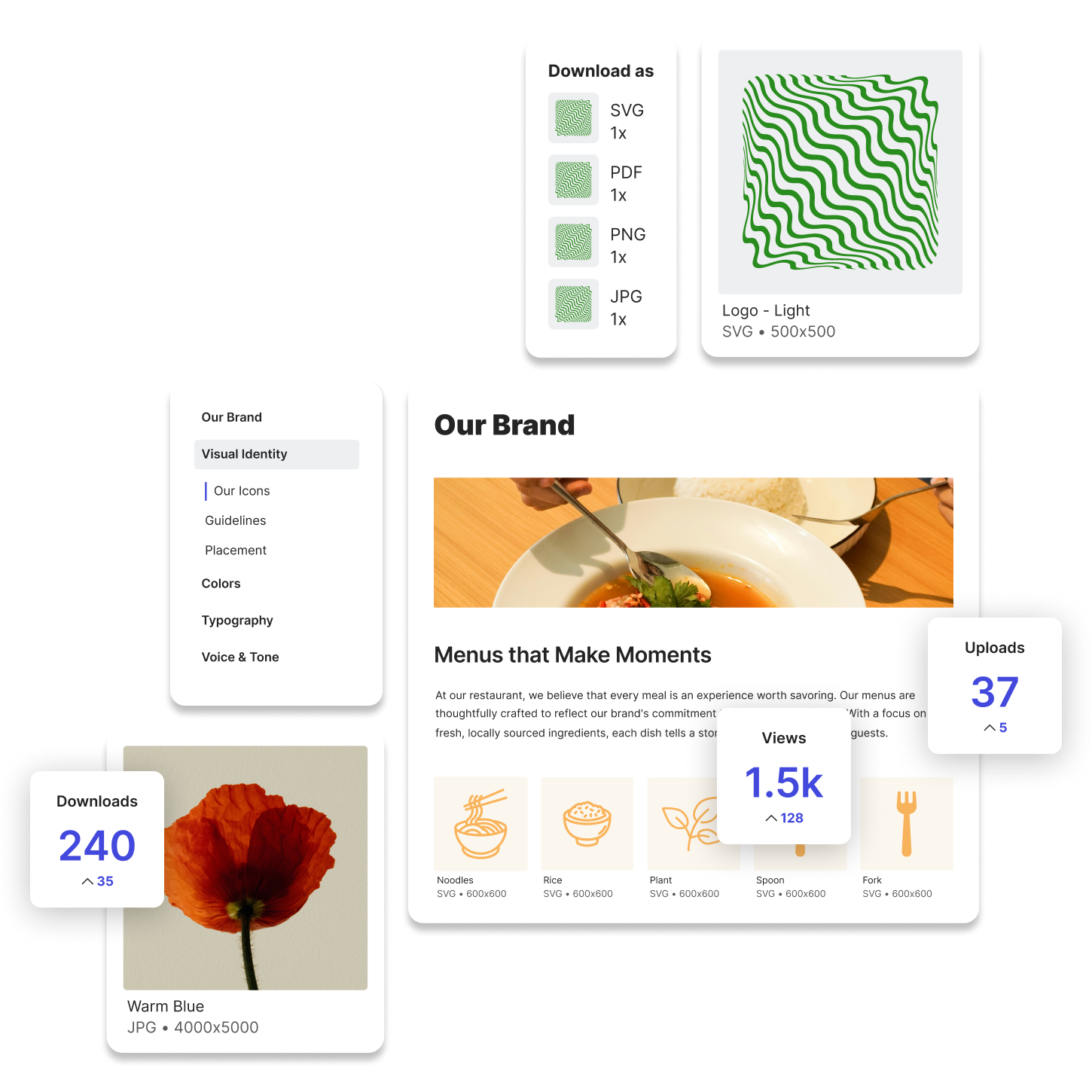
Many Lingo buyers come from solutions like Dropbox or Google Drive and find them too structured for brand and marketing asset management. Unlike Dropbox, which relies on a folder-based system, Lingo provides a visual, flexible way to organize and distribute brand assets.
With Lingo, teams can:
- Preview and browse assets visually, rather than sorting through file names.
- Ensure brand consistency by centralizing approved logos, fonts, and templates.
- Easily share assets with the right people, using access controls and permissions.
Convert and resize files instantly for different platforms without additional software.
Try Lingo for free.